Showing posts with label Raleigh. Show all posts

Saturday, 4 June 2011

Red and Blue, Old and New: Fun with Bike Comparisons

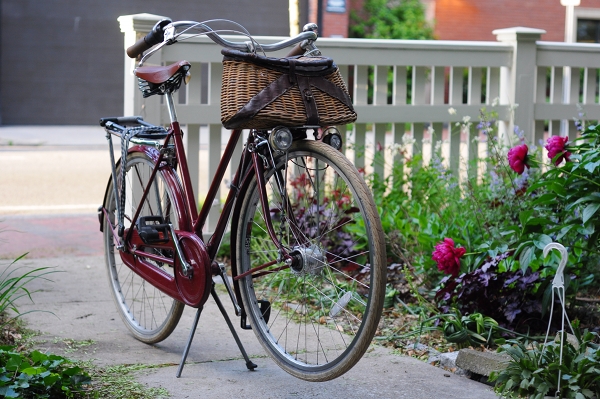
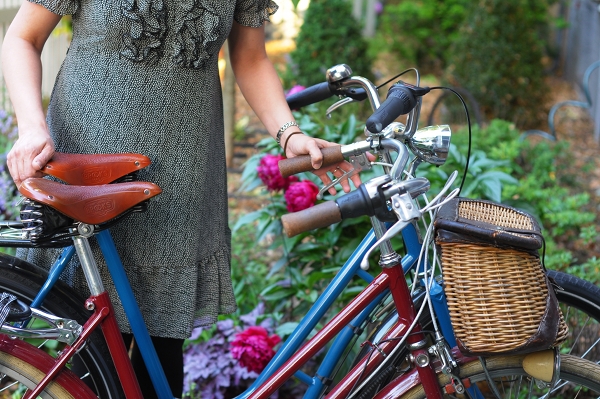
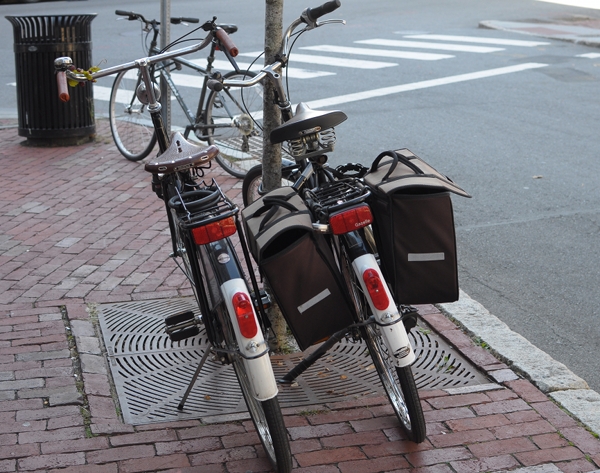
A couple of days ago I visited "Cycler" from Biking in Heels, asking her to test ride the Pilen I am reviewing and tell me what she thinks. While we were at it, we also compared the geometry of the Pilen to that of her modified vintage Raleigh Lady's Sports - the charming bicycle described here.

Unlike the traditional English roadster (which is similar to a Dutch bike), the Sports model is a zippier bicycle with somewhat more aggressive angles and a more leaned-forward posture. It made sense to compare it to the Pilen, which is also somewhat more aggressive than Dutch bikes.

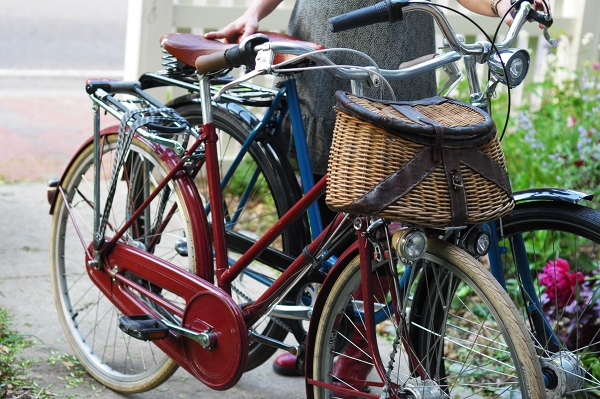
Placing the two bicycles side by side, we did notice some similarities. The seat tube angles, front end geometry and bottom bracket heights were fairly close - at least in comparison to those of Dutch bikes and English Roadsters. The Pilen has a slightly more relaxed seat tube and a higher bottom bracket - but the extent of this is minor when compared to the more relaxed Dutch bikes and Roadsters with their high bottom brackets. The Pilen however, has a longer wheelbase than the Raleigh Sports - not to mention that it is dramatically larger.

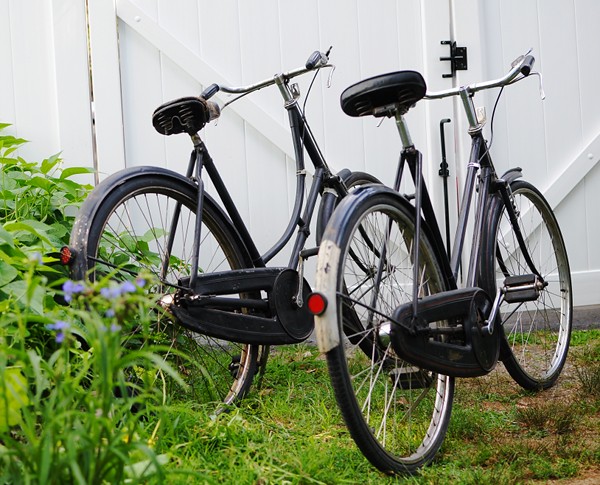
When looking at this picture, consider that the saddles of the two bicycles are set to roughly the same height. Now notice the amount of seatpost showing on the 21" (53cm) Raleigh Sports compared to the 22" (56cm) Pilen Lyx (see here for a close-up of the Pilen's seatpost). Despite the 3cm difference in their frames, the actual size difference between the two bicycles is considerably greater. This is because the Raleigh has 26" wheels with 35mm tires, whereas the Pilen has 700C wheels with 50mm tires - raising the Pilen's frame higher off the ground. Wheel and tire size are definitely something to be aware of when determining the actual size of a complete bicycle. The frame size alone is fairly limited information.

Cycler and I are similar in height (she perhaps 1/2" shorter), and we prefer similar bicycles for transportation - both of us especially in love with the ride quality of the classic Raleigh DL-1. It was therefore informative to learn that she had a similar reaction to the Pilen as I did. On the other hand, two other (taller) persons who also tried the bike had very different reactions. I will write about that in more detail at a later stage, but suffice to say that there is a bike out there for everyone. It is amazing to me how many variations exist of the traditional upright step-through design; I never tire of learning about the similarities and differences between them.

Tuesday, 1 February 2011

The 'Lady's Bicycle': Descriptive, Offensive, or Merely Obsolete?

[an unsuccessful attempt at parody]

There has been some discussion lately about how appropriate it is to refer to diamond and step-through frame bicycles as men's and ladies' bikes. After all - gender roles are flexible these days, women are no longer expected to wear elaborate skirts, and a low standover height can be convenient for everyone. So why use gender specific terminology? Am I just intentionally being quaint?

Well, not exactly. You see, when a bicycle model exists in both diamond frame and step-through designs, the latter is usually not just about lowering the standover height. It is also about taking the female anatomy into account. For example, have a look at the pictures below and see whether you notice anything interesting.

[image via Gazelle USA]

These are the Oma and Opa versions of the current production Gazelle Toer Populair bicycles. If you look closely, you will notice that the Oma on the left has a considerably higher headtube than the Opa on the right. This is done in order to set the Oma's handlebars higher, so as to accommodate the typically shorter torsos and arms of female cyclists. The bikes are named "Grandma and Grandpa," because they are, in fact, gender-specific. The expanded headtube tactic is used by many manufacturers on their step-through models, while others use the alternative tactic of shortening the virtual top tube. Either way, more often than not the step-through version of a given bicycle model is designed for the female body. This is not to say that men cannot or should not ride step through frames, but only that step-through frames are typically optimised for female proportions.

Of course, one could ask: Why confound gender-based anatomical differences with preferences for standover height? After all, some women may prefer diamond frames, while some men may prefer step-throughs. That is where statistics and market research come in. Most manufacturers cannot afford to make two versions of diamond frames and two versions of step-through frames within the same model. And statistically, women are considerably more likely to wear skirts and are thus more likely to prefer a step-through transportation bike. Therefore, it makes more sense to optimise the step-through design for the female anatomy, while optimising the diamond frame design for the male anatomy. Naturally, there will be some females who prefer the diamond frame and some males who prefer the step-through. Furthermore, not every woman has a short torso and not every man has a long torso. But when it comes to manufacturing decisions, it's all about tendencies and probabilities - not about individuals.

And speaking of statistics, perhaps we could indulge in another poll (a weekly tradition?). No purpose for this other than my own curiosity, and possibly yours:


In my own vocabulary, I use terms like "lady's bike" or "woman's frame" when I am referring specifically to the bicycle's suitability for females - be it anatomically, or in terms of their ability to accommodate skirts. On the other hand, I use terms such as "step through," "loop frame," and "mixte," when I am describing frame geometry. And while some worry that referring to bicycles as "women's bikes" makes them seem inferior or less valuable, I am not on board with that line of thinking. After all, what is considered "standard" frame geometry in the industry, is in fact optimised for the male anatomy. We are female, we are wonderful, and we need bicycles designed for us. To me, that is neither offensive nor obsolete - it's just common sense.

Sunday, 30 January 2011

Where Have You Been...

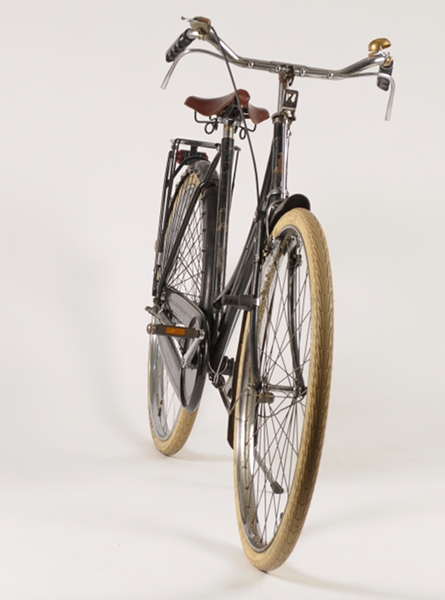
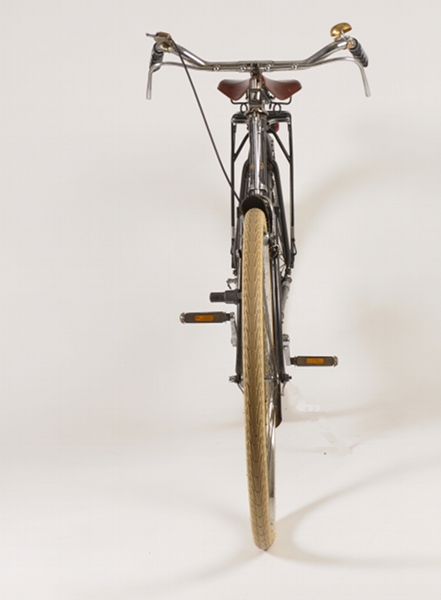
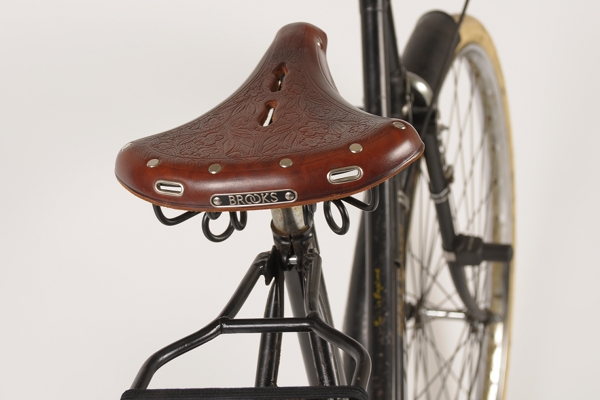
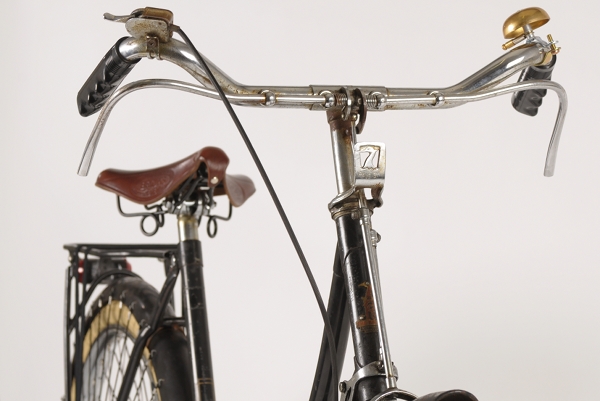
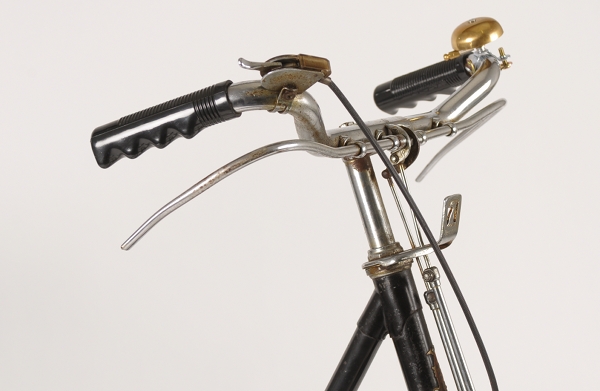
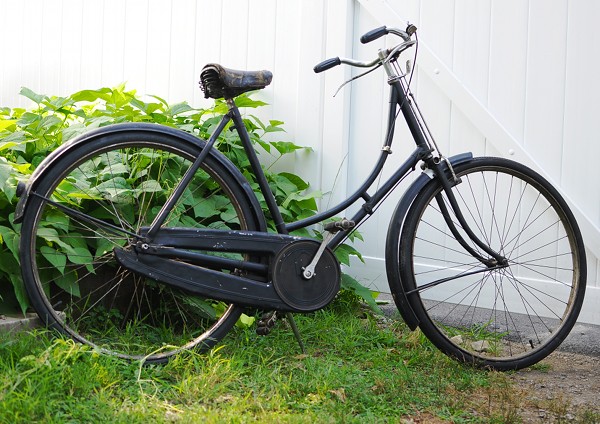
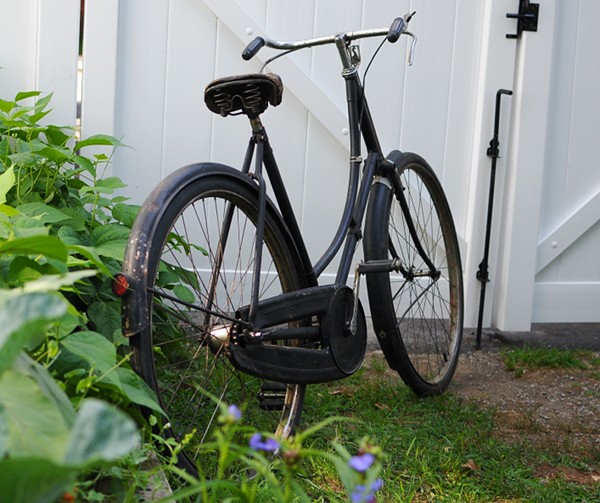
Since the end of the summer, I've received a number of concerned inquiries about "Velouria," my vintage Raleigh DL-1 Tourist (and for those who have only begun reading this blog recently, I am named after this bicycle, not the other way around). Though admittedly I have not featured her for some time, I assure you that Velouria is alive and well. She resides in our photo studio just South of Boston, performing the under-documented but crucial role of "studio bike." And here are the pictures to prove it.

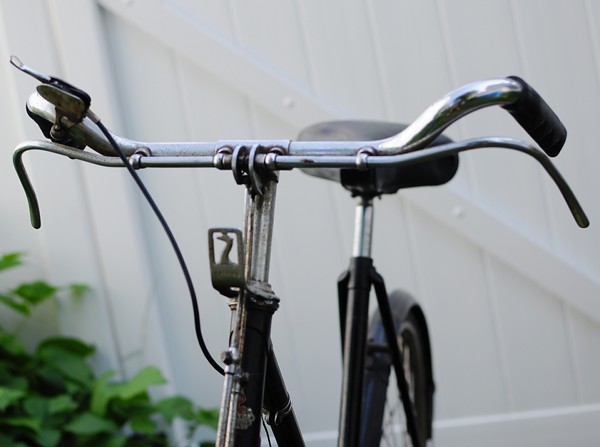
For those unfamiliar with Velouria's history, she is somewhat of a "frankenbike," albeit a darling one. I acquired the 1973 Raleigh DL-1 in the summer of 2009 and over time proceeded to subject her to a number of modifications. These have included: an aftermarket chaincase and dress guards, cream tires, a Brooks B18 saddle, a custom rear rack, and an updated rear wheel with a coaster brake hub to supplement the pitiful braking power of the rod brakes.

Why do I feel the need to mess with a vintage bicycle in this manner? To tell the truth, part of it is simply the compulsion to experiment, to customise, to turn objects that belong to me into "creatures." I am not saying it's a good habit necessarily; but it's how I like to do things.

There was also a practical reason for all the modifications: I loved the ride quality of the DL-1 so much, that I was highly motivated to make it as functional as possible.

But ultimately, my love for this bicycle is also what made me move it to the photo studio after I (literally) found the vintage Gazelle in the end of last summer. At the risk of sounding cruel to the Gazelle, I am willing to run it into the ground. It is a great bike, it handles wonderfully, it is admirably designed, but my feeling toward is appreciation - not "love." The vintage Raleigh, on the other hand, feels almost like a pet. I just can't bring myself to ride its already battered and rusty frame on the salted roads in the winter, or even to leave it for hours in the rain in the summer. "Let the Gazelle take the abuse and spare the Raleigh," says my heart. And so Velouria became "studio bike" - ridden occasionally, but not too much.

And if you've noticed that these pictures are a little different from my typical bike photos, that is because they were taken inside the studio itself. We will soon be doing a couple of photo shoots for a local framebuilder, so we're practicing. When it comes to product photography in a studio setting, every object requires a different approach to lighting - and I would say that bicycles are fairly complicated as far as these things go. They are enormous, they have both matte and reflective parts, and they cast a variety of unusual shadows. Oh, and don't get me started on the kickstand thing; we are still working that one out!

Of course, the trouble with this type of product photography is that it brings every single detail of the object into sharp focus - not exactly the most flattering approach when it comes to vintage bikes!

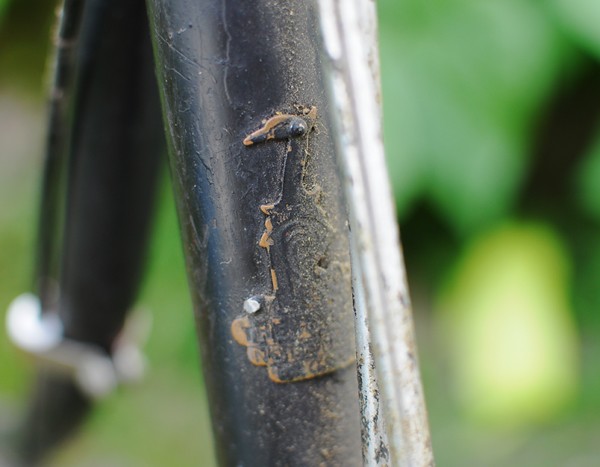
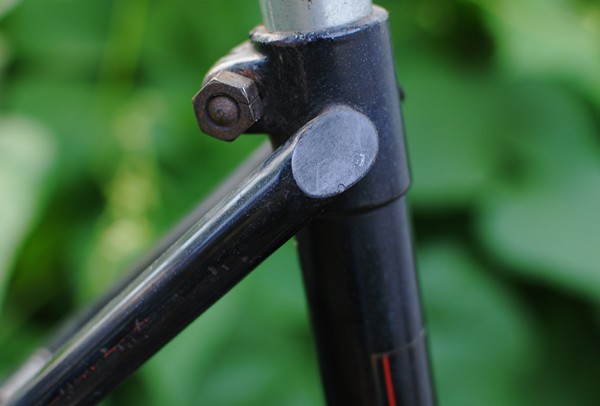
But after all, "Velouria" is not just any vintage bike.  She is mine. The scraped paint, the rust, the solidified crust, the dented fenders and even the bent rodbrake levers are, oddly, all part of what makes me cherish her. She may no longer be the most frequently featured bicycle here, but she epitomises the theme of this blog perhaps more than any other bike I own.

Thursday, 28 October 2010

Lovely Bicycles on a Budget: Vintage vs Modern

[image via niniferrose]  

In addition to the variety of comments posted on this website, I receive lots of questions from readers via email. And if I had to say what the one most frequently asked question is, it would be a variation of this one:
I am looking for a nice bicycle for commuting around town and my budget is $500. I would love to get a new Dutch bike or a Pashley, but I just can't afford it. What would you recommend in my price range? 
Now, I do have a page on this website called Budget Options, and a link to it is prominently displayed in the upper lefthand corner. On that page I keep an updated list of manufacturers that sell budget versions of classic bicycles for as little as $150. I also have a page on shopping for vintage bikes. So, in emailing me the above question, the reader is usually looking for more than to be directed to one these pages. They are looking for my opinion: What would I do with $500? What do I recommend of all the possible options?

Okay, if you really want to know, I'll tell you. But I can almost guarantee that you won't like it and that you won't follow my recommendation. Do you want to hear it anyway? Well, all right. I would recommend buying a vintage 3-speed and spending the remainder of your budget on modernising it. Here is how I would do it:


Step 1: 
Buy a vintage Raleigh Lady Sports in your size and preferred colour. Make sure the frame is in good condition, and that as many components as possible are salvageable. Try to spend under $100 on this purchase, and absolutely no more than $150. It is possible if you do some research and ask around. Even if there is a shortage of vintage bikes in your area, post a "want to buy" ad on your local C-List and chances are someone will dig one out of their basement or barn. Or join bikeforums and a kind enthusiastic soul on the Classic & Vintage subforum will provide you with some local contacts. It can be done if you are motivated.

Step 2:
Buy a modern 26" (ISO 590) wheelset with alloy rims and a 3-speed hub built into the rear wheel (the shifter is usually included). The biggest problem with using vintage 3-speeds for transportation, is that they have caliper brakes and steel rims - a combination that provides inadequate stopping power in wet weather conditions. An alloy wheelset will solve this problem. Several bike shops sell such wheelsets online at reasonable prices: A Sun wheelset from Harris Cyclery will set you back $200. An Alex wheelset from Niagra Cycle Works will set you back $130.  Your local bike shop might be able to order a wheelset from a catalogue as well.

Step 3:
Buy a set of 26" (ISO 590) tires with puncture protection. Schwalbe Delta Cruisers in either black or cream are a good choice, because they look classic, make for a very comfortable ride, and cost only $40 for the pair.

Step 4:
Assuming that you are not skilled in bicycle repair, maintenance or assembly, bring your vintage bike and all the parts to a trusted local shop. Ask them to replace the wheelset, put on the new tires, and give the bicycle a thorough tune up. They will probably end up replacing the chain and some cables as part of that process as well. It should run you about $100.

Step 5:
If the vintage bike you found did not come with a saddle and there is room in your budget, get a Brooks or a lower-priced VO leather saddle. If you are tapped out, look for a vintage saddle, or buy a cheap generic one as a temporary fix until you save up the extra money for a new, quality one.

[image via niniferrose]  

At the end of this process, you will have a bicycle with all the comfort, durability and charm of a vintage 3-speed, but with modern braking power. It should last pretty much forever and should feel great to ride. Yes, organising the bike will be a small adventure - but again, it can be done if you put your mind to it.

Having said that, I realise that most of my readers will opt out. For one thing, it seems difficult and time-consuming. It also probably seems absurd to spend a total of $500 on a vintage 3-speed, when you could go to the store and get one of these for the same price, brand new and shiny. I sincerely understand that. But...

Consider that the second most frequently asked question I get from readers over email is a variation of this one:
Three months ago I bought a [Budget Manufacturer X] bicycle, because my budget was $500. Actually, I ended up spending a bit more than that, because I got the 7-speed version. And Basil panniers. And a Brooks saddle. And cork grips. But anyway, I thought the bicycle looked nice and I liked how it rode when I tested it outside the bike shop. But it's only been 3 months, and now my rear fender is making clunking noises, and my chain has come off twice, and I keep getting flat tires. Also, the bike doesn't feel that great over pot-holes and my hands start to hurt on the handlebars towards the end of my commute from work. My bike shop says that I can update some of the components to fix these problems, but it looks like that's going to cost me another several hundred dollars. I am not sure what to do now. What do you think? 
I never know quite how to answer that one, because at that point the person has already maxed out their budget. Any suggestions? And yes, I am perfectly serious that I get these emails. I respect it when people say they are on a tight budget and I would like to be helpful with solutions instead of saying "save up for a better quality bike". But I honestly cannot think of a solution that I truly believe in other than my vintage 3-speed plan.  I have never received an email from anybody complaining about their vintage Raleigh Sports. 

Wednesday, 20 October 2010

America's Vintage Bike Capital?

I wonder whether there is a way to get some official acknowledgement naming Boston the vintage bicycle capital of the USA. Because the sorts of bicycles we see here - and take for granted - during our daily travels, are not to be believed. Restored 50-year-old roadsters casually locked up outside office buildings, ancient step-throughs with exotic headbadges and enormous baskets, vintage folders of unknown manufacture used as canine transport - these are just some of the bicycles I see every day as I make my way through the city. Normally, I have no time to stop and photograph even a small fraction of it all, but today the Co-Habitant was with me and a couple of the bikes absolutely required documentation.

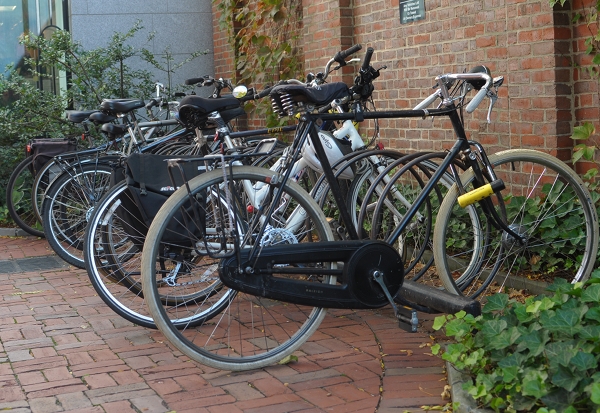
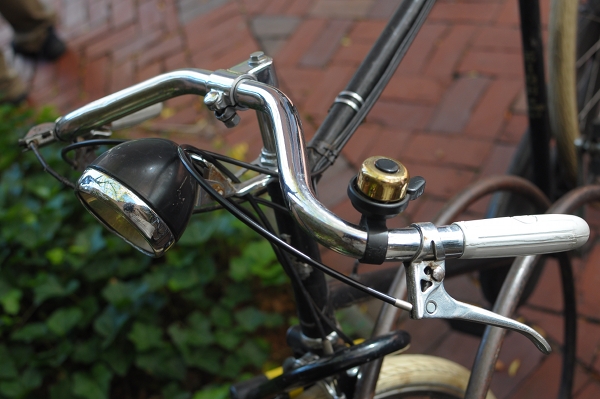
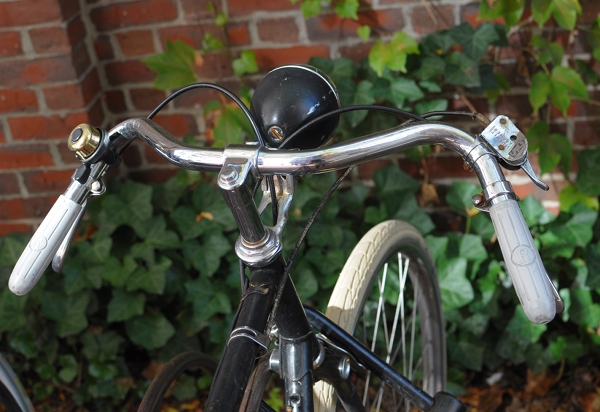
Just so you understand, this all-original 1950's Raleigh Sports with front and rear dynamo lights and original white Raleigh grips(!) is actually someone's commuter.

Secured with a U-lock to a bike rack outside a small local university, it looked so natural amidst the mixed crowd of other bikes, including a fully lugged Specialized and a couple of Peugeot mixtes.
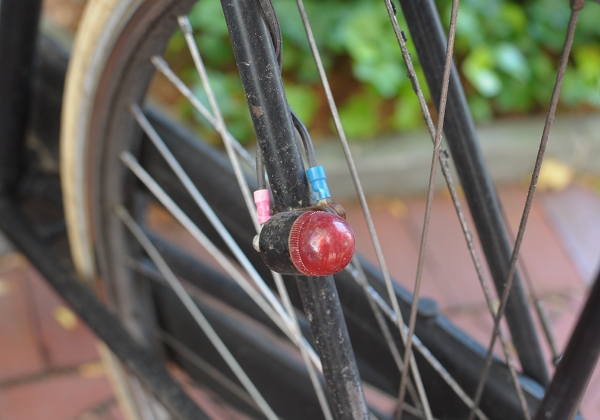
The headlight and tail light seemed functional. These must provide sufficient lighting for the owner's commute, as there were no other lights attached to the bike. Anybody know how powerful they are?

But exciting as it was to see the beautiful vintage Raleigh, it paled in comparison to what we stumbled upon next. Yes, that is my Gazelle, Linda, parked next to... another vintage loop-frame Gazelle.

What are the chances? Unlike Raleigh 3-speeds, Gazelle "Oma" bicycles of this vintage were never imported into the USA and were never sold here.

Both my bicycle, and the bicycle next to it, have stickers indicating that they were purchased in Germany (not in the same shop or even the same town). And the (yet another) vintage Gazelle I spotted nearby a year ago, had a Dutch shop sticker on it. The bicycles' owners must have at some point brought them on the plane when moving to Boston, probably for grad school or for post-doctoral positions.

Seeing the other Gazelle and remembering the third one I spotted earlier, made me wonder whether they still belong to the same owners who brought them over from Germany and Holland. Either way, those bikes must have been dearly loved, at least at the time. Transporting a 50lb bicycle on an airplane could not have been easy!

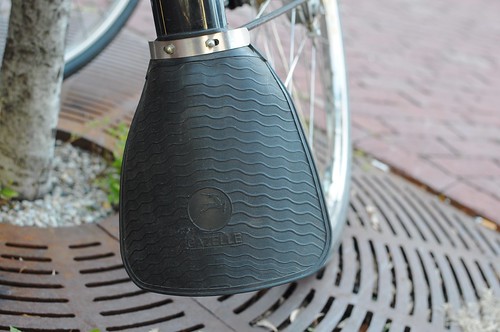
Overall, my Linda was in nicer condition than her neighbour, but one thing that evoked her envy was this mudflap on the other lady. Now she is asking me to get one for her, too. I think a leather one (possibly hand-made?) would go well with her saddle and grips, but I am curious whether these Gazelle proprietary flaps are still sold today. Also, they seem to be attached by a bracket that does not necessitate drilling the fender, but makes use of the existing holes for the stays, which seems like a fairly easy installation method.

I think that to spot several bicycles like this in an American city is highly improbable. Surely it is proof that Boston is the vintage bike capital? If you have a better story about your city, bring it on!

Thursday, 23 September 2010

His and Hers Bicycles: Matching Looks vs Matching Performance

I love the idea of "His and Hers" bicycles: an elegant pair of lady's and gentleman's bikes from the same manufacturer. When we first decided to ride bicycles, the Co-Habitant and I envisioned ourselves exclusively on such matched pairs. We acquired a Pashley Princess and Roadster as our transport bikes. We acquired a Motobecane Super Mirage and Mirage Mixte as our roadbikes. And we acquired a Raleigh DL-1 Tourist and Lady Tourist as our vintage 3-speeds.

It was all so perfect!... except that it wasn't.  I could never keep up when we were both on the Pashleys, which was a constant source of discontent (I am now convinced that the female model is just inherently different from the male one). With the Motobecanes things were even worse, as my semi-upright mixte was no match for his racy Super Mirage roadbike. Despite being perfectly matched in looks, our beautiful velo couples were plagued by a disparity in performance. 

Having finally decided that the illusion of perfection was not the same as perfection itself, I shattered the symmetry - first by replacing my Pashley Princess with a vintage Gazelle, and then by selling my Motobecane mixte.  Interestingly, the Gazelle is a better match for the Pashley Roadster performance-wise, and we no longer experience the same problem with discrepancies in speed when cycling together on our commuter bikes.

As for roadbikes, it is difficult to keep up with somebody on drop bars, while yourself riding with upright bars - especially if you are a weaker cyclist to begin with. My Rivendell and Trek roadbikes may not look as sexy next to the Co-Habitant's Motobecane as my vintage mixte did, but they are a better match when it comes to actually cycling together.

This particular discrepancy in "his and hers" bikes is something I wonder about when I see a man and a woman cycling together, where he is on an aggressive roadbike and she is on an upright hybrid from the same manufacturer (usually Trek, Cannondale or Specialized). While I understand that the idea is for the woman (who is presumably less skilled) to ride an "easier bike," surely it must make the difference in their skill levels all the more acutely felt?

Of the three "His and Hers" pairs we started with, only our vintage Raleigh DL-1s remain. These are actually matched pretty nicely in terms of performance, so apparently "back in the day" Raleigh got it right whereas today's Pashley did not. Although we do not ride these as often as we ride our main transport bikes, it is nice to have at least one pair of bicycles that matches both in looks and performance. Who knows, maybe in the future there will be more - but the performance aspect is a must. After all, a couple's chemistry is about more than just looks.

Saturday, 31 July 2010

Two Boston Beauties: Rare Vintage Raleighs

Today I visited the bicycle collector Neal Lerner and photographed some of his beautiful bikes. I am posting pictures of these two in particular - not only because they are rare and stunning, but because the owner is offering them for sale [note: both bicycles are now sold]. Here is more about the bicycles, for your viewing pleasure and for longevity:

The loop-frame bicycle is a 1938 Raleigh Lady's Tourist. This model was the predecessor to the DL-1.  The frame is 22" with 28" wheels. It is a similar bicycle to the one I wrote about here; only this one is in ridable condition.

The main difference between the earlier Tourist and the later DL-1, is that the older bicycles are not quite as long - meaning that there is less distance between the saddle and handlebars. At the same time, they look "taller" than the DL-1, because the head tube extends quite a bit higher. Another difference, is that the older Tourists have a lugged connector between the downtube and the "loop" top tube which is absent from the later DL-1 model.

The handlebars on these older models are quite short and narrow - which makes sense, because of how closely the rider is seated to the bars.

The bicycle is in ridable condition and rolls surprisingly nicely (I've ridden it for a short distance).  The shifting needs to be worked on (the gears slip) and the rod brakes need to be adjusted, but it is a stable and buttery-smooth ride. Sadly, there is a piece missing from the rear of the chaincase; it is so difficult to find these chaincases intact. The shifter, saddle and grips are replacements and are not original to the 1938 model.

Being from the WWII period, this bicycle has some "blackout" components - including the headbadge.

The second bicycle in the pictures is one I'd never heard of before: It is a 1948 Raleigh Dawn Tourist. The Dawn Tourist was apparently the predecessor to the Sports. It was lighter and more agile than the original Tourist, and featured a straight step-through frame instead of a loop frame. The frame size of this bike is 21" with 26" wheels.

Unlike the later Sports, the Dawn had rod brakes, just like the Tourist did. However, its handlebars were wider and had considerably more "sweep".

The seat-cluster of the Dawn looks just like that of the later Sports (whereas the seat clusters of the original Tourist and the later DL-1 were bolted together).

The rear fender with original glass reflector are in very clean condition on this bicycle. These reflectors are highly thought after (both of the bicycles pictured have them).

The middle bit is missing from the original full chaincase, but otherwise it is intact.

"The all-steel bicycle" is written on the downtube. The pain on this bicycle is in very nice, even glossy, condition throughout.

It is rare to see even one of these bicycles "in the wild", let alone two - so I felt privileged to take these pictures before these beauties go to new homes. Hope you enjoyed the show and tell.

Tuesday, 13 July 2010

Custom Rear Racks for Roadsters!

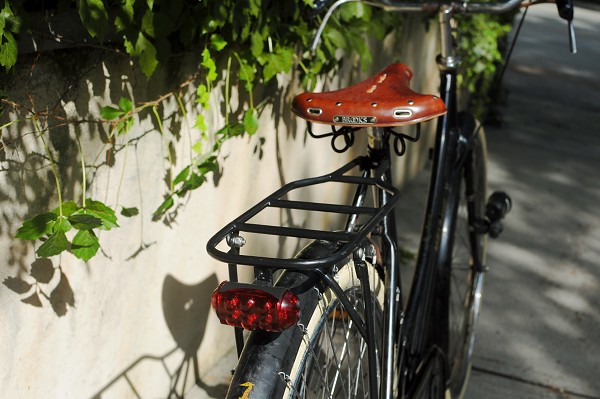
As some have astutely observed in the previous post, my Raleigh DL-1 now has a rear rack! It is notoriously difficult to find racks that will properly fit these bicycles (without slanting), and the racks that originally came with DL-1s are almost impossible to get ahold of. This here is a prototype for a custom rack by Red Barn Classic Bicycle Accessories, designed and built by metalsmith Jon Gehman with some input from me, specifically to fit the vintage Raleigh DL-1.
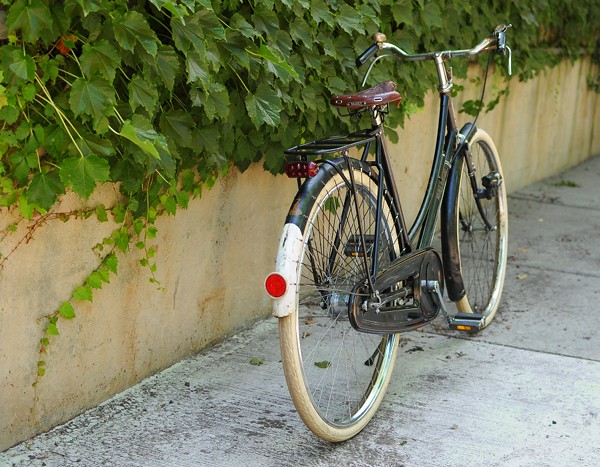
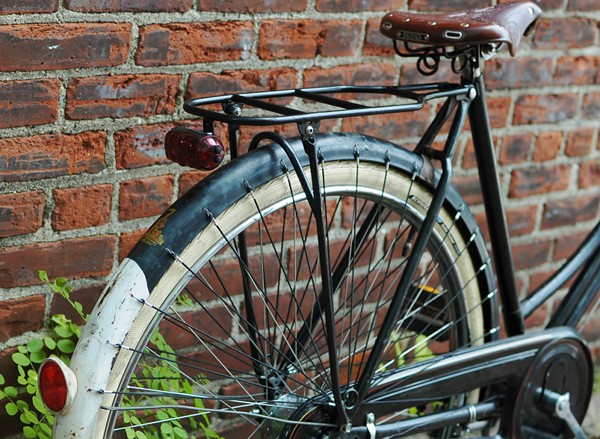
The Roadster Rack was built based on the dimensions of the original racks that were typically used with the DL-1, but features some delightful add-ons.

The platform of the rack is fortified with a graceful arch - something the original lacks. There is also a handy light mount at the end for attaching a tail light.

Here is a detail shot. The Roadster Rack is made of 3/8" seamless aircraft chrom-moly tubing; brazed and silver soldered. It is enamel painted, and the matte finish is a good match for the aged paint on my bicycle.

The rack also features these nice loops for attaching bungee cords. Needless to say, these are extremely useful.

Though the functionality of the rack is impeccable, I have to say that - at least for me - the practical aspects are overshadowed by the looks. I am not sure how well my pictures portray this, but the lines of the rack are mesmerisingly graceful. The arch, the light mount, the bungee loops, and even the gentle curves of the platform itself - everything is perfectly proportioned and pleasing to the eye. It makes me feel like a criminal for having now attached a set of Wald folding baskets to my rack - but hey, I needed to carry my laptop bag!

If you are interested in commissioning one of these gorgeous racks from Jon Gehman, the price is $125. And keep an eye on his website for upcoming products, which will include French chainguards and other secret things. I am collaborating with Jon on some of the designs, so you will notice that his pictures are of the prototypes I have on my bikes. However, I am not involved in the sales of the products (nor do I receive any revenue from the sales) - so please contact Jon directly if you'd like to place an order or have questions about his other products. We would also be glad to know what you think of the design, so please feel free to post your honest feedback here.

Ping Blog

Step 1
Blog URL:


Blog Title (optional):


Blog RSS Feed (optional):


I agree with terms of service.

Step 2
Copy the following code and put it on your blog/site to help our blog ping tool track your submission (Need help?):
;

 
Design by Free WordPress Themes | Bloggerized by Lasantha - Premium Blogger Themes | Best Buy Coupons