Showing posts with label roadcycling. Show all posts

Sunday, 14 August 2011

Within My Grasp, Yet Out of Reach: the Evasive Century Ride

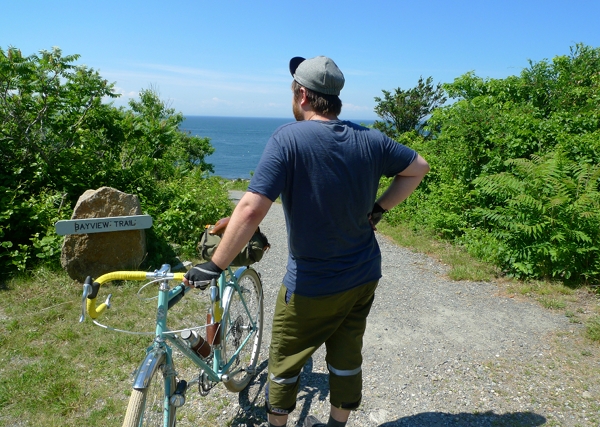
Ipswich, MA
Once a cyclist begins to ride longer distances, it is inevitable that they will hear the siren call of the Century - the 100 mile ride. While 100 miles is as arbitrary a number as any, it has an undeniable cachet to it. It is a three digit number, a round number, and impressive number. Put simply, 100 miles is unambiguously "a lot." It is often considered a marker of seriousness when it comes to long-distance cycling.

Ipswich, MA
Although I never set it as a goal for myself to complete a century, to tell the truth I thought that surely I would have done it by now. Distances of 30, 40 and 50 miles were so easy for me almost from the start, that I assumed 100 miles would inevitably follow. However, it is now my 3rd summer of cycling and somehow I still have not managed it - 65 miles being the longest distance I've covered so far in one go. One obstacle has been lack of time. As someone who gets annoyed when others tell me they don't have time to cycle, I can't believe I am using the same excuse. So maybe I should rephrase: My time management skills have been inadequate. I try to set a day aside for a century ride, but something inevitably comes up to make it impossible. Shorter rides are easier in that sense, because they do not require taking an entire day off. The other obstacle has been finding places to ride to. While the countryside outside Boston offers excellent cycling, I am having a hard time mapping out routes that exceed 65 miles and are still within my comfort zone when it comes to car traffic and elevation changes. And doing repeat loops just to cycle 100 miles is not appealing.

Surly, Rivendell, Essex MA
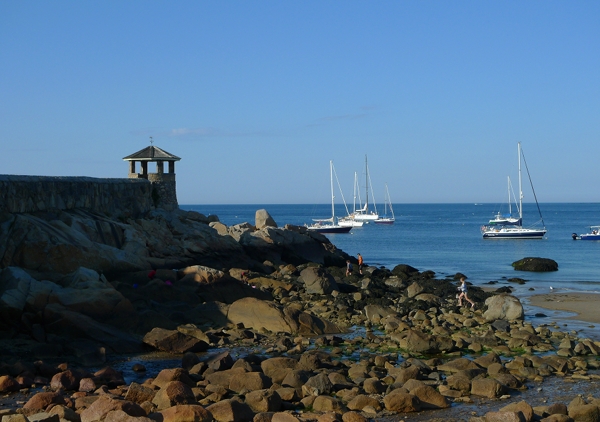
While on Cape Cod last summer, I thought that surely a century would finally be completed. Our plan was to gradually work up to it, but in the end we did it too gradually: Just after the 65 mile ride I got sick, and by the time I felt better it was time to go home. This summer, the inability to reach the 100 mile mark is becoming almost comical. Now that we are on Cape Ann - with both the time to do it and the perfect location - weather and other factors have intervened to foil our plans repeatedly. 50 miles along the coast has been the longest we have managed so far, and with half our stay over and more storms predicted for this week, it's possible that a century is simply not in the cards during this trip either.

Ipswich, MA
It is becoming clear that, while I am accustomed to fitting rides into my life "organically," the century may necessitate a different approach. If I am serious, then I will need more careful planning, stronger determination, and a willingness to do it in poor weather conditions or along a route that I am not entirely comfortable with. But frankly, that just doesn't seem like much fun. When I finally find the time to do a 100 mile ride on my terms, it will be fantastic. But to approach it as a grimly goal-oriented undertaking for the sake of saying that I've done a century would defeat the purpose. As far as endurance goes, I am fairly confident that I can handle the mileage, so it's just a matter of an opportune situation presenting itself. I am sure someday it will.

Thursday, 21 July 2011

Junk Miles: Not an Insult

Tired Computer
Since having gotten into roadcycling, I find myself in the hilarious position where both "roadies" and "non-roadies" will ask me questions about the imagined other, as if I can provide inside information. Of course the dichotomy is mostly a false one, but that hardly matters. I get questions such as "So why do roadies ___ when they ___?" or "So when people ride bikes to work, how in the world do they ____?" Half the time I don't even know what the person means, but it's always entertaining. It also shows our readiness to think in terms of ingroup/outgroup - attributing exotic, irrational tendencies to the outgroup while perceiving the ingroup as entirely normal. 

Anyhow, the latest conversation I had in this context was about "junk miles." Before I even knew what that term meant, I'd noticed that transportation cyclists find it offensive - perceiving it as a derogatory expression used by roadcyclists to be dismissive of any other type of riding. In keeping with this, last week someone asked me: "So when you go to the grocery store, do you now think of it as junk miles?" - the idea being that the person assumed roadies do not consider that sort of thing to be "real" cycling, hence junk miles or wasted time on a bike. 

All right. So allow me to attempt to explain "junk miles" as I now understand it from a roadcycling perspective, because the term appears to be widely misunderstood. Transportation cycling is not junk miles. A fun ride with friends at a leisurely pace is not junk miles. Relaxed touring is not junk miles. Nothing you do outside the realm of cycling as a sport is junk miles, because the term simply does not apply to you.

But let's say you are a roadcyclist who is training for a race. This means that you want to improve your performance, to become faster. In order to train effectively for this purpose, it is generally suggested that you alternate training rides that are super-difficult with rides that are easy. The super-difficult rides will push you beyond your current abilities and the easy rides will allow you to recover. What you don't want to do too much of are rides that are in between. Those types of rides are called "junk miles," because they don't help you get faster, but they don't allow you to recover either. That's it; that is what the term means. It is used exclusively within the context of roadcycling, and with the assumption that the person is an athlete, intentionally engaging in goal-oriented training. The term does not refer to other forms of cycling. 

I am not sure how the misunderstanding originated that "junk miles" is an insult to transportation or leisurely cyclists, but it is exactly that: a misunderstanding. 

Tuesday, 19 July 2011

Pop-Up Tour de France! A Book About a Race That Put a Smile on My Face

Pop-Up Tour de France
When Paintbox Press asked me to review Pop-Up Tour de France: the World's Greatest Bike Race by Pamela Pease, I agreed out of sheer curiosity - expecting a children's picture-book. Having now read it cover-to-cover, I must say that this is the most comprehensive and captivating explanation of the race I have come across, as a novice follower of the sport. Oh yes, and the pop-up illustrations are adorable!

Pop-Up Tour de France
Written in a way that can be read by adults and precocious children alike, Pop-Up Tour de France begins with the history of racing and of the Tour itself, before plunging into a step-by-step explanation of how the race is organised and held today.

Pop-Up Tour de France
Everything one might care to know - descriptions of the stages, explanations about how teams work together, race tactics, etc. - is spelled out in language that is interesting and understandable to a layperson, without being condescending or simplistic. Illustrations are done in what looks like pencil and gouache, occasionally combined with photos and logos collage-style. The pictures have a whimsical, half-finished quality to them that adds textural interest and a sense of spontaneity: Pencil marks are visible and the density of brush strokes is uneven. While parts of the same image might be rendered in great detail, other parts look almost like abstract colour blocks. Combined with the pop-up features, it all comes together well to attract the viewer's eye to even the most minute details of the illustrations. The book is exciting and succeeds in portraying the Tour de France as a very real and very appealing event.

Pop-Up Tour de France
Then of course there is the cute factor. There are tiny cut-outs of jerseys for the various race stages.

Pop-Up Tour de France
And things like this, where you get to see who's inside the team car by pulling on the tab, or who rides in the caravan by rotating a spinning wheel. Overall, the book comes across as well researched, though I am sure Tour aficionados would find plenty of slip-ups. The only thing I found off was a reference to a "back derailleur".

Pop-Up Tour de France
Held since 1903, the Tour de France is the most famous bicycle race in the world and takes place every year in July - In fact it is happening right now, and today is Stage 16. This year is the first time I've felt inclined to follow the Tour and I am not ashamed to admit that this wonderful pop-up book has contributed to my enjoyment and understanding of the coverage. Whether a novice or a seasoned follower, a child or an adult, the Pop-Up Tour de France is certain put a smile on your face and rev up your enthusiasm for cycling - be it on a racing bike across France or on a 3-speed around the block. I am delighted that a book like this exists about a sport that does not receive as much publicity as its fans would like. Thank you, Paintbox Press, for the opportunity to review it.

Saturday, 16 July 2011

A Dirt Road Excursion

Bedford Narrow Gauge Rail Trail
I've decided that I will definitely be going to the Deerfield Dirt-Road Randonnée (D2R2) this year - a scenic ride along New England dirt roads that will take place in August. The 40 mile route is said to be tame in comparison to the longer options, but I still need to get used to riding on dirt roads if I am going to do it. So we began by exploring some of the ones close to our usual cycling routes: the Narrow Gauge Rail Trail that runs from Bedford to Billerica, and the Battle Road Trail that runs from Lexington to Concord. Both of these are pretty short (3 miles and 5 miles), but they are the only dirt roads I know of around here that aren't too technical. We incorporated them into our regular 40 mile ride, setting off on bikes with wide tires. 

700Cx50mm and 650Bx42mm
650B x 42mm Grand Bois Hetre tires on my Rivendell, and 700C x 50mm Schwalbe Fat Frank tires on his Surly. I know that some prefer to ride mountain bikes and be more upright on trails, but I really like the feeling of a roadish bike with dropbars on this terrain: My weight feels well-distributed and the speed and maneuverability seem to work in my favour when going either over or around tricky patches. 

Lake Trail Surface
I am fairly certain that I would not enjoy a trail so technical as to require a dedicated mountain bike. Even this offshoot of the main path was too much.

Bedford Narrow Gauge Rail Trail
When there are rocks and roots jutting out every which way, navigating around them is stressful - while going over them feels like riding a pogo stick. I don't think this kind of surface is for me.

Main Trail Surface
But the surface of the main paths looked like this most of the time: Mainly packed dirt with some gravel, and occasional stretches of sand. These things I am more or less okay with.

Bedford Narrow Gauge Rail Trail
We maintained a speed of about 12-13 mph most of the time on this surface, and I was fairly comfortable. When gravel is loose, it can feel like it's slipping out from under your tires - but the main thing is to get used to that sensation and just keep going. Easier said than done of course - especially when cycling down a winding incline. Even a gentle incline and a subtle turn can incite panic if it feels like your tire is slipping sideways. But braking is a bad idea and trying to put a foot down is a bad idea - pretty much just trusting in the bike's momentum and continuing seems to be the way to deal with this.

Rivendell, Grand Bois Hetres, Sand
I did have a minor incident when we went over a stretch of deep sand. I was fine through most of it, but toward the end the mere awareness that I was cycling through sand just got too much and I lost my nerve. The bike started to topple and I sort of half-fell forward in slow motion (crotch onto toptube - ouch!), while desperately clutching the handlebars so that the bike itself wouldn't fall. Given that this hardly even qualifies as a fall, I am glad it happened: Now I understand how the bike behaves if I slow down in sand.

Rivendell, Grand Bois Hetres
After this dirt road excursion, I am still not not sure how I feel about cycling off-road. Riding in the woods was nice and I do appreciate the fresh air and the quiet of being away from busy roads. But the slower speed felt limiting and I was very glad to be back on pavement and cycling at 20mph once we were done with the trails. The technical aspect - developing skills to transcend difficult terrain on a bicycle - is just not exciting to me at all in of itself. The aspect I do like is the feeling of exploring, and I hope to find some other trails that are longer and lead somewhere more interesting next time. What appeals to me about the D2R2 is the vastness and diversity of terrain it promises, with beautiful riverside views. It's a legendary ride, and I hope to be comfortable enough on dirt roads to complete it in August. Any advice for local routes to practice on most welcome!

Thursday, 14 July 2011

Pass It Along

Anti-Chainslap, Velo Orange
A few weeks ago, I experienced my very first incident of dropping a chain. Of all the times this could happen, it happened during a paceline ride: We were transitioning from a downhill to an abrupt uphill and I rapidly switched to the small chainring. It's funny how we don't immediately recognise things that we haven't experienced before, and it took me a moment to understand what was happening. I sensed that pedaling suddenly became way too easy and that I was losing speed rapidly... but what could be the matter? It wasn't until somebody yelled "chain off!" that I looked down - and oh my God, my chain was off! It was surreal, like one of those dreams where someone says "But why are you wearing a duck costume?" and that's when you realise that, indeed, you are wearing a duck costume. First comes the wave of shock, then realisation that this must be a dream. Except this time I was awake - and aware that three other girls were pedaling behind me, so that a sudden stop on my part would likely cause a crash. 

Everything happened quickly. I managed to make a "pulling over" gesture, then steered the chainless bike onto the grass and dismounted, averting disaster. But the rest was pathetic. Though I knew how to get the chain back on, my hands were not cooperating. Soon I was covered in grease and bleeding from somehow having cut myself on the chainring, but the chain would not stay on. "Need help?" said a voice next to me. I became aware that one woman stayed behind with me and was now observing my ineptitude. Still in a state of shock and now also red with embarrassment, I could not even answer coherently, and could only mutter "it won't stay on... why won't it stay on?.." Next thing I knew, she calmly took the bike from me, put the chain back on the ring, and turned the pedals until the chain was back on. I felt like an idiot as I thanked her profusely - but she expressed not an ounce of annoyance. "Don't worry about it. I froze the first time it happened too." I don't know whether this was true, or whether she was just being self-deprecating to make me feel better, but it did make me feel better.

Fast forward to my ride this morning. I stopped to drink some water and saw a woman walking her bike toward me from the side of the road. "Excuse me, could I use your phone?" I gave her my phone and asked what happened. She replied, with some embarrassment, that her chain came off and she wasn't able to get it back on. She wanted to call her boyfriend for a ride. "I know how to do it, but it's just not working." I looked at her chain and decided to give it a try. This time I wasn't nervous or under pressure to fix my bike as soon as possible. I said "May I?" and - miracle of miracles - got the chain back on. She rode the bike down the path and back, confirmed that it was working, and no longer wanted to call her boyfriend. She was just as flustered about not having been able to do it herself as I had been two weeks earlier. So I said the same thing the woman in the paceline had said to me: "Don't worry about it. I froze the first time it happened too." It was true!

When mechanical problems happen, I think it's natural to freeze. We may know how to fix things in theory, but when it's actually happening to us for the first time, it's a different story. It's nice to be helped without being judged as inept. I appreciated that help when I got it, and will reciprocate in the same manner when I can. 

Tuesday, 12 July 2011

Leveling the Playing Field

Rivendell, Longer Stem
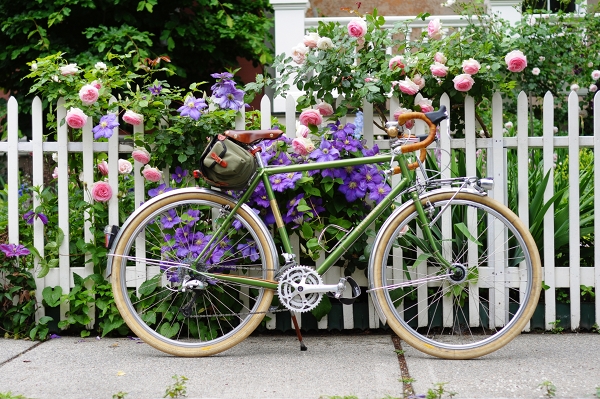
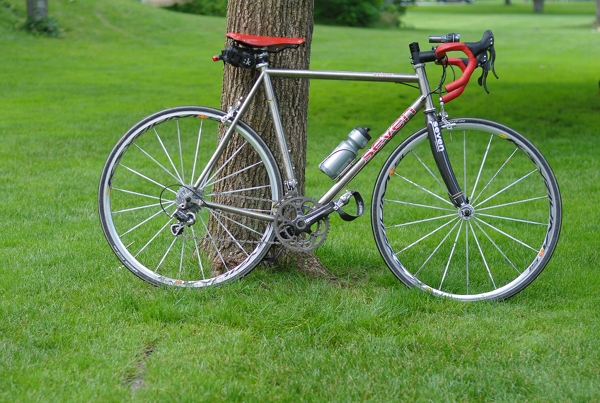
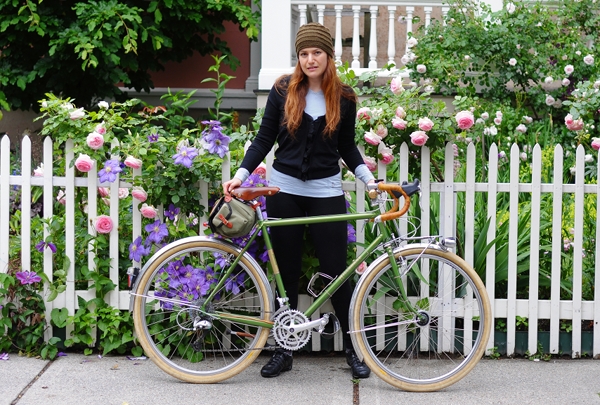
File this under "duh" if you will, but I need to acknowledge this out of fairness to Rivendell, and as a means of providing information to others wondering just how much of an effect one's positioning on a bike can have on pedaling effort and speed. Earlier I described being considerably faster, particularly uphill, on the Seven bicycle I have on loan in comparison to my Rivendell Sam Hillborne. It was widely agreed that there were many factors involved in this difference - from frame geometry, to weight, to positioning. For some time now I'd been considering making changes to my Rivendell, and finally it's been done - thus somewhat leveling the playing field between the two bikes, with interesting results.

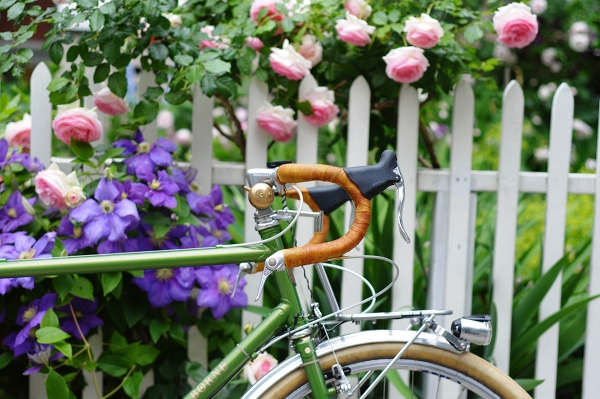
You may spot a number of other alterations in these pictures, but for now I will talk just about the difference in positioning. Namely, the bike now has a longer stem (8 cm, instead of 6 cm as previously). The handlebars have been positioned slightly lower as well.

Rivendell, Less Setback
We've also reduced the amount of setback on the saddle by about 2 cm (not just by moving the saddle forward, but by replacing the seatpost). The overall effect is that my lean has increased by a small amount, my weight on the bike has shifted forward, and my hips are move directly above the cranks.

It's important to stress that I would not have found this position comfortable a year ago, so making these changes is not so much "admitting a mistake," as altering the bicycle's set-up to reflect my changing skill level and preferences. I very much find this position comfortable now - comfortable and fast.

Altered Rivendell
We rode to Lexington, MA to try some hill intervals. I did not attach a saddlebag, so that I could get a sense of how the bike itself performs. And it performed well - albeit differently from the Seven.

Here is my amateur description of what happens on the two bikes when I cycle uphill: The Seven allows me to very easily "attack" a hill - to cycle up it at a fairly high speed, until I run out of steam toward the end and am forced to slow down. In comparison, the Rivendell does not like to "attack" and forces me to slow down earlier. In its previous state, this slowing down happened almost immediately and drastically. Now it happens half way up, and the speed drop is considerably smaller. Cycling on flats, the new positioning makes the Rivendell faster to accelerate than previously. Not as fast as a racing bike of course, but I no longer feel as if I am sitting "behind the bike" unable use my weight efficiently.

Once I attach bags, that will no doubt slow it down some. But I have a strong feeling that the change in performance is due to the forward placement of my weight more than anything else - when I ride the bike now it feels inherently different - more responsive and more efficient. I am not trying to convert the Rivendell to a Seven and I am not considering taking it on paceline rides. I want to keep the wide tires, the fenders, the rack, the bags, the lighting - there is no compromise possible on that end, as these features are extremely useful to me. But the Seven's positioning (and my enjoyment of that positioning) has most definitely affected my expectations in terms of performance, and I don't think I can go back to short stems and seatposts with generous setback. Not that there is any reason I should - It's all about what you are comfortable with at any given point in time.

Tuesday, 5 July 2011

Bikes, Trains, Sailboats

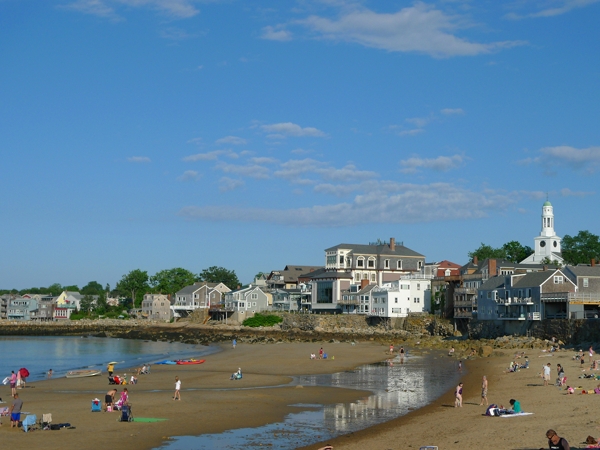
T-Warf, Rockport MA
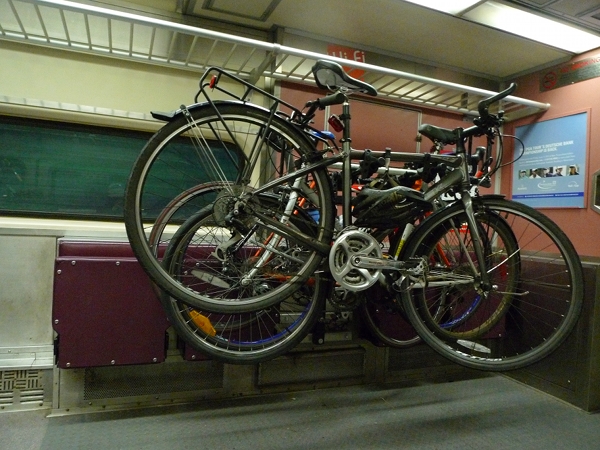
After months of deliberation and procrastination, we've finally done it: Traveled by train with our bikes. For a while now we have wanted to cycle around Cape Ann, which is a beautiful area about 40 miles North of Boston - accessible by the MBTA Commuter Rail via the Rockport line. A number of people we know have taken this trip with their bikes, so it seemed doable. Also, I was delighted to spot the following notice on the MBTA website: "Commuter Rail re-introduces The Bike Coach on the Rockport line for the summer season." Bike coach! No other information was provided, so I did some research. Turns out they have commuter trains with special cars dedicated entirely to bikes - with bike racks as far as the eye can see, like this. But I could not find any information regarding its schedule, and it seemed that only some weekend trains were Bike Coach trains. A call to the MBTA was fruitless, so we decided to just show up and hope for the best.

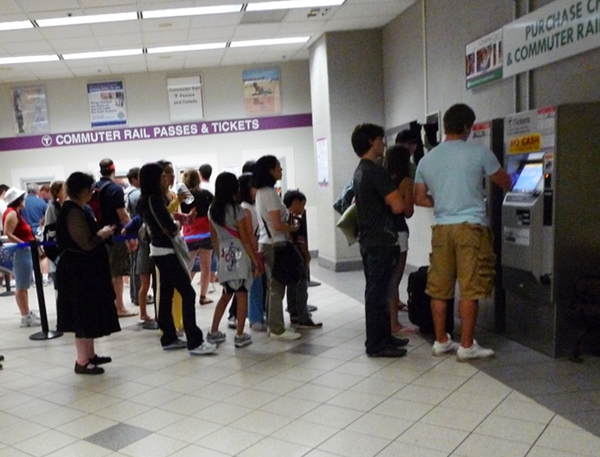
The commuter train to Cape Ann leaves from North Station, a 3.25 mile bike ride from our house through some of the busiest parts of Boston. I don't like cycling through the city on a roadbike, but on a Saturday morning the traffic wasn't bad. We arrived early, which was good as there was a line at the ticket machines. There were plenty of other people with bicycles. When our train arrived, the conductor came out and announced that all those with bikes must proceed to the first car of the train. Only those with bikes were allowed in that car. Only those without bikes were allowed in the other cars. The segregation gave us hope that this was the fabled Bike Coach, and we happily headed for the front car along with the procession of other cyclists. 

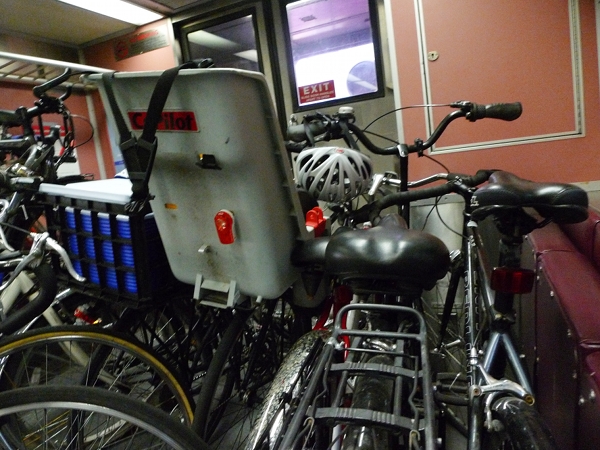
What happened next was rather stunning. The car we were ushered into had no accommodations for bikes what so ever - just a small corner of space at one end where a couple of handicapped seats had been removed. This was definitely not the Bike Coach. Nonetheless, everybody proceeded to drag their bikes on the train - more and more of them, until not only this corner, but the entire aisle was filled with bikes. When even that space ran out, new passengers began to pile their bikes on top of other bikes. Loud clunking noises filled the train as tubes smashed against derailleurs. 

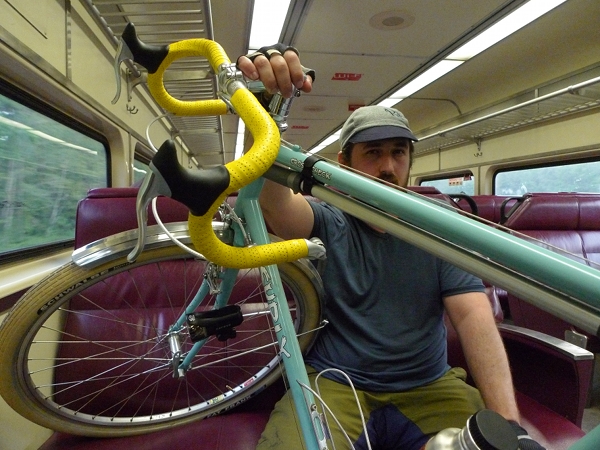
Not wanting our bikes damaged in the velo moshpit that ensued, we found a seat near the exit and sort of held our bikes on our laps the entire time. As you might imagine, it was uncomfortable to sit that way for an hour. But the alternative was to accept that a dozen 50lb mountain bikes would be thrown on top of our bicycles - which was not a viable option. So we tried to have a sense of humour about the whole thing and looked forward to reaching our destination while seriously discussing the possibility of Bromptons in the future. 

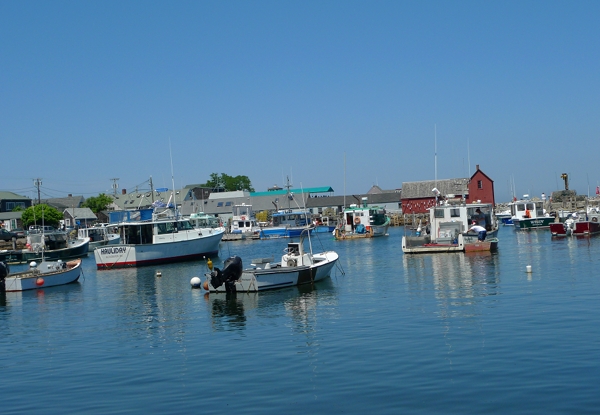
But no sooner had we reached Rockport than the train trauma was forgotten, as we were greeted with perfect weather and glorious coastal views. 

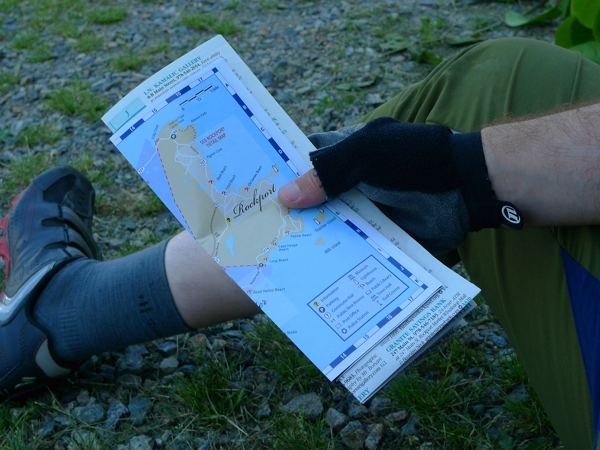
The Cape Ann peninsula consists of Rockport, Annisquam Village and Gloucester - each of them with beautiful scenery. Severed from the mainland by the winding Annisquam River, water views are everywhere. This was our first time in the area and we decided to do an exploratory loop along the coastline instead of a long-distance trip. The Cape Ann loop is about 20 miles, with mild but constant rolling hills, alternating between open water views and tree lined country roads. Especially considering the 4th of July weekend, the area was not crowded. Drivers were courteous everywhere except for the traffic circle in Gloucester, but even that was not too bad. Roads were good on the eastern side of the cape, but terrible on the western side. Navigation was intuitive - just follow the coastline! 

My Rivendell is in the midst of a small (but exciting) make-over, so I took the loaner Seven on this trip. Overall it was pretty good, though a burlier bike might have been a better choice on the pothole-ridden roads. We also ventured off road a bit, which was "interesting" on 23mm racing tires!

Cape Ann is even quieter and less commercially developed than we expected, a pleasant surprise. Lots of parks, meadows and nature reserves. Not too many parking lots. And "motel sprawl" is virtually non-existant - at least compared to places like Cape Cod, the NH Seacoast, and much of coastal Maine. 

Also, there are apparently sailboat races happening in Rockport - wonderful!

All in all, we loved the area and are now considering staying there for longer, instead of venturing further from home on vacation later this summer. After all - just load up our bikes on the commuter rail, it's so easy! Of course we'd forgotten about our train experience earlier that day. Or at least, we thought, there would surely not be as many bikes on the return trip. Or maybe we would finally get the mythical Bike Coach?

Nope, no such luck. On the return trip, passengers were once again segregated into those with bikes and those without, and this time the "bike car" had a car rack attached in the handicapped seating area. It accommodated 4-5 bikes, tightly squeezed, and was filled as soon as the train began to board.

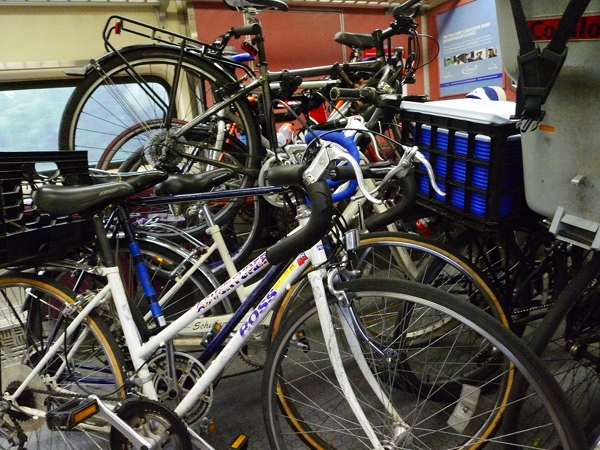
Minutes later, that pathetic little bike rack was surrounded by dozens of other bikes, stacked and thrown against one another haphazardly. 

Exits were blocked, aisles were blocked - no one seemed to care. When passengers with bikes needed to get on or off, they would simply throw the other bikes out of the way and the whole thing was like one huge pile of scrap metal. So we held our bikes on our laps again - hugging them ever closer to our bodies as other passengers kept trying to pile their bikes on top of ours (yes, even while we were holding our bikes on our laps!). It was a madhouse and probably violated all sorts of safety regulations. The MBTA clearly needs to have these alleged Bike Coach cars run with more frequency and on a predictable schedule. As we now understand it, the schedule is random and there is no way to time your trip to ensure that you will get a Bike Coach. Sounds improbable, but that's how it is!

Late in the evening, we rode home from the station along mostly empty city streets, recuperating from the train but also satiated from a day of exploring such a beautiful new place by bicycle. We only cycled 30 miles over all, and the point of the trip was mainly to hang out and get to know the area. Next time we will plan for a longer route. The North Shore is a great starting point for long distance touring: While there is no pleasant bicycle route North out of Boston, from Cape Ann we could just continue to cycle along the coast to Maine. Definitely something to consider, despite the less than ideal commuter rail experience.

What is it like to travel on a train with a bike where you live, and do you do it often?

Tuesday, 28 June 2011

The Clipless Ambush: a Tale of Failure

Well, my first encounter with clipless pedals occurred sooner than I anticipated. Last week the Co-Habitant decided to update his pedals, and the new set arrived in the mail today... which meant that he could gift me his old ones. I thought that surely this gifting would take place some time in the future - a distant, abstract future. But no. Cheerfully he attached them to one of our vintage roadbikes right then and there, so that I could give them a try. Don't get me wrong, I myself had expressed interest in this. But... I don't know, I just didn't expect it to happen immediately!

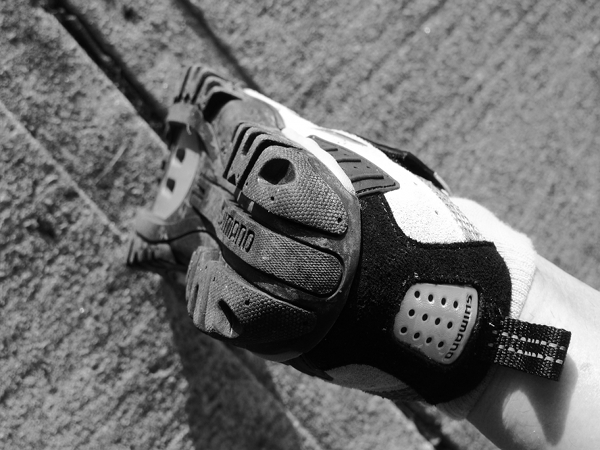
I already owned a pair of compatible shoes, having bought them on clearance last summer "just in case." With apprehension I watched him attach the cleats to the soles, trying to gauge the correct position. I then put them on and dragged the bike over to the kitchen sink, so that I could hold on to the edge with one hand as I tried to figure out how the contraptions worked.

I expected that clipping in would be relatively easy, but clipping out difficult. It was the opposite. At first I could not to clip in. I tried and tried, but my foot stayed on top of the pedal and the mechanism would not engage no matter how hard I pressed. I struggled to figure out what I was doing wrong, but the explanation turned out to be simple: I am a weakling. We had to loosen the tension almost to the max for my foot to engage the mechanism. Even after that, I still had trouble pressing down with enough force and in the exact position necessary for the cleat to catch. Clipping out, on the other hand, was intuitive: the sideways twist of the foot is exactly the same motion required to get out of Power Grips, so I found it natural. Transitioning from the kitchen sink to the trainer, I practiced for some time, clipping in and out successfully. I then decided it was time to go outside. I felt pretty confident at this point. Nothing to this. 

It was around 10 pm and the small side street behind our house was well lit and empty of cars. Confidently, I carried the bike outdoors, swung my leg over the top tube, and clipped in my right foot. Now all I had to do was push off, coast for a bit, then put my left foot back down on the ground. That would be such an easy first step. No different from Power Grips. Just need to do it. Now. Go! But... it was not to be.  Like some malfunctioning marionette, I kept clipping and unclipping my right foot, trying to mentally force myself to push off, but it wasn't working; nothing was happening. The amused Co-Habitant offered to stand at the end of the street and "catch me" if I found myself unable to unclip when I got there. But imagining that just made it worse. It began to feel as if I'd forgotten how to ride a bike entirely. 

There is no redeeming ending to this story. After a good ten minutes I gave up and went back inside, my head hung low in shame. Obviously I am just not ready.

Aside from the tale of failure, I have some observations about the shoe and pedal set-up. I can't find the model name of the shoes, but in retrospect getting clipless shoes with laces was silly. Being stiff and unyielding, they are difficult to put on and tighten, and it's a pain to tuck the laces under the velcro. I am also not sure these pedals are right for me. They are Shimano SPD 520s: mountain bike style, double sided and with a very small surface area. I know that many love this type of pedal, but to me it felt like not enough of my foot was connected. Pedaling on the trainer, I had the sensation that there was too much pressure on the spot where the cleat meets the pedal and that a larger contact area would have been better. Maybe these particular shoes are not stiff enough, or maybe I would do better with a different style of pedals. There seems to be a consensus that the mountain bike clipless system is easier than the road system, but I wonder whether I might prefer the latter. Unfortunately, there is no way to try these things out. 
Navigating the world of clipless shoes and pedals is complicated, and at the moment it seems best to postpone it... at least until I am brave enough to use the ones I have beyond the confines of my kitchen!  

Wednesday, 22 June 2011

The Morning After: Post-Sport Transport

Today is a day like any other. I unlocked my bike from our outdoor storage area, clipped my pannier onto its rear rack and took off for the day, wearing my regular clothing. If I get home after dark, I will give my dynamo bottle a little push and the lights will come on - sustained by my pedaling. I cycle carefully in traffic. I sit upright. Drivers and pedestrians see my old-fashioned loop frame bike and they often wave to me and smile. I have been doing this more or less every day for over two years. As a mode of transportation it is perfect for me; I have truly found something that works. And I enjoy helping others who feel that it could work for them.

But cycling in traffic this morning, I am also remembering what happened last night - and it's like a fuzzy memory of a drunken party in its sheer unreal-ness. I went on another paceline ride, starting off in a faster group this time. Five miles in I dropped my chain accelerating uphill, which was mortifying and had never happened to me before. But disaster was averted ("Chain off!! Slowing!"), the chain was soon back on, and we (the woman who stayed behind to help and I) caught up with the group in no time. The chase was a nice warm-up. Toward the middle of the ride, we ended up splitting in two again, with myself and a couple of others in the front. We received minimal instruction in this slightly more advanced group, and I took frequent turns rotating. I was on a high from the sheer excitement of it, not even feeling my legs - only the speed. As the end of the ride neared, the leader asked who wanted to go on an extra climb instead of straight back, and I was among those who came along. We were allowed to pass each other uphill, and I did - passing the others, then waiting at the bottom of the hill for a good few minutes. Next time, I am told I can join the next group up. There was also discussion of joining the team. Then I cycled home for 10 miles, elated but not particularly tired. Even as I write this, it sounds like I am making it all up. My mind is swirling.

Riding my bike for transportation, I feel at ease and familiar with the city where I used to resent living just a couple of years ago. Everything seems friendlier now, more accessible, more connected to my life. I have a personal map of the city in my mind, where every area includes the sensory experience of riding my bike there. I continue to discover new neighborhoods that surprise me, feeling like an explorer every time I need to venture somewhere new. It's wonderful, and I don't write about it daily only because it has become so incorporated into my everyday routine as to become mundane.

I wonder whether I will ever experience this sense of familiarity and belonging with cycling as a sport. I feel wildly different from the other women doing the paceline rides, who seem so comfortable with the very notion of it all.  They've been running, going to the gym and playing other sports all of their lives, while I've stayed as far away from such activities as possible. And it's not just a matter of being intimidated. The non-athletic have prejudices against the athletic, whether they want to admit it or not. I grew up with perceptions of athletes as shallow, aggressive, cliquish and bullying - nothing us artsy kids wanted to be a part of. It's hard to get away from that mentality, even as an adult, and it's hard to get comfortable with the idea of being something I am not. Hearing things like "put the hammer down, girl!" followed by appreciative cheering, makes me feel conspicuously out of place.

Cycling to the training ride in my shorts, jersey, gloves, styrofoam bonnet and sunglasses yesterday, I got a "Hey, slow down!!" shouted at me by a woman strolling on the wrong side of the bike path, accompanied by a look of pure hatred. I glanced at my computer and confirmed that I was in fact going very slowly. But she saw me as fast, aggressive, and dangerous nonetheless. Would this same woman have waved to me and smiled had I been riding my loop frame bike wearing a dress?

Since I began writing about paceline rides, some readers have told me they feel I am sending "the wrong message" by getting involved in roadcycling and publicising this involvement: My "turning into a roadie" only confirms the stereotype of cycling as an extreme sport. At the same time, the supportive emails I've gotten from the pro-roadcycling camp border on pressure - from suggestions for which local team to join, to being told that I am in a unique position to advance the cause of getting more women into racing. For the most part, I am just confused by it all. I admit that I am now addicted to the paceline rides, and that joining a local cycling team is appealing. At the same time, I am socially uncomfortable both within a group of roadies, and also with being perceived as one. Call it a mild cycling-identity crisis.

I cannot take seriously the idea that to take part in paceline rides is to "betray" transportation cycling. I see the two as completely independent activities that can be pursued in parallel. Am I being unrealistic? Today I am cycling for transport while daydreaming of sport, and it seems completely natural.

Tuesday, 21 June 2011

Back and Forth: Lessons in Positioning

Last week I rode my Rivendell Sam Hillborne for the first time in three weeks after riding exclusively the loaner Seven on a close to daily basis. It's hard to believe that the body can adapt to one position so quickly as to find other positions unnatural. I confidently got on my bike, expecting that old familiar feeling of riding it to welcome me back. But I was in for a surprise. The ride was as comfortable as I remembered, but everything felt off. It took me a while to understand what was wrong. Initially it was just a vague sense of not feeling as connected to the road and as much in control of the bike, which was disconcerting. As I kept cycling, I became aware that it was really two specific things: I felt that I was seated too far back, and that I wasn't out far enough over the front wheel. I kept wanting to shove my weight forward, and it was frustrating to feel almost as if I were sitting "behind" the bike. 

Looking at the way the two bicycles are set up, the difference makes sense. On the Seven, the saddle sits further forward and the handlebars are further out. I was aware of this difference before, but assumed that I would find the Seven's set-up aggressive and uncomfortable, while the Rivendell's set-up a welcome relief. Instead the Seven's set-up now feels "right" and anything deviating from it feels "wrong" - as if I don't have sufficient control of the bike. That feeling is hard to shake. I think my Rivendell needs a little make-over. 

While moving the saddle forward is easy enough, changing the handlebar set-up will be messy, because I will have to replace the fairly short (6cm) stem with a longer one. When I fist began trying to ride with drop bars, I found it extremely difficult and a short stem was recommended to make the transition easier. I cannot say that it was a poor recommendation, because it worked. I rode with this set-up for a year, gradually becoming more comfortable with the whole idea of a roadbike, and feeling increasingly natural in a forward-leaning position. Some would look at my bikes and point out that my stems are too short, and I was perfectly aware that by most standards they are. But these things are highly personal, and last year I was concerned not so much with speed and agility, as with just being able to ride the bike. The way a bike balanced with a shorter stem felt better to me at the time. For what it's worth, I see many roadbikes from the 1970s-80s that were ridden by women set up with short stems. My previously owned vintage Trek had an even shorter stem than this bike, and that was the original owner's doing.

Going back and forth between the Seven and the Rivendell has been educational; each has what the other lacks. It is fairly clear to me that I "need" a lightweight, purely-roadish roadbike like the Seven and that I also "need" a wide-tired, befendered, dynamo-hub, luggage-bearing long distance bike like the Rivendell. I would not want to turn one into the other, or to combine them into something in-between. If I could make changes to the Seven, it would be to magically decrease its size. If I could make changes to the Rivendell, it would be to alter its positioning and to make it lighter. The former we will be doing shortly. The latter is not really possible without getting rid of the very things that make this bike practical. But I am very curious now whether it is the positioning, more than anything else that accounts for the difference in speed between the two bicycles. I am also wondering what the "ideal" stem length for this bike would be. The top tube is unusually long, so it would have to be 8-9cm tops. It's frustrating that experimenting with stems is not easy, but I will report the results of my trial-and-error fumblings. 

Friday, 10 June 2011

Understanding Rest and Recovery

For the past month I've been cycling about 120 miles per week, not counting transportation. And as someone who is completely new to the concept of "training" (i.e. cycling with the goal to become faster, better uphill, and so on) I've been struggling with how to structure my rides. Last year the very notion of structure would have seemed completely ridiculous: I would simply go off on my bike whenever I had the time. But last year I never cycled the way I do now, never exerted myself to such an extent repeatedly. Now everything is different, and I feel completely lost in this new territory.

One thing I've realised, is that if I do strenuous rides for more than two days in a row, on the third day my performance starts to get worse rather than better. Even if I don't think that I feel tired, it's as if my legs stop working properly. If you're an athlete, you are probably thinking "well, duh!" but to me this was a novel discovery. The idea of needing to rest and recover in order to improve did not have meaning until I physically experienced it.

What I am trying to figure out now is, what exactly does resting and recovering entail? Some advise that on days off, you absolutely must do "recovery rides" - 15-20 mile rides at an easy pace on fairly flat terrain - and that not doing them will result in stiff muscles and make it even more difficult to ride the next day. Others advise that on days off, you need to stay off the bicycle completely and just basically lounge around and eat so that your system can fully recover. Unless I am misinterpreting (which is entirely possible), these two points of view seem at odds with one another. So which is applicable under which circumstances?

Having tried both methods, I am still not sure which works better. I am also not sure whether transportation cycling (on an upright bike) is considered a type of recovery ride, or whether it's considered not cycling at all. Given that it activates a different set of muscles I suspect the latter, but I could be wrong. None of this stuff is intuitive for me, which makes it both frustrating and fascinating.

Thursday, 9 June 2011

Paceline Ride, Take 2... or How I Psyched Myself Out, Then Had Fun After All

After two weeks of cancellations due to inclement weather and a week skipped due to injury, I finally did my second paceline ride. Because so much time passed since the previous one, the whole thing had gotten completely blown out of proportion in my mind, and I was even more nervous than before. I was now convinced that it wasn't being on a touring bike that made the ride strenuous for me last time - it was just me, being hopelessly out of my league. Was I prepared to face the embarrassment of arriving on my 110% appropriate loaner Seven just to have the same experience as before?

But moreover, as time passed I began to question whether pacelines were really a good idea for "someone like me." Since my write-up about the first ride, I've been warned by readers and acquaintances alike about how unsafe pacelines are, how ruthless the members of this particular cycling team supposedly are, and how there was no need to go to extremes - why not join a nice social group ride instead? I've even received links to videos of paceline crashes, just to make sure it sunk in what sort of danger I was exposing myself to. Though I took it all with a grain of salt, I would be lying if I said it didn't get to me. When I arrived to the meeting point for the ride, I was so nervous that I had to practically shove myself toward the group of women sitting on the grass. I can't believe that I managed to psych myself out to that extent. I did the ride, and it was great.

To clear up a misinterpretation of my previous post on the part of some readers, I never meant to suggest that the atmosphere of the last paceline ride was anything but welcoming. The leaders told me I had the wrong bike not because they were being unfriendly, but because I did have the wrong bike for that type of ride. This was an introduction to a sport and I basically showed up with inappropriate equipment. This handicapped me in comparison to the other participants, and they were simply letting me know that. My description of doing the previous ride on a touring bike was meant to show the humour of the whole situation, and not to criticise the nature of the ride or its organisers - for whose guidance and time I am genuinely grateful.

This time around, the difference in speed was so obvious that it is hardly worth discussing. Yes, a Seven Axiom set up for racing is faster than a Rivendell Sam Hillborne set up for touring, and to frame this as some profound realisation would be absurd. Still, I was tremendously relieved to have real evidence and not just assurances that "the right bike" would make such a difference. The right bike does not have to be a Seven of course. But it needs to be a light, aerodynamically set-up roadbike with closely spaced gearing and modern combination levers. When that's what every single other person in the group has, then that's what you need to have in order to be on equal footing.

Our group was larger this time and by the middle of the ride it was evident that a gap kept forming in the same spot. So we split into two groups and I ended up in the faster one. This was fantastic. I was mostly in the big ring for the rest of the ride, took more turns in the front, and practiced rotating while going full speed downhill. One of the leaders made sure to pull up alongside me and cycle as closely on my left as possible on the descent, having noticed that I am scared of that kind of proximity. With no way of escaping, I thought I'd lose my marbles and crash into a tree out of sheer fear of sensing her elbow 1" away from mine. "Oh my God, you're too close to me!" I pleaded. "No I'm not. Keep going. You need to get used to this." And I guess she had the right idea for how to deal with me: I got used to it.

At this point I am probably horrifying some of you again and making you wonder what on earth attracts me to this type of cycling. Honest answer: I don't know. But something definitely does. I like the speed. I like being in a paceline. I like receiving straightforward feedback about what I am doing wrong. I am relieved to know that my speed and endurance are up to par. My technique needs a lot of work, because I am still somewhat scared of the bike, scared of downhill speeds, and not entirely comfortable with constantly shifting gears. But all of that can be improved if I am willing to practice. The funny thing about human psychology, is that we tend to do what feels good without really knowing why, then construct elaborate rationalisations of our actions after the fact. But right now I'm too tired and confused to rationalise. I don't fully understand why I like the paceline rides. But I know that I want to keep doing them.

Thursday, 2 June 2011

Cycling Partners and Sketchy Rides

When describing my lone bicycle rides over the past two years, I was often told that, all romance of "the lone cyclist" aside,  I won't improve if I don't ride with others. With all my might I resisted this idea. But, big surprise: It's true. Having finally gathered enough courage to start cycling with others, I notice that I tend to ride further, put in more effort, and generally push my limits more when I am egged on accompanied by other cyclists - particularly those who are better than I am. Luckily, finding stronger cyclists to ride with is easy, since by roadie standards I am terrible. But finding stronger cyclists to ride with whom I feel comfortable with and who won't outright laugh at my ineptitude? Not so easy at all.

That's why I was grateful when Jim A. (the owner of this bike) invited me to join him on a ride. Given that Jim is a bicycle mechanic and a life-long cyclist, I knew that I would embarrass myself on this ride despite his description of it as easy-going. But Jim is such a nice guy, that I was okay with that.

I was also looking forward to seeing his Sketchy bicycle.

A-ha!

Sketchy bikes are made by Mike Salvatore, a framebuilder at Seven Cycles. I only had my point-and-shoot camera with me, so no good photos this time. But Susan of Twelfth Bike has lots of beautiful pictures of her pink one here. Jim's bike is brown.

So my loaner Seven and Jim's Sketchy are essentially related and possibly built by the same person. They even have a family resemblance, including the curved stays.

However, the Sketchy is steel, not titanium. Next time I'd love to try this bike.

Despite a minor injury a few days ago, I felt good and was ready for our easy-going ride... which, by the time I got home, ended up being 50 miles. That is the longest single ride I've taken on the Seven so far, and it's safe to say that any remaining anxieties I had about its handling have been alleviated. Apparently, a racing bike with 23mm tires can be comfortable for 50 miles: I have no hand, neck, back, or any other pain what so ever. And apparently it can do 30mph downhill on a criminally pothole-ridden road without anything terrible happening to the fork or wheels. Good to know!

I am also generally more confident on the bike. Last time I was at the Ride Studio Cafe we lowered the handlebars so that they are now a couple of cm below the saddle. Since the frame is too big for me, this was accomplished by placing all the spacers above the stem and flipping the stem over so that it points down. The tall stack of spacers looks funny, but I am glad to have the handlebars in this position.

So, how terrible am I compared to Jim? Unfortunately, it's hard to say! He is so polite that I have no way of knowing to what extent he was taking it easy for my sake. The ride ended up being longer than we planned and more strenuous than I anticipated - which is good! I am starting to understand that I need other people to motivate me, push me, and help me improve as a roadcyclist. 

Ping Blog

Step 1
Blog URL:


Blog Title (optional):


Blog RSS Feed (optional):


I agree with terms of service.

Step 2
Copy the following code and put it on your blog/site to help our blog ping tool track your submission (Need help?):
;

 
Design by Free WordPress Themes | Bloggerized by Lasantha - Premium Blogger Themes | Best Buy Coupons