Showing posts with label transportation options. Show all posts

Friday, 26 August 2011

Side Street or Main Street?

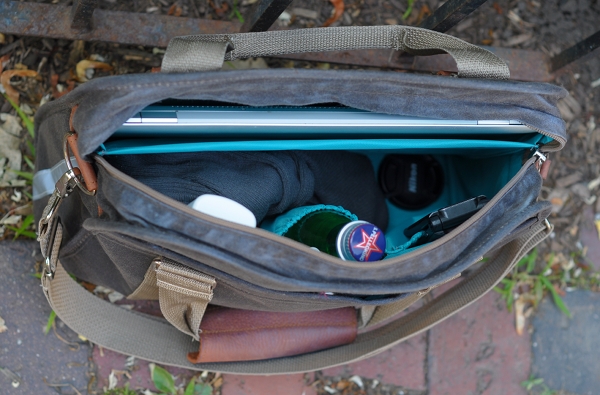
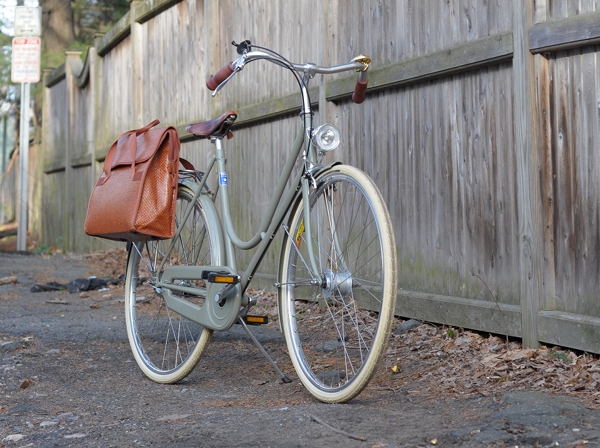
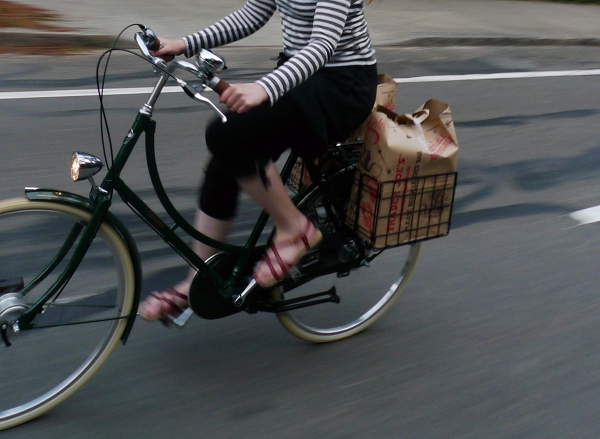
Grocery Shopping with Wald Folding Baskets
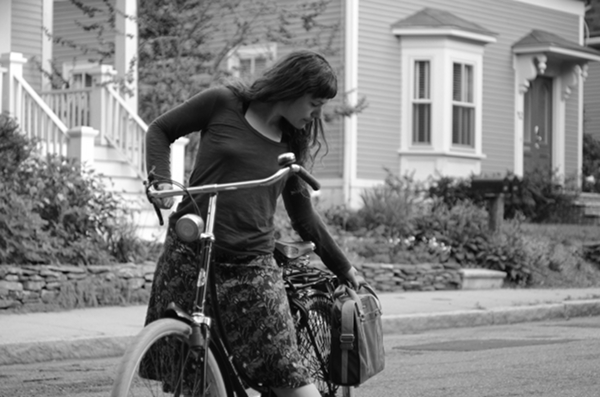
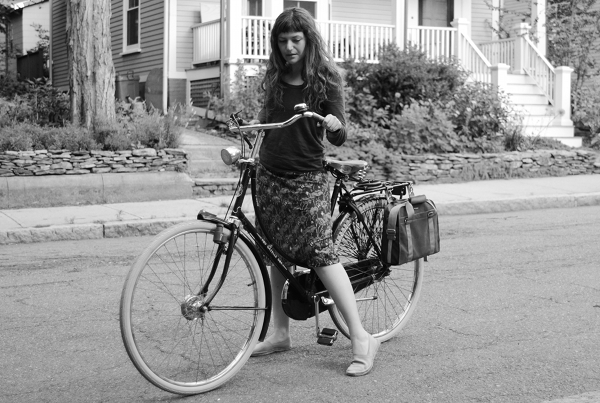
Cycling in greater Boston, I alternate between routes that take me along busy roads and routes that take me through quiet side streets. Each option leaves something to be desired. The busy roads are, well, busy - lots of car traffic, lots of action, lots of chaos. But they do seem to have enough room for everyone, including the processions of cyclists that now travel along them more than ever. The side streets are much quieter and greener, but are often too narrow to fit both a car and a bike side by side - resulting in its own set of challenges. 

I've mentioned before that when I have close calls or memorably negative encounters with cars, it almost always seems to happen on a side street. But the same is definitely not true for everyone, and a recent post on Let's Go Ride a Bike illustrates why many urban cyclists tend to keep away from busy roads. So I keep wondering what it is that, over time, has made me weary of side streets, whereas others see them as a refuge. 

One possibility is that I tend to overcompensate for the danger factor of main streets by being extra-vigilant, extra-focused and extra-careful as a matter of course - expecting the worst from every vehicle out there, and cycling in a way that anticipates that. On the other hand, side-streets lull me into a state of relaxation, because they seem so tranquil and friendly - so when something bad is about happen, I don't see it coming and am less likely to avoid it.

But this factor aside, I also think that drivers are less likely to keep their aggression in check when there are fewer witnesses. On side streets there aren't many people around, and perhaps the drivers with whom I've had confrontations and close calls were well aware of that. A scary thought, to be sure.

What is your take on main streets versus side streets, and what is your preference?

Tuesday, 2 August 2011

Bicycles, Time and Leisure

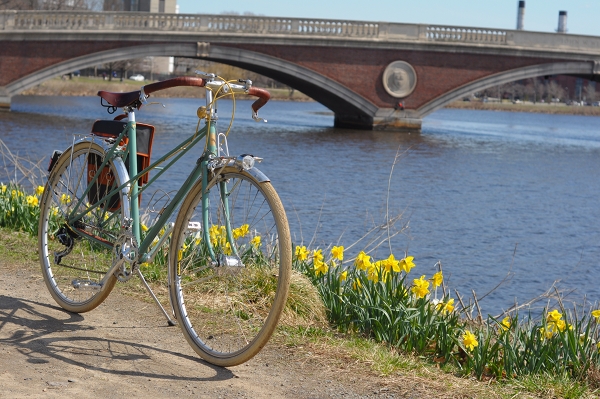
Pilen, Charles River Trail
I was outside the post office, unstrapping a bundle of packages from my bike's rear rack, when a woman walking past with a toddler looked at the bicycle and smiled.

Her: That's a beautiful bicycle!

Me: Thank you.

Her: (Whistfully) It's nice that you have time to ride a bike. Wish I did.

Me: Oh, but I ride a bike to get places, so it actually saves me time.

Her: Yeah, but you know. When you're married and have a kid, you have no time for anything and need a car.

Me: Well, depending on where you live, it can be faster to get places by bike.

Her: Maybe if you're a student, but those days are past me! Love your bike though, take care...

Okay, so I've basically been told - albeit in the friendliest way - that I was either a bum or a woman of leisure if I had the time to travel by bike. It is a sentiment I've heard before. Looking at things objectively, I think that it is difficult for those raised in the US to overcome the association between the bicycle and leisure. It follows then, that if you ride a bike, you must have a lot of spare time. For people who like to project an image of being busy and hardworking, riding a bicycle can compromise that image. That's one aspect of it, I think.

Another aspect, is that of course it can take longer to do things by bike - for instance in the suburbs or in the countryside, where distances are vast and car parking is plentiful. I acknowledge this as a genuine obstacle to transportation cycling. But it is illogical to apply it to contexts where the opposite is true and where the bicycle can indeed function as a time saver - with or without children.

One thing I found particularly curious, is that the woman did not cite being worried about cycling with a child, whereas I didn't have that issue (which would also have been an assumption, but never mind). Instead, she just kept bringing up time and the difference she perceived in our lifestyles.

Our society has a complicated relationship with time and leisure. Both are viewed as commodities; we seek them out and are envious when others have more than we do. At the same time, we willingly give them up and waste them - be it by watching hours of uninteresting television just because it's on, or by organising our lives around stressfully long commutes for a small difference in salary. I am not critical of the way others live their lives and I make no assumptions about their values and priorities. Three years ago, I did not seriously believe that riding a bike to places could save time compared to driving there, but after trying it both ways I now believe it. I wonder to what extent the bicycle-leisure association is an obstacle for those who would otherwise benefit from transportation cycling.

Saturday, 30 July 2011

Fear and Loathing of the City Bus

MBTA Bus in the Night
As a cyclist, I doubt that I am alone in my strong dislike of city buses. They are enormous. They make frequent stops and wide turns. They have sizable blind spots. And their operators - overwhelmed with countless stimuli and the stress of keeping to a schedule - don't always notice cyclists in their path. All in all, it seems reasonable to be wary of these vehicles, and prudent to keep away from them whenever possible.

But as most fears, mine is not based on such rational ideas. What frightens me are things like the "heavy breathing." I will be riding along, when suddenly there is the sound of a most horrific heaving inches behind me, and I realise that a bus is dreadfully, unacceptably near. What exactly is responsible for the sound that buses make when they are braking I do not know, but it sends shivers through my body and makes me want to jump up on the curb in panic. A couple of times the bus stopped and "heaved" so closely behind me, that I could feel the heat of its terrifying dragon breath against my left calf.

My fear of buses can border on paranoia, and sometimes I am convinced that the driver is playing "chicken" with me. I can tell that they see me - they will sometimes look straight at me - yet they seem to intentionally try to squeeze me out in order to make their stop, or make the green light, or make a high-speed left turn as I am attempting to cycle straight through an intersection - figuring I'll stop out of sheer terror. I've been assured by bike messengers that the driver will yield if I don't give into them. But I lack the courage to play that game, and allow them to win every time.

Over the past two years I've overcome most of my fears about cycling in city traffic. Taxi cabs, large trucks - I am more or less okay with them. But the city bus continues to terrify me. Oh enormous, heaving metal beast... Some day, I will learn how to deal with you and my fears will be conquered.

Tuesday, 5 July 2011

Bikes, Trains, Sailboats

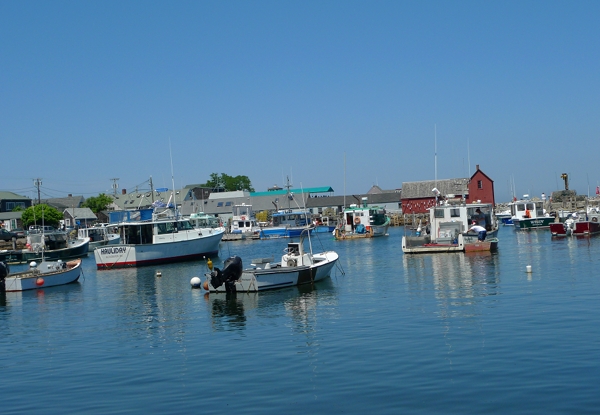
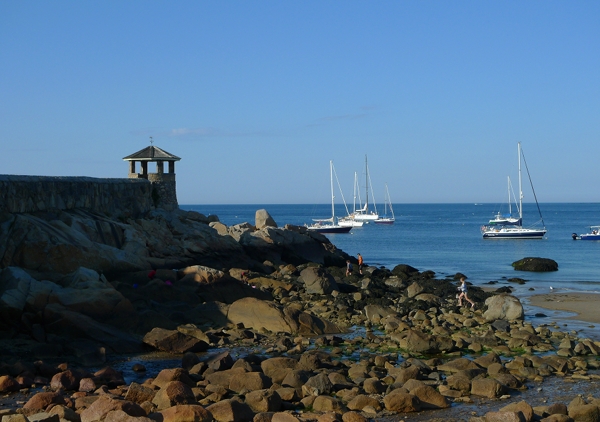
T-Warf, Rockport MA
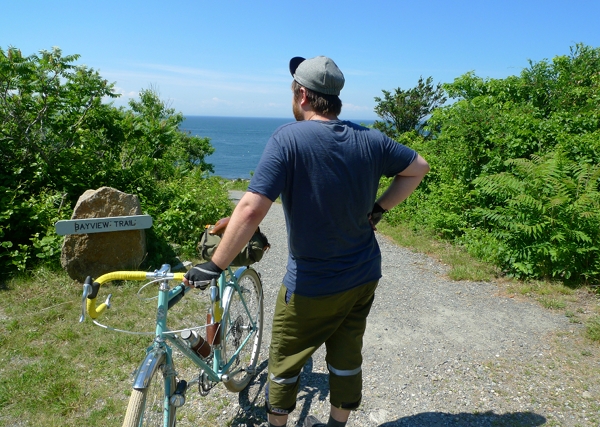
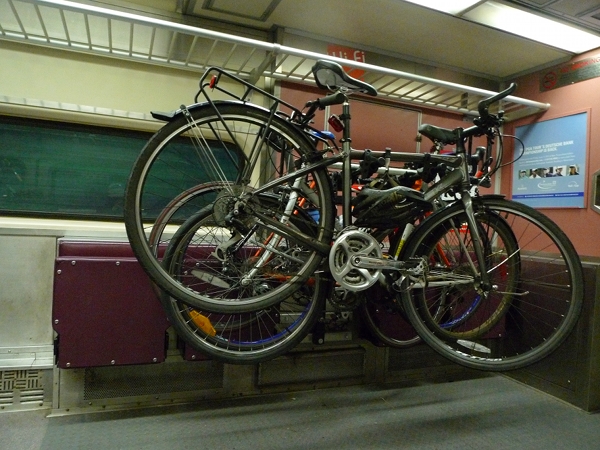
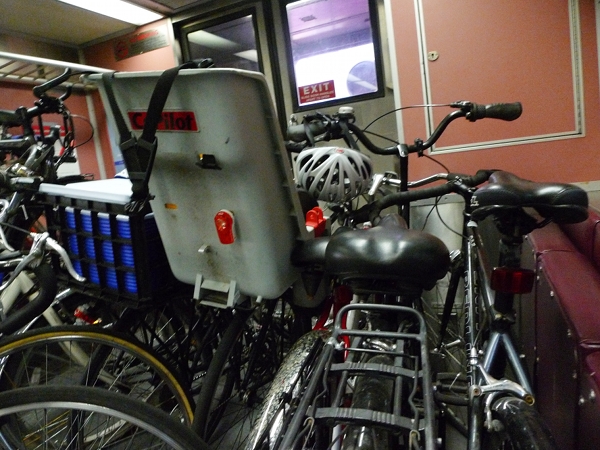
After months of deliberation and procrastination, we've finally done it: Traveled by train with our bikes. For a while now we have wanted to cycle around Cape Ann, which is a beautiful area about 40 miles North of Boston - accessible by the MBTA Commuter Rail via the Rockport line. A number of people we know have taken this trip with their bikes, so it seemed doable. Also, I was delighted to spot the following notice on the MBTA website: "Commuter Rail re-introduces The Bike Coach on the Rockport line for the summer season." Bike coach! No other information was provided, so I did some research. Turns out they have commuter trains with special cars dedicated entirely to bikes - with bike racks as far as the eye can see, like this. But I could not find any information regarding its schedule, and it seemed that only some weekend trains were Bike Coach trains. A call to the MBTA was fruitless, so we decided to just show up and hope for the best.

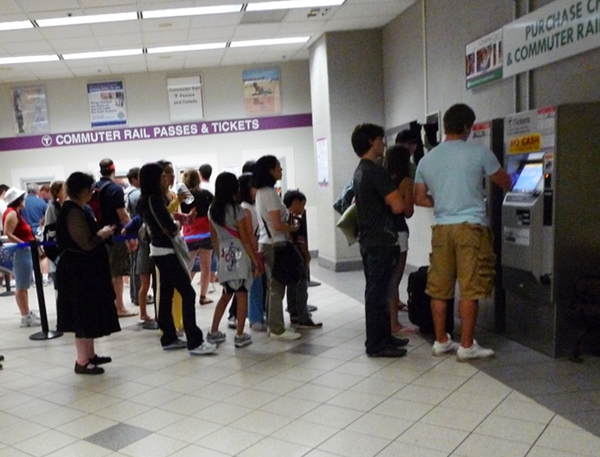
The commuter train to Cape Ann leaves from North Station, a 3.25 mile bike ride from our house through some of the busiest parts of Boston. I don't like cycling through the city on a roadbike, but on a Saturday morning the traffic wasn't bad. We arrived early, which was good as there was a line at the ticket machines. There were plenty of other people with bicycles. When our train arrived, the conductor came out and announced that all those with bikes must proceed to the first car of the train. Only those with bikes were allowed in that car. Only those without bikes were allowed in the other cars. The segregation gave us hope that this was the fabled Bike Coach, and we happily headed for the front car along with the procession of other cyclists. 

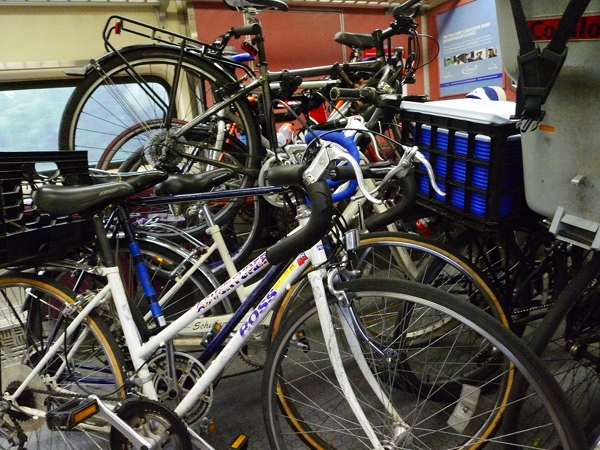
What happened next was rather stunning. The car we were ushered into had no accommodations for bikes what so ever - just a small corner of space at one end where a couple of handicapped seats had been removed. This was definitely not the Bike Coach. Nonetheless, everybody proceeded to drag their bikes on the train - more and more of them, until not only this corner, but the entire aisle was filled with bikes. When even that space ran out, new passengers began to pile their bikes on top of other bikes. Loud clunking noises filled the train as tubes smashed against derailleurs. 

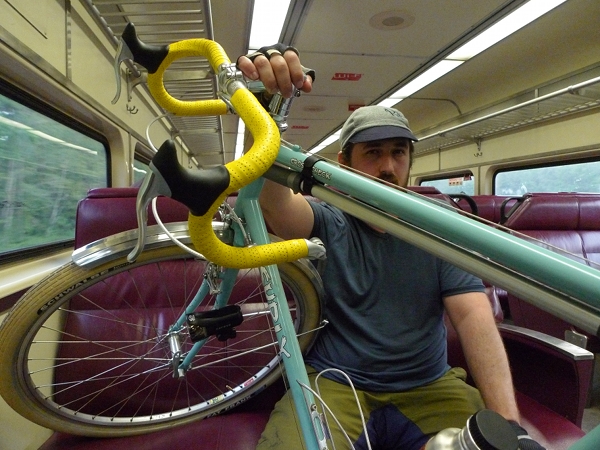
Not wanting our bikes damaged in the velo moshpit that ensued, we found a seat near the exit and sort of held our bikes on our laps the entire time. As you might imagine, it was uncomfortable to sit that way for an hour. But the alternative was to accept that a dozen 50lb mountain bikes would be thrown on top of our bicycles - which was not a viable option. So we tried to have a sense of humour about the whole thing and looked forward to reaching our destination while seriously discussing the possibility of Bromptons in the future. 

But no sooner had we reached Rockport than the train trauma was forgotten, as we were greeted with perfect weather and glorious coastal views. 

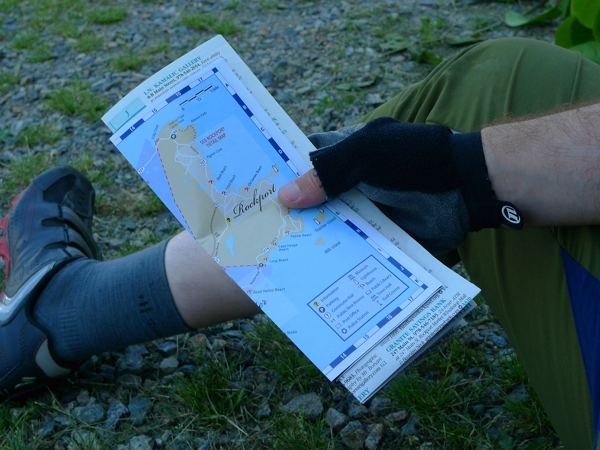
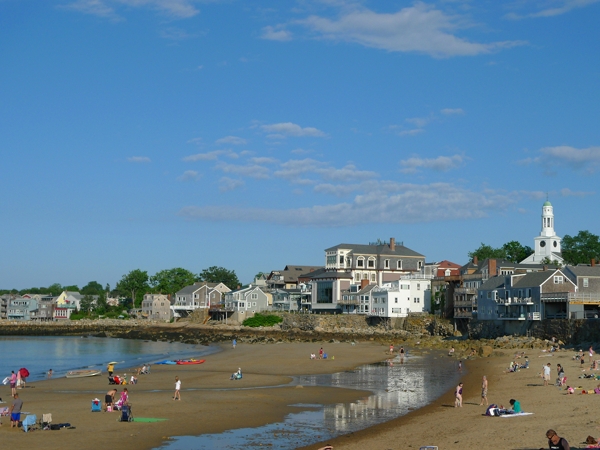
The Cape Ann peninsula consists of Rockport, Annisquam Village and Gloucester - each of them with beautiful scenery. Severed from the mainland by the winding Annisquam River, water views are everywhere. This was our first time in the area and we decided to do an exploratory loop along the coastline instead of a long-distance trip. The Cape Ann loop is about 20 miles, with mild but constant rolling hills, alternating between open water views and tree lined country roads. Especially considering the 4th of July weekend, the area was not crowded. Drivers were courteous everywhere except for the traffic circle in Gloucester, but even that was not too bad. Roads were good on the eastern side of the cape, but terrible on the western side. Navigation was intuitive - just follow the coastline! 

My Rivendell is in the midst of a small (but exciting) make-over, so I took the loaner Seven on this trip. Overall it was pretty good, though a burlier bike might have been a better choice on the pothole-ridden roads. We also ventured off road a bit, which was "interesting" on 23mm racing tires!

Cape Ann is even quieter and less commercially developed than we expected, a pleasant surprise. Lots of parks, meadows and nature reserves. Not too many parking lots. And "motel sprawl" is virtually non-existant - at least compared to places like Cape Cod, the NH Seacoast, and much of coastal Maine. 

Also, there are apparently sailboat races happening in Rockport - wonderful!

All in all, we loved the area and are now considering staying there for longer, instead of venturing further from home on vacation later this summer. After all - just load up our bikes on the commuter rail, it's so easy! Of course we'd forgotten about our train experience earlier that day. Or at least, we thought, there would surely not be as many bikes on the return trip. Or maybe we would finally get the mythical Bike Coach?

Nope, no such luck. On the return trip, passengers were once again segregated into those with bikes and those without, and this time the "bike car" had a car rack attached in the handicapped seating area. It accommodated 4-5 bikes, tightly squeezed, and was filled as soon as the train began to board.

Minutes later, that pathetic little bike rack was surrounded by dozens of other bikes, stacked and thrown against one another haphazardly. 

Exits were blocked, aisles were blocked - no one seemed to care. When passengers with bikes needed to get on or off, they would simply throw the other bikes out of the way and the whole thing was like one huge pile of scrap metal. So we held our bikes on our laps again - hugging them ever closer to our bodies as other passengers kept trying to pile their bikes on top of ours (yes, even while we were holding our bikes on our laps!). It was a madhouse and probably violated all sorts of safety regulations. The MBTA clearly needs to have these alleged Bike Coach cars run with more frequency and on a predictable schedule. As we now understand it, the schedule is random and there is no way to time your trip to ensure that you will get a Bike Coach. Sounds improbable, but that's how it is!

Late in the evening, we rode home from the station along mostly empty city streets, recuperating from the train but also satiated from a day of exploring such a beautiful new place by bicycle. We only cycled 30 miles over all, and the point of the trip was mainly to hang out and get to know the area. Next time we will plan for a longer route. The North Shore is a great starting point for long distance touring: While there is no pleasant bicycle route North out of Boston, from Cape Ann we could just continue to cycle along the coast to Maine. Definitely something to consider, despite the less than ideal commuter rail experience.

What is it like to travel on a train with a bike where you live, and do you do it often?

Wednesday, 29 June 2011

What Does 'Commuting' Mean to You?

Some of us have conventionally structured jobs, where we ride our bikes to the office, stay there for a given period of time, then ride home. Others might move from site to site throughout the day, or work from home, or go to the office and back several times. I've had lots of conversations with friends in both job categories, and it's clear that there are benefits and drawbacks to each: With a conventional schedule, you get a sense of structure, and once you leave the office you are done. On the down side, sitting in the same building for an entire day can feel constricting. With a non-conventional schedule, there is a greater sense of freedom and you can organise your time to suit your needs. On the down side, it can feel as if the work never really ends and that you are chained to your laptop or phone 24/7.

Most of my jobs have fallen somewhere in the second, unstructured category. Even while working in a university setting - probably my most "normal" employment - it was always a back and forth between different locations on and off campus. Now that I have transitioned entirely to freelance work, it is up to me how to organise my time - which is nice in theory, but can work against me if I am not careful.

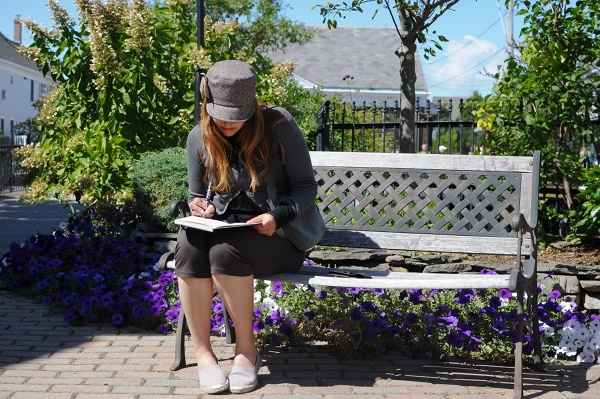
Finding it nearly impossible to work from home, I like to leave the house for the day and transition between one setting and another - coffee shop, studio, supply store, meeting, park bench. My laptop perpetually in tow, the nomadism is my means of staying both sane and focused.

Cycling back and forth between these locations and home is my version of commuting - though it is disheartening when those with structured jobs say things like "Oh, but then you don't have to commute, do you." I know what they mean to say: There is no pressure for me to arrive somewhere at exactly 9am every day. While this is mostly true, I do have meetings where I am expected to be on time. I also make more trips per day than they do and don't really have a concept of week-ends. But it is not a competition and I think that whatever one considers to be "commuting" is valid for that person. The term is a strange one for non-English speakers anyhow, as they struggle to understand why a special word is needed for traveling to and from work!

For those who do commute in a nomadic fashion, and do so by bicycle, there are some helpful posts about establishing a mobile office (via Girls and Bicycles) and an outdoor office (via Simply Bike). And for those who work 9-5 jobs, there are some great posts by Dottie from Let's Go Ride a Bike on how to take a refreshing joyride on your lunch hour. Cycling can function both to infuse a conventional job with a sense of freedom and to bring structure into a more chaotic work situation. What does commuting mean to you, and how (if at all) has it been affected by cycling?

Wednesday, 22 June 2011

The Morning After: Post-Sport Transport

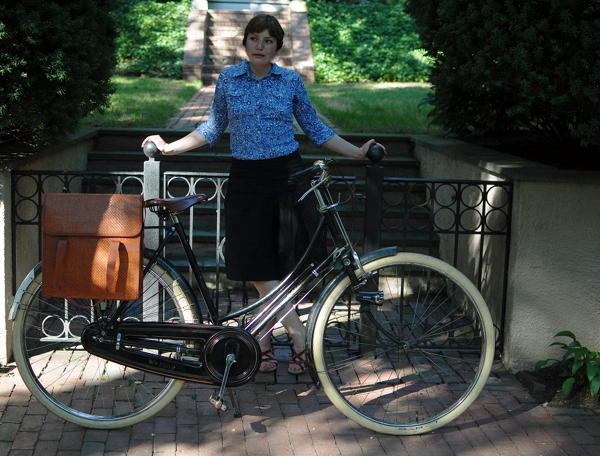
Today is a day like any other. I unlocked my bike from our outdoor storage area, clipped my pannier onto its rear rack and took off for the day, wearing my regular clothing. If I get home after dark, I will give my dynamo bottle a little push and the lights will come on - sustained by my pedaling. I cycle carefully in traffic. I sit upright. Drivers and pedestrians see my old-fashioned loop frame bike and they often wave to me and smile. I have been doing this more or less every day for over two years. As a mode of transportation it is perfect for me; I have truly found something that works. And I enjoy helping others who feel that it could work for them.

But cycling in traffic this morning, I am also remembering what happened last night - and it's like a fuzzy memory of a drunken party in its sheer unreal-ness. I went on another paceline ride, starting off in a faster group this time. Five miles in I dropped my chain accelerating uphill, which was mortifying and had never happened to me before. But disaster was averted ("Chain off!! Slowing!"), the chain was soon back on, and we (the woman who stayed behind to help and I) caught up with the group in no time. The chase was a nice warm-up. Toward the middle of the ride, we ended up splitting in two again, with myself and a couple of others in the front. We received minimal instruction in this slightly more advanced group, and I took frequent turns rotating. I was on a high from the sheer excitement of it, not even feeling my legs - only the speed. As the end of the ride neared, the leader asked who wanted to go on an extra climb instead of straight back, and I was among those who came along. We were allowed to pass each other uphill, and I did - passing the others, then waiting at the bottom of the hill for a good few minutes. Next time, I am told I can join the next group up. There was also discussion of joining the team. Then I cycled home for 10 miles, elated but not particularly tired. Even as I write this, it sounds like I am making it all up. My mind is swirling.

Riding my bike for transportation, I feel at ease and familiar with the city where I used to resent living just a couple of years ago. Everything seems friendlier now, more accessible, more connected to my life. I have a personal map of the city in my mind, where every area includes the sensory experience of riding my bike there. I continue to discover new neighborhoods that surprise me, feeling like an explorer every time I need to venture somewhere new. It's wonderful, and I don't write about it daily only because it has become so incorporated into my everyday routine as to become mundane.

I wonder whether I will ever experience this sense of familiarity and belonging with cycling as a sport. I feel wildly different from the other women doing the paceline rides, who seem so comfortable with the very notion of it all.  They've been running, going to the gym and playing other sports all of their lives, while I've stayed as far away from such activities as possible. And it's not just a matter of being intimidated. The non-athletic have prejudices against the athletic, whether they want to admit it or not. I grew up with perceptions of athletes as shallow, aggressive, cliquish and bullying - nothing us artsy kids wanted to be a part of. It's hard to get away from that mentality, even as an adult, and it's hard to get comfortable with the idea of being something I am not. Hearing things like "put the hammer down, girl!" followed by appreciative cheering, makes me feel conspicuously out of place.

Cycling to the training ride in my shorts, jersey, gloves, styrofoam bonnet and sunglasses yesterday, I got a "Hey, slow down!!" shouted at me by a woman strolling on the wrong side of the bike path, accompanied by a look of pure hatred. I glanced at my computer and confirmed that I was in fact going very slowly. But she saw me as fast, aggressive, and dangerous nonetheless. Would this same woman have waved to me and smiled had I been riding my loop frame bike wearing a dress?

Since I began writing about paceline rides, some readers have told me they feel I am sending "the wrong message" by getting involved in roadcycling and publicising this involvement: My "turning into a roadie" only confirms the stereotype of cycling as an extreme sport. At the same time, the supportive emails I've gotten from the pro-roadcycling camp border on pressure - from suggestions for which local team to join, to being told that I am in a unique position to advance the cause of getting more women into racing. For the most part, I am just confused by it all. I admit that I am now addicted to the paceline rides, and that joining a local cycling team is appealing. At the same time, I am socially uncomfortable both within a group of roadies, and also with being perceived as one. Call it a mild cycling-identity crisis.

I cannot take seriously the idea that to take part in paceline rides is to "betray" transportation cycling. I see the two as completely independent activities that can be pursued in parallel. Am I being unrealistic? Today I am cycling for transport while daydreaming of sport, and it seems completely natural.

Wednesday, 4 May 2011

If Not Bike Month, Then What?

A couple of weeks ago I wrote this post explaining why I do not believe that "Bike Month" is effective at making transportation cycling accessible to non-cyclists and beginners. In the discussion that followed, many different opinions were expressed - which I appreciate. In addition, a couple of readers suggested that, since I criticised the approach, perhaps I could follow up with my own ideas. If not bike month, then what alternative would I propose? That was a good point, and I have now prepared my response. This is far from the first time I've considered the issue. But it's one thing to have my head full of ideas, and quite another to express them lucidly. Let me give it a try.

A Support System for Cyclists
If the goal of a city, community, or organisation is to make cycling an accessible form of transportation, I propose a year-round support system permanently in place. This support system could exist in the form of a small department within the local government structure, or in the form of an independently funded non-government organisation. The sole mission of this department or organisation would be to provide a range of services - in the form of literature, materials, counseling, classes and workshops, and more - to persons interested in transportation cycling. It is crucial that the office or organisation providing these services be non-partisan - which includes independence from political groups, environmental organisations, or any other entities with specific agendas to pursue. The goal of this office or organisation would not be to promote cycling, but to support cyclists or those considering cycling - which is a crucial distinction. Trained employees would work with person, families, and groups to determine their level of comfort, their concerns and their goals - responding appropriately and providing them with relevant resources. The existence of this office or organisation would be made known to the public via an online presence, via brochures available at relevant local venus, and via announcements in the local media.

While I have quite detailed and concrete ideas of how this fictional entity would function, outlining all of them would require its own post - or more like a multi-page proposal. But I think you get the gist of what I envision. Having a solid, well-developed support system in the community that any cyclist can rely on is, would in my view, be more effective than a month-long annual event that is dense in activities while it lasts, only to end abruptly. A year-round support system would also send the message to the community that cycling is an accepted and attainable means of transportation.

A "How, Not Why" Approach
It is my belief that the chances of non-cyclists finding the idea of transportation cycling appealing are diminished, rather than improved by the "hard sell" tactics employed by the majority of bicycle activists (and by the very notion of bicycle activism, for that matter). When people try too hard to convince us that something is "good for us" or morally superior, our natural response is to be skeptical, to resist. After all - if it's so wonderful, then why are they trying so hard to persuade us and why isn't everyone already doing it? For this reason, I think it is misguided to "sell" cycling. Moreover, cycling doesn't need to be sold: It is a trend on the rise, particularly in large cities that are centers of popular culture. People everywhere are already enjoying riding their bicycle for transportation, and we need merely to communicate this fact as a given. Instead of telling people why they should cycle, make it an implicit assumption that they already want to do it (of course! doesn't everyone?) and focus on the how. I believe that this approach must underlie any initiative or outreach program designed to encourage new cyclists.

Ideas for a How-To Brochure
One thing discussed with particular zeal in the comments of my post about bike month, was the Bike to Work Week commuter booklet - a transportation cycling guide offered as promotional literature by the organisers of Bike Month. Here I described the ways in which nearly every page of the brochure portrays transportation cycling as a challenging and possibly dangerous athletic activity, which I believe makes the brochure intimidating rather than inviting. In response, I will outline my vision for an alternative brochure.

Title:
"A Guide to Cycling for Transportation"

Introduction:
Start by mentioning that cycling for transportation is becoming increasingly popular, and many people are wondering how to go about starting. This brochure is for them.

How to begin:
Explain how easy it is to commute by bicycle, dispelling myths that athleticism, energy bars, or special cycling clothing are necessary in order to commute to work on a bike.

Choosing a bicycle:
Inform of the existence of comfortable transportation bicycles, and explain which accessories are necessary in order to commute in work clothing. List bicycle shops that specialise in commuter bicycles and perhaps websites that focus on reviewing them.

Road rules:
Using clear and simple language, outline the basic cycling laws in your area, providing link to full version.

Safety:
Be objective and positive. Cite statistics that reveal bicycling to be a relatively safe activity. Stress the necessity of good brakes, proper lighting, and adherence to road rules first and foremost. Explain that opinions on helmets are mixed, and while some choose to wear them, others do not.

Illustrations:
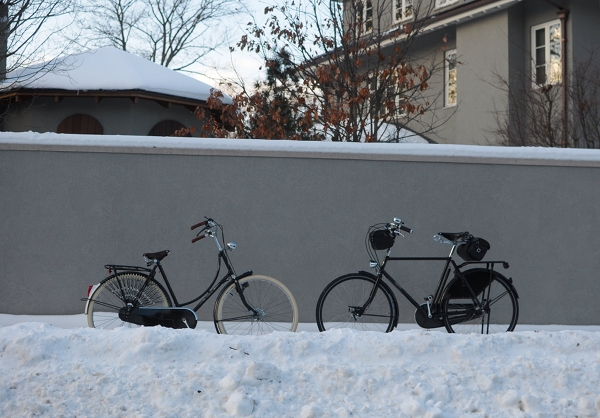
Choose appealing images where persons are shown cycling at a relaxed pace while wearing street clothing and riding transportation bicycles with appropriate accessories. Include signs of normal, everyday activities: parents transporting children, persons in suits cycling with briefcases strapped to rear racks, grocery panniers with flowers sticking out, and so on. Images should communicate that cycling is easy, convenient and pleasant. Helmet use can be portrayed in a manner that represents freedom of choice: Some cyclists can be shown wearing one and other cyclists not, in a way that both come across as natural (see image above, or this image from a recent bike advert).

Further Resources:
Provide a list of popular websites focusing on transportation cycling.

Given that small, specific things are easier to implement than grandiose plans, I think that creating a brochure such as the one I outlined to counteract the one promoted via Bike Month would in itself be useful to those who are considering cycling for transportation and do not know where to begin. But making one - as well as thinking up the means of distributing it - is a project that would require hours of my time and is beyond the scope of this blog. Putting forth ideas is far more difficult than merely criticising, and I am exhausted from writing this post. Your thoughts on all of this are, of course, welcome.

Monday, 25 April 2011

On Living Locally and Seeking Continuity

I was having a political discussion with a friend over email, and in response to something I wrote he replied: "You know, it's really starting to show that you haven't been out of the US in almost a year." Ouch... But the "insult" aside, I realised he was correct: I haven't been out of the country since last July, which is unusual for me. Moreover, we have been without a car since December, making our travel radius limited to cycleable distances. Without explicitly being aware of it, I have transitioned from living "globally" to living "locally," and my friend's insinuation was that this has made me narrow-minded and provincial. Has it? I think not, but I also realise that I don't really care. My quality of life has improved as a result of the changes I've made since last year, and that's difficult to argue with.
We could go on forever debating the "moral" and "social responsibility" implications of living locally vs globally. On the one hand, those who lead lifestyles that rely on air travel are doing a great deal of damage to the environment. On the other hand, one could argue that some international jobs are "important" in their contribution to society, and the scale of this contribution outweighs the degree of environmental damage. But the trouble with these arguments, is that they inevitably lead us to a slippery slope. Who determines what's important? Who has the right to pass that judgment on others, and using what criteria? Are UN workers "good," but fashion reporters "evil"?  Is it "wrong to endanger the environment" by traveling to Shanghai just for fun, or is that outweighed by the positive effect of experiencing another culture, growing more tolerant and open-minded as a result? Impossible to say, without imposing our subjective sense of logic on others' sovereignty, which is not something I wish to do.

But the issue of living locally vs globally has personal, psychological implications as well, and these have been on my mind lately. I have an unusual personal history, and have basically never lived in any one place for more than several years at a time. As a result, my life has been fragmented and unstable, which I do not feel is ultimately good for me. When I remember things from my past, I sometimes get confused about the location of an event, and even about the language that was spoken. With my friends, relatives, experiences and memories scattered all over the world, it is difficult to maintain a sense of continuity and even a coherent sense of self. Forming healthy attachments to new people and places is challenging, and replacing the physical reality of personal interaction with virtual communications is isolating.

As we lose our sense of "continuous living," our notions of contact grow increasingly abstract - and not just contact with other people, but contact with our surroundings. I remember a post by Dottie at Let's Go Ride a Bike some time ago, where she describes the lifestyle of her family in the North Carolina suburbs as "traveling from pod to pod." The home is a pod. The workplace is another pod. The restaurant, also a pod. And because of the vast, highway-navigated distances between each, there is no clear sense of what happens in between; it is kind of a dead space, almost a virtual space. I found this imagery to be both frightening and relatable - a reflection of my own anxieties about what our lifestyles are doing to the way we connect with the physical world.

I thought that I might feel limited and stir-crazy once I stopped traveling abroad, and even more so once we began living without a car. Instead I am feeling as if some long-neglected human aspect of me is waking up. Living locally and all that it entails - seeing the same people, experiencing the change of seasons while staying put, and developing a feel for manageable distances - is giving me a sense of continuity that I have been lacking.

Saturday, 26 March 2011

Zipcar... Not at All Like Bikeshare

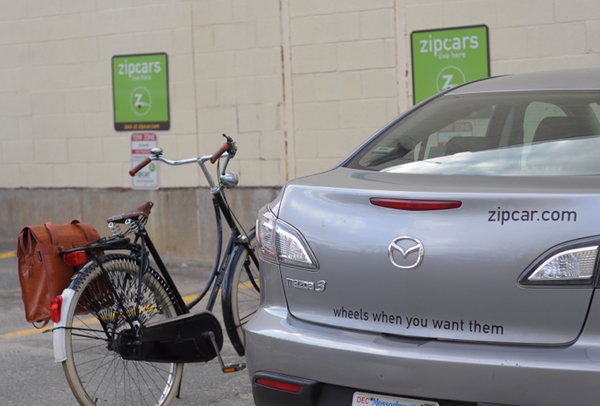
So, we have finally signed up for Zipcar, and I thought it might be useful to share my impressions. While I had imagined a motorised version of a bikeshare program, Zipcar is a different thing entirely.

Here is how it works: First you buy a yearly membership. It is worth noting that some employers have programs for employees to try it free, which was the case with us - but otherwise it's $60 per year plus a $25 application fee (so essentially you pay $85 to sign up). You are then able to rent a Zipcar by the hour at rates that start at $7.50 per hour. The rate depends on the type of car you need. So, for instance, a compact sedan might be $7.50, but a truck or SUV would be more like $12. You can also rent a Zipcar for an entire day, and the daily rates start from $69. To use a car you must reserve it, which can be done online or via smartphone. You specify in advance the exact time you will be getting and returning the car, and when finished, you must return the car to the same location from which you got it.

I can see how this system would be useful for those who need a car for short and pre-planned trips to the grocery/  hardware/ furniture store, or for meetings with clients that are short and finite in nature. However, our needs are different and there is no way Zipcar would work for us in most circumstances.

Scenario 1: We need to go to our photo studio or to a photoshoot in a far-off location, and to bring a bunch of enormous equipment with us. We will then be staying there for 5 hours working, maybe longer - depends how it goes. And it's the weekend.

Problems: We'd have to rent the car for en entire day, because at the hourly rate it would not be worth it. Either way, the rate would be quite high, because we'd need a large vehicle. Additionally Zipcar's weekend rates are higher than weekday rates, which would make the fee greater still. Car rental makes more sense than Zipcar.

Scenario 2: There is an urgent situation and we need a car right away.

Problems: We check the Zipcar reservation site and there are no cars available in any locations within 2 miles from us for the next hour and a half (This is true: I just checked). We also do not know for how long we need the car - could be 45 minutes, or could be 3 hours. A taxi makes more sense than Zipcar.

So... since 90% of the times we need a car, it is one of the above scenarios, Zipcar is not really the right choice for us. However, I think that if Zipcar worked more like a bikeshare program, it could be more useful for everyone. In many areas, there is a dense grid of Zipcar locations - so why not make it so that a car can be checked out from one location and returned to another? I am sure there are good logistical reasons why this is not done, and as always no system is perfect. I hope this was useful for those considering a Zipcar membership and wondering how the system works.

Tuesday, 8 March 2011

Mileage As Measure of Sport vs Transport

I was chatting with someone who wanted to know whether I was predominantly a recreational cyclist or a transportational one, and their criterion for determining this was mileage: how many miles I cycled for sport vs transport. Earlier I had seen an online poll that used the same measure - which made me wonder whether this is the de facto industry method for determining how cyclists see themselves. Do manufacturers conducting market research use mileage to understand what kinds of bicycles would be more in demand?

Even if I factor in the winter months, on average I cycle many more miles on a roadbike than I do for transportation. But I still see myself as a transportation cyclist first and foremost for one simple reason: I actually depend on my bike to get around. Sure, roadcycling is fun and I love it. But cycling for transportation is necessary. I do not drive and I am serious about not being able to take public transportation: I did it a total of maybe 6 times over the winter, each trip followed by nausea and migraine. When it snowed too much to ride a bike, I decreased my travel radius and compromised: Instead of going to my preferred stores, I went to the ones within walking distance, and I postponed a number of trips and activities. In the end, it wasn't so bad. But it made me aware of how bicycle-dependent I am. So even if my daily transportation trips total less than 5 miles, they are more important to me than a 50 mile "training" ride on a roadbike. In my view, that makes me a transportational cyclist.

What do you think of mileage as a determinant of what kind of cycling you affiliate yourself with - would your mileage be congruent with how you perceive yourself?

Saturday, 26 February 2011

No Car, Must Travel

It has been two and a half months now without the car - pretty much the entire winter. For the most part we did not miss it. But now that the blizzards have subsided, it is time to get things done. We'll start going on photoshoots and other trips again soon, and there are other ways in which we will need it as well. This weekend was our first experiment with alternative options.

I needed to get to Harris Cyclery (10 miles away) to drop off a bicycle along with some extra wheels and rims, since they'll be building new wheels for the Bella Ciao Superba prototype and also replacing the headset. After considering various options, we decided to take a taxi there with all the stuff, then take the commuter train back. Ordering the taxi, we specified that there would be two people plus a bicycle. Nevertheless, they sent a small sedan and great fun was had by all as we stuffed both me and the bicycle in the back seat. Still, we managed to fit everything in and arrived at Harris without incident. The fee for the taxi was reasonable. Total time for the trip, including calling and waiting for a taxi, wrangling in the bicycle, and the drive itself: 1 hour. Had we rented a car, it probably would have taken longer than the taxi, as a result of having to first go and get the rental. Had we driven our own car, it would have taken 30 minutes.

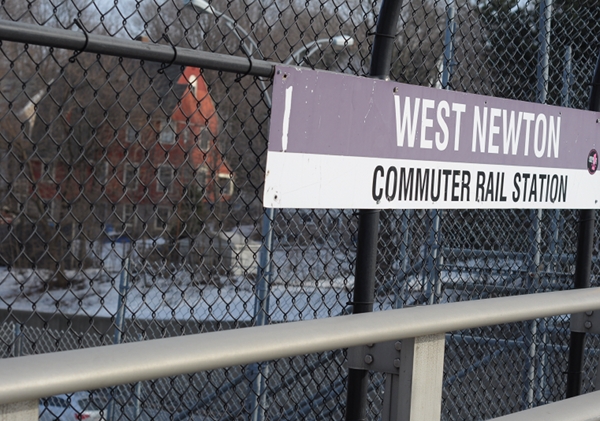
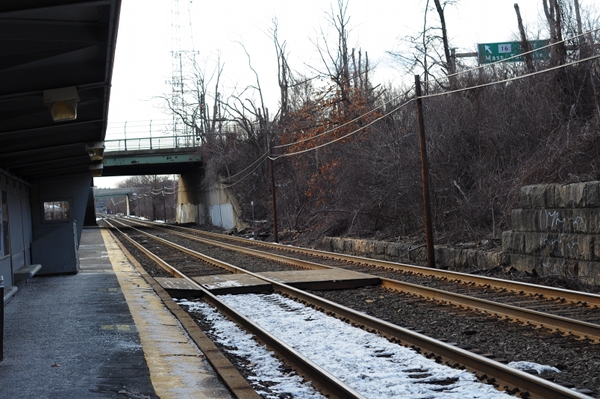
After getting done everything that we needed done, we had several hours to kill before heading back. The Saturday train schedule limited our choice for when to travel considerably: There was basically one train in the early afternoon and another late at night. So we test rode some Moultons and wandered around the three shops on the Main street, before heading for the Commuter Rail station.

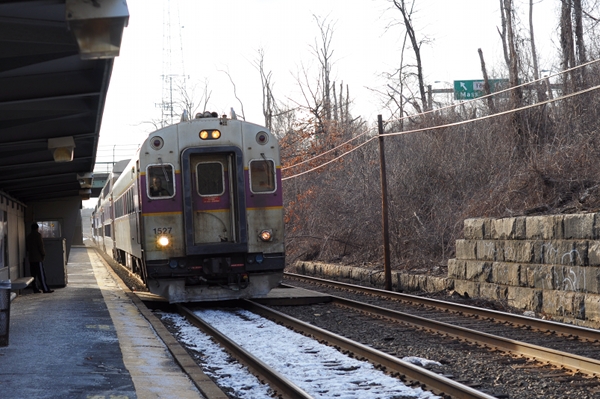
We arrived several minutes early. The station is outdoors and the train was 7 minutes late. In freezing temperatures, that wait is more difficult to endure than it sounds. The other people on the platform looked miserable as they paced back and forth to keep warm and cursed the train's (apparently habitual) lateness.

But finally it arrived, and thankfully it was warm inside. The numbness in my face began to subside as we headed toward Boston. Once in the city, we transferred to the subway, then walked home from the station.

Total time for the trip, including waiting for the commuter train, transferring onto the subway line and walking home: 1 hour 15 minutes. But if we include the time wasted because of the spotty train schedule, then the return trip was really over 3 hours. Had we driven our own car, it would have been 30 minutes. In other words, an activity that would have taken us a total of two hours had we used our private vehicle, wound up taking up half of our day - which is not exactly a success story. Next time we will give car rental or zipcar a go, but it is too bad that public transportation in the greater Boston area is not more convenient.

Friday, 21 January 2011

The Least Daunting Option

Well, it seems that we've been having one of two weather conditions in Boston lately: (a) blizzard, or (b) in between blizzards. When it's the latter, I have been riding my bike - sort of. To be honest, I would not be doing it if I didn't have to, because the road conditions are pretty bad. But the bus makes me motion sick, the nearest subway stop is a 15 minute walk from our house (longer in the snow), and the sidewalks are slippery. So except on days when the roads are completely impassable, cycling seems to be the least daunting option. Still, "least daunting" doesn't mean "easy," and I've had to make a number of adjustments to the way I ride a bike, in order to be able to do it at all.

For one thing, I cycle much slower than usual, because I am scared of hitting not only ice patches, but those mini-mountains of hard snow that seem to pop up when I least expect them, like some treacherous obstacle course. Cycling slowly allows me to see them in time to either brake, or figure out how to go around them safely (I am a slow thinker when it comes to spacial rotation tasks). Happily, there are almost no other cyclists on the roads, so there is no one to get annoyed at my crawling speed - I've found that I can go as slow as I like, and no one seems bothered. I guess to cars, it's pretty much the same whether I am cycling at 7mph or 20mph: Either way, they are faster than me and will have to pass me eventually.

I also simply accept that I will have to get off my bike and walk a lot - across impassable stretches of slush and even over snowbanks. Sometimes I'll walk for a quarter of a block, then get back on the bike and ride for a couple of blocks, then get off again, and so on. It's annoying, but still better than walking the entire way - at least to me. Warmer and faster.

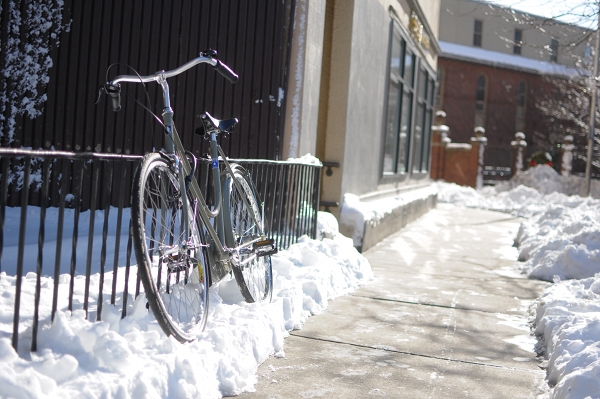
Finally, I've been having to get really creative about locking up my bike. Most bike racks have been made inaccessible by the surrounding knee-deep snow. So I will usually chain my bike to a fence, or whatever is handy - often having to rest it on top of a snowbank.

While all this is kind of miserable, I also find it pretty funny. I am not a "hard core" cyclist by any means and I am extremely risk averse. "Wimp" would probably be the appropriate word. And yet I am one of the few people out there on a bike, which does make me question my sanity. But I guess there is no better motivator than having no other choice - or at least no alternative options that are less daunting. Cycling in slow motion through a winter wonderland is not so bad, after all, when I compare it to feeling nauseous inside of a stuffy bus, or slip-sliding along icy sidewalks.

Tuesday, 4 January 2011

Winter Starts without the Car

Sometime in December, the car which I don't myself drive but share with the Co-Habitant, announced to us that it needs some work. It's not a big problem, but it's quirky. Unable to agree on how to go about getting it resolved, our solution was to put off the decision until we have more time and can think clearly. In the meanwhile, we have been automobile-free for about three weeks - just in time for the snow!

As far as everyday necessities go, we have felt no adverse effects so far from the lack of car. The Co-Habitant typically cycles to work anyhow, and I always cycle to my meetings and errands. We can (though normally don't always) go grocery shopping by bike. And other crucial destinations - post office, bank, hardware store, art supply store, etc. - are within manageable distance as well. When the streets were un-cyclable during the blizzard, we worked from home and walked to the grocery store. If anything, not having a car feels liberating in this respect.

The problematic aspects surface when it comes to long-distance trips. For instance, our photo studio is 14 miles away. It is accessible via the subway system, but the T stop is a considerable walk from our house. That is okay, except that sometimes we transport huge and fragile objects to and from the studio - and that cannot really be done properly other than in our car.  We also travel to remote places for photoshoots - and those trips will be suspended until the car is available again. There are other things, like not being able to go to specific supply stores that are in bicycle-unfriendly locations, as well as trips that involve large and heavy cargo. So far we have dealt with these things by either finding alternative (but not ideal) solutions, or postponing them. And while so far that's been fine, I wonder how we will feel about it after several more weeks pass.

At the heart of my transportation preferences is a need to feel independent, and most of the time cycling fulfills this need for me better than other options. But sometimes the car is the appropriate tool for the job, and I have nothing but respect for the automobile in that context. I am hoping this carless period will clarify for us, what it is that we actually need from the car given our current lifestyle.

Sunday, 25 April 2010

No-Bike Town

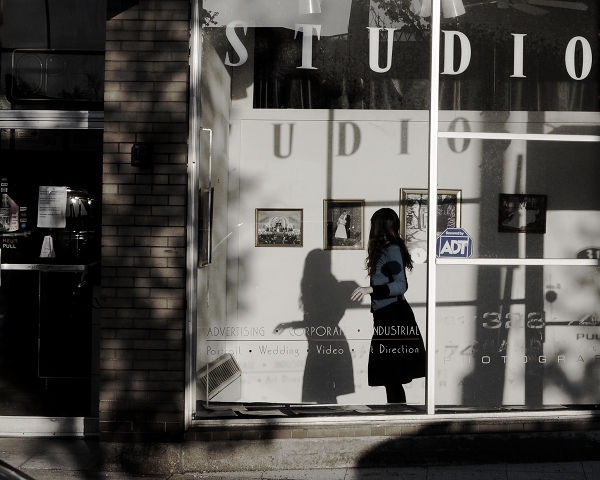
Owing to a stroke of luck, we now have a new, wonderful photography studio. It belongs to an acquaintance whose partner has just retired - and so we took over the partner's share. The place is fully equipped with a darkroom and a portrait studio, and is located in a coastal town outside Boston - convenient as we often do photoshoots in that area.

The only problem? Well, something about this town just seemed off as soon as we got there.

It was as if the shadows in the town center were extra shadowy.

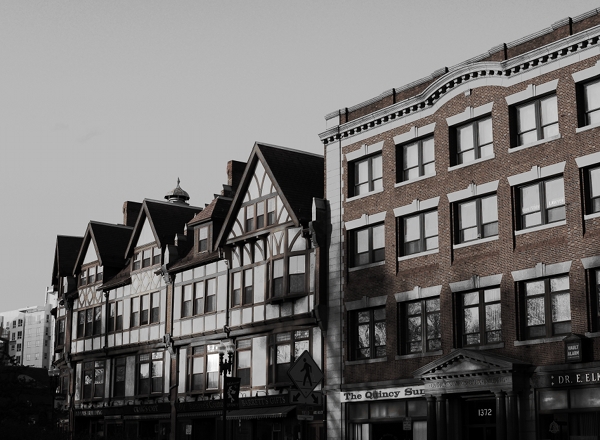
And the sun-lit rooftops exuded a sinister gleam.

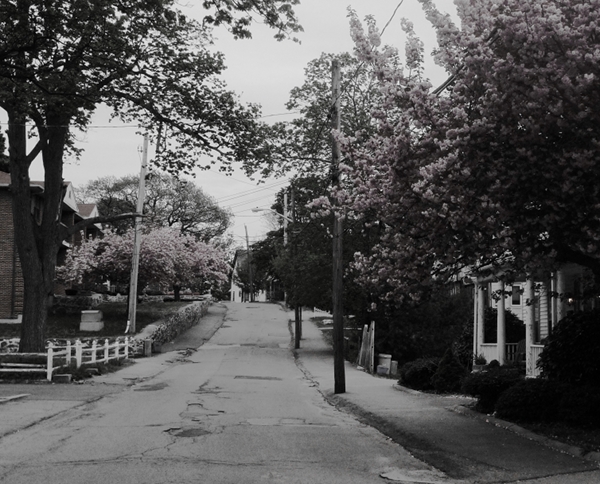
Even the quiet side streets were eerie. What could it be?... Oh yes. There was hardly a bicycle to be seen! Honestly, I cannot remember the last time I saw a town with so few bicycles. Over the past weeks we have been moving our things into the studio and renovating the darkroom, and I've spotted a total of maybe half a dozen bikes in the streets during that entire time period -mostly being ridden on the sidewalks.

The studio is 14 miles from our house, but around the corner from a T-station - so the idea is to commute there by T and keep a bicycle on site as a Studio Bike. Initially I was hoping that I could perhaps cycle to the studio, and distance-wise I could do it. But the route seems to be beyond my current level of skill and bravery, involving busy roads with high speed limits and no shoulders. And given the No-Bike Town situation, I am beginning to question whether I will even be able to cycle near the studio itself, if only just for a coffee.

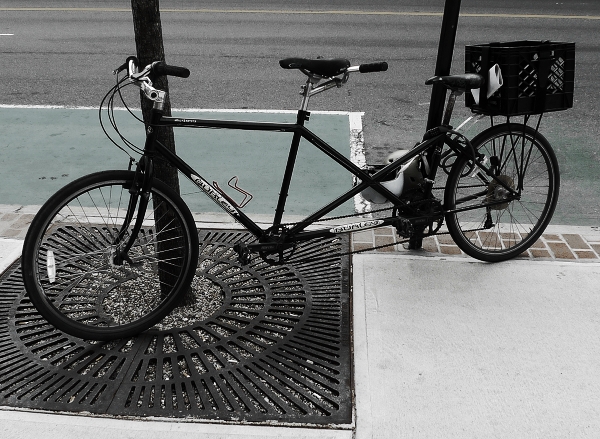
This singular bicycle stood out in No-Bike Town like a lone cowboy. It is an interesting Burley tandem, and I wonder how its owners feel about cycling in this area. More importantly, I wonder how the drivers in this area feel about cyclists - would they even know what to do if they saw me riding down the street? I guess I will soon find out...

Ping Blog

Step 1
Blog URL:


Blog Title (optional):


Blog RSS Feed (optional):


I agree with terms of service.

Step 2
Copy the following code and put it on your blog/site to help our blog ping tool track your submission (Need help?):
;

 
Design by Free WordPress Themes | Bloggerized by Lasantha - Premium Blogger Themes | Best Buy Coupons