Showing posts with label Myles. Show all posts

Monday, 23 May 2011

On Sentimentality and Retiring Old Bikes

When we got the Co-Habitant's Surly Cross-Check frame, it was supposed to be an off-road-capable supplement to his vintage roadbike, not a replacement. But after he built up the Surly and took it on several rides, the old Motobecane was soon put away. We had expected that the modern cross bike with wide tires would be more comfortable, but slower and less agile than the vintage roadbike. Instead, it is more comfortable in addition to being just as agile and also faster - not to mention more stable and entirely lacking in shimmy on descents. 

The Co-Habitant is a wee bit disillusioned in vintage bikes at the moment. All the lugs and "patina" in the world are not worth it to him, if a reasonably priced, good quality new TIG-welded frame fitted with decent components offers a better ride. That is not to say that a mass produced mid-tier Motobecane from 1976 represents all vintage bikes. But sometimes experimenting with vintage until you find a good frame can be more expensive than buying new.

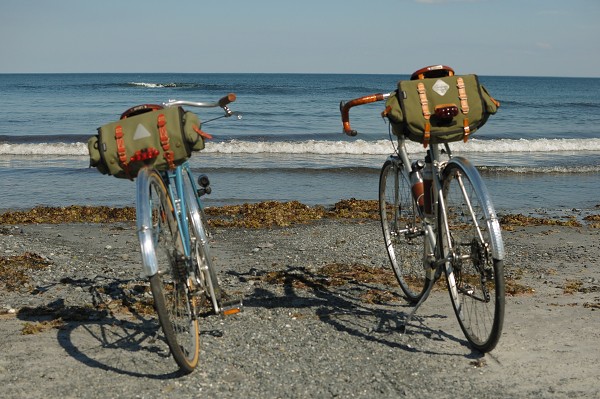
Nonetheless, "Myles" the Motobecane was the first roadbike he'd ridden as an adult, and the one and only roadbike he's been riding for the past two years. It was old and crusty and we made it beautiful. It was rickety and we updated it with nicer components. That bike got him through multiple trips to Maine and Cape Cod just fine, before he knew that "just fine" could feel even better. It seems almost a betrayal to get rid of it so unceremoniously.

We've considered turning the Motobecane into a beater city bike, but that idea was eventually dismissed. Ultimately, he likes wide tires and stable handling for city riding, and a twitchy 1970s French roadbike is just not his idea of a good time in our pothole-ridden neighbourhood. Fair enough.

So, what to do with a retired bike? One option is to sell it as a complete bicycle. The other option is to strip all the good components, keep them for future projects or trades, and sell just the frame. In the past, we've always gone with the former, even though financially it makes less sense. This time we are considering the latter, but ultimately still leaning toward the former out of sheer sentimentality - if Myles is kept intact, at least he would still be "alive." But of course that's ridiculous.

Later in the summer I will face a similar dilemma with my vintage Moser fixed gear conversion. It feels too small. But more importantly, despite having been reassured about the low bottom bracket issue I've now actually experienced pedal strike on this bike and that's enough to convince me that I need a fixed-gear specific road frame. In the case of the Moser, I plan to move its wheelset and some of the other components to the new frame when I get it, and just hang on to the Moser frame as a keepsake. I got in in Austria and the memories associated with it are worth more to me than whatever money I could get for the frame. Maybe some time later I will give it away to a friend as a gift, but I just don't feel that it's sellable.

What do you do with bicycles that you replace or retire? Does sentimental attachment get in the way of reason?

Tuesday, 2 November 2010

Location, Lock-ation...

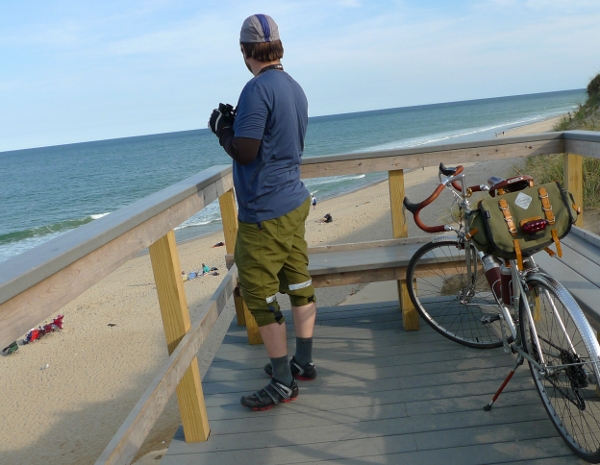
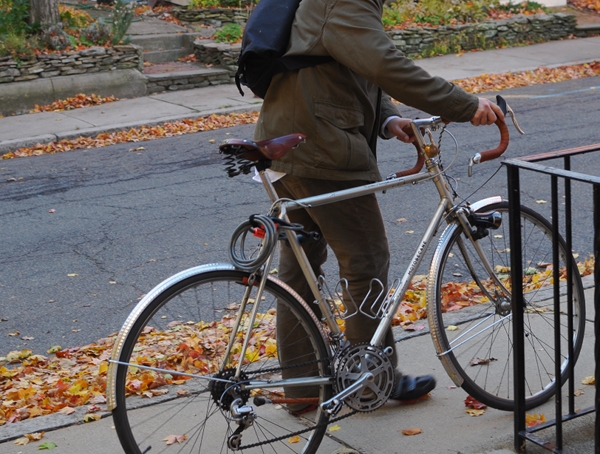
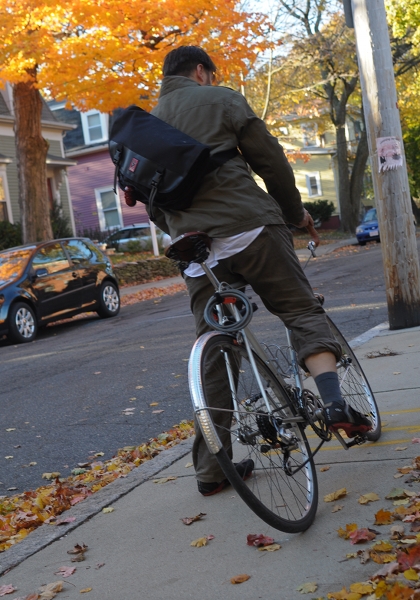
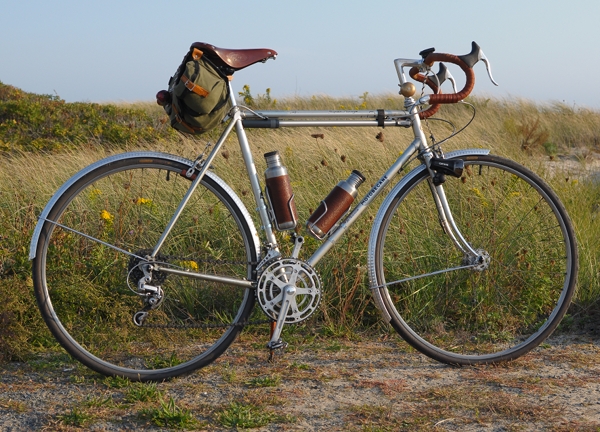
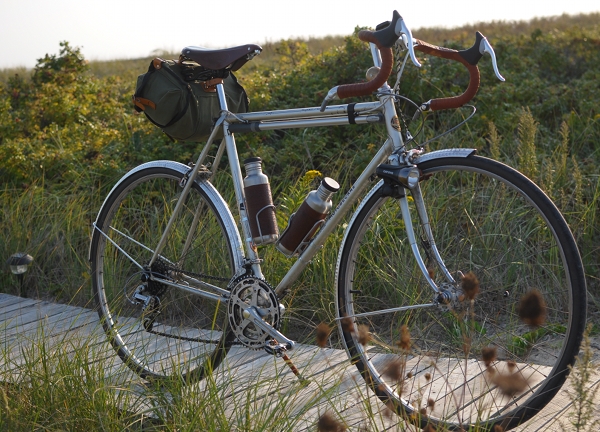
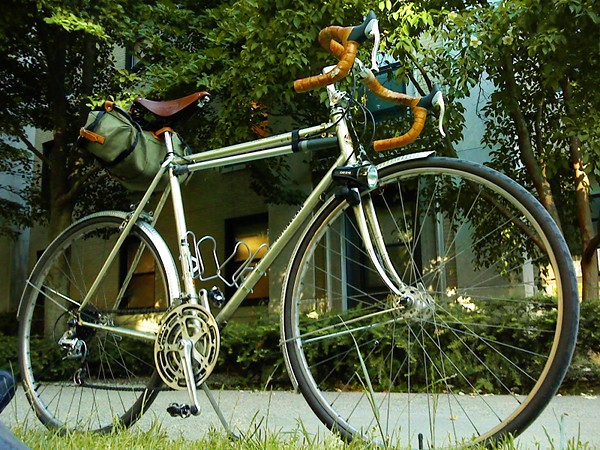
The Co-Habitant started a new job this week, and with it a new commute. The trip is about the same distance as before, but his cycling ritual is much changed. Previously, he rode to work on his fully loaded Pashley Roadster, which he would lock up in the secure bicycle cage inside the building's parking garage. The new job's parking facilities are less secure, and it is in an area where he does not feel comfortable leaving his Pashley on the street all day. So he will now be commuting on his old Motobecane roadbike, which he has stripped down to the bare bones.  This is what Myles looks like in his normal role as touring bike. And above is the new pared-down version: No saddlebag, no twined water bottles, no pump under the top tube. A U-Lock and an extra long cable lock are wrapped around the seat cluster. The battery headlight on the fork is detachable, and the tail light will now be attached to the messenger bag he plans to carry.

The Co-Habitant's response to his new commute underscores the differences in our attitudes toward bicycle security.  His Pashley is a comfortable, upright bicycle and if it were me, I would continue to ride it despite the change of location and the less than ideal parking situation. I would remove the Pashley's luggage, get a detachable pannier for the rear rack, use a U-lock plus long cable combination, lock it up outside and stop worrying about it. But then again, some would say that my own lock-up methods are scandalously lax, because I typically just use a cable lock. In short, the Co-Habitant and I are separate people and often our views on things differ. I respect that he does not want his "nice" bicycle to get stolen, but it just seems like such a shame to ride an aggressive roadbike (with clipless pedals!) to work and carry all his stuff in a messenger bag, when he owns the perfect commuter bike. 

How much of a factor is the location of your job (or residence) in your choice of what bicycle to ride and in your lock-up methods? 

Friday, 24 September 2010

Making an Ordinary Vintage Roadbike Extraordinary (a Review of Sorts)

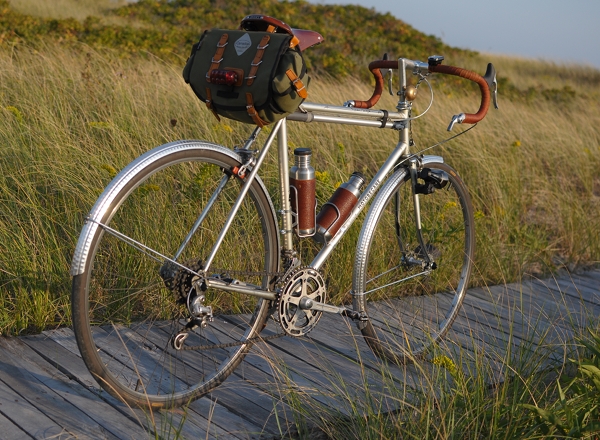
The Co-Habitant's roadbike, Myles, is a 1976 Motobecane Super Mirage, which he acquired in Spring 2009 and has been gradually updating with modern components and personal touches. It is his only roadbike, and he has cycled somewhere between 2,000 and 2,500 miles on it through its various iterations. I wanted to write a review of it (from my perspective), because I think it poignantly illustrates some aspects of owning and customising a vintage roadbike.

It is always interesting to observe people's reaction to Myles, for he is a real head turner - even more so than my Rivendell. The silver frame, the hammered fenders, the wealth of brown tones in the leather and twine, the frame pump looking almost like a double top tube, and the classic Carradice bag, somehow combine to create a whole that is more magnificent and eye-catching than the sum of its parts.

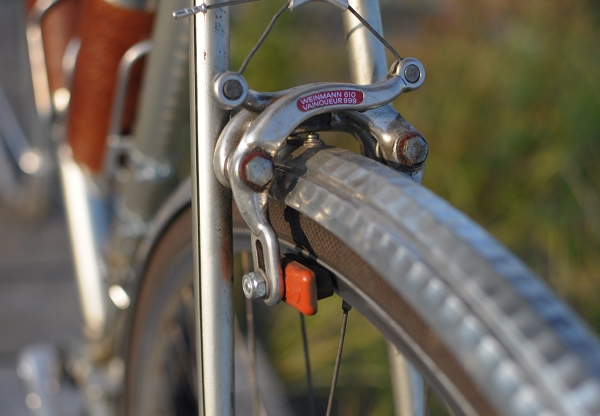
On closer inspection, those who know bicycles typically exhibit one of two reactions. Some are delighted to see a good, ordinary vintage bicycle salvaged and turned into a thing of beauty. Others are bewildered that we bothered to so elaborately refurbish something so commonplace, rather than searching for a frame with a more impressive pedigree. While the Motobecane Super Mirage was a good, solid bicycle in its time, it was decidedly middle-tier and for that reason unremarkable. The frame is hi-ten steel, the lugs are fairly basic, and the original components (Suntour, Weinmann) are pretty good, but not excellent.

We do not disagree with the point of view that a better frame would have been more deserving of all the DIY lavished on Myles. But sometimes a bicycle just evolves organically, and such was the case here.

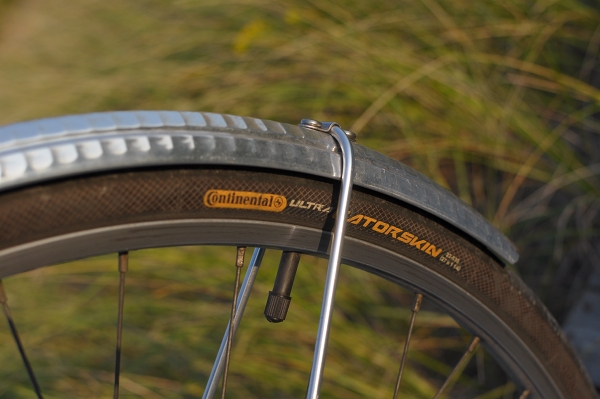
When the Co-Habitant found the bike, used and somewhat abused, the plan was simply to ride it after a few minor changes. He first replaced the tires, after the original ones blew up on his very first ride.  He has ridden these Continental Gatorskins (27" x 32mm) the entire time without incident.

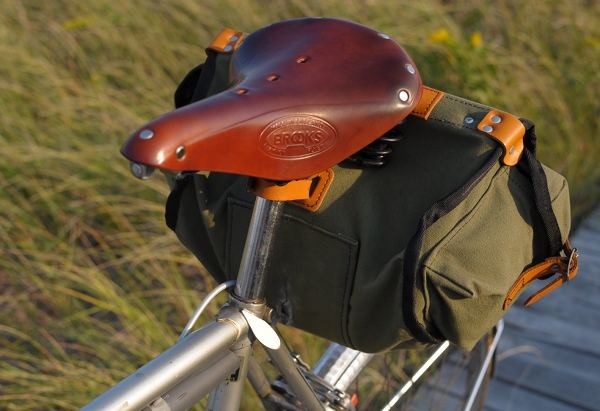
He then replaced the original vinyl saddle with a Brooks Flyer. Early on, he was caught in the rain and the Flyer got wet - which hastened its breaking-in process nicely.

The brakes on the bicycle worked fine after some adjustment, but he did replace the pads with the salmon Kool-Stops.

As he began riding the bicycle more and more, he added fenders and a saddle bag. Although I am normally not a fan of hammered Honjos, I think they do look good on silver bikes - providing textural variation where the colour is similar.  Hammered fenders are also a good investment in terms of hiding dents or scratches.

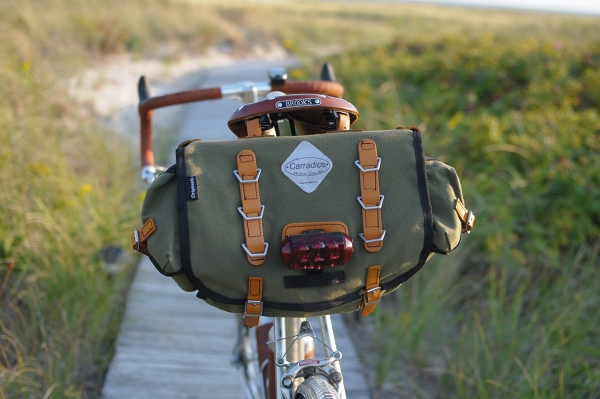
The Carradice Barley bag has been sufficient for carrying anything he needed on this bike, up to our current trip. For the future, he will consider getting a larger bag that can fit laptops, and a rack to support it. Having a saddlebag is also handy for installing a battery-operated tail light, such as his CatEye.

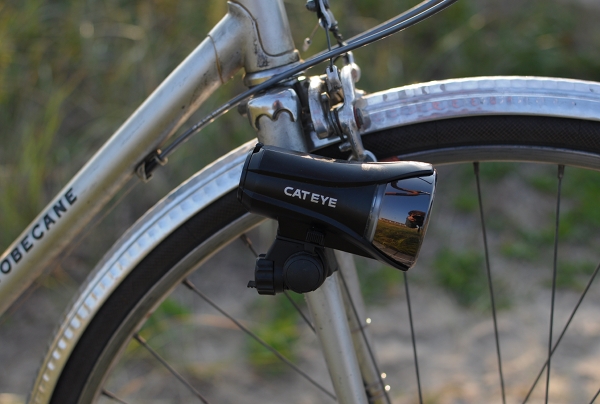
His headlight is mounted on the fork, using a Minoura light mount. While he prefers generator lighting, as far as battery-operated lights go, he likes this system very much.

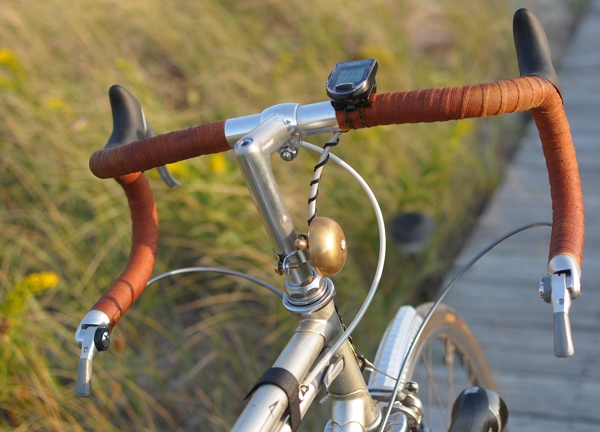
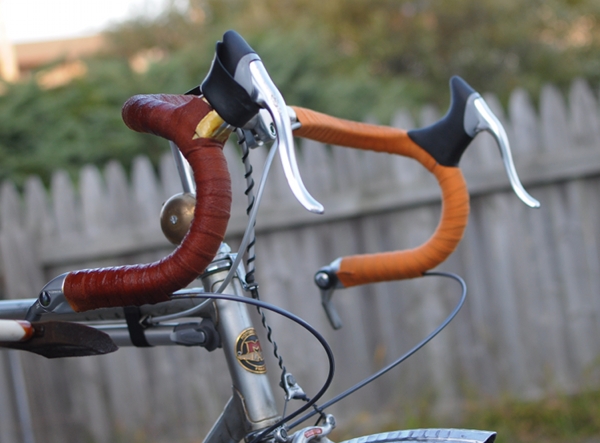
Some months later, he decided to replace the handlebar set-up, as the original one caused discomfort and difficulty operating the brake levers.  He replaced them with 42cm Nitto Noodle bars, which he loves, and the stem with a Nitto Technomic. 

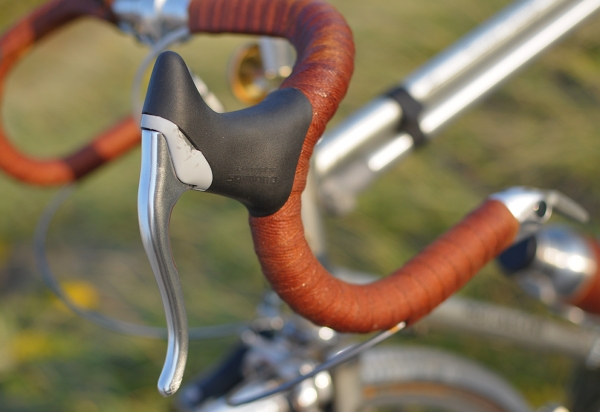
The original non-aero brake levers were replaced with modern Shimano aero brake levers. Personally, I am not a fan of these brake levers, as the hoods have a rather harsh surface and there is a plastic insert that is very easy to damage. The Co-Habitant has dropped and crashed this bike several times, and you can see that the levers look battered.

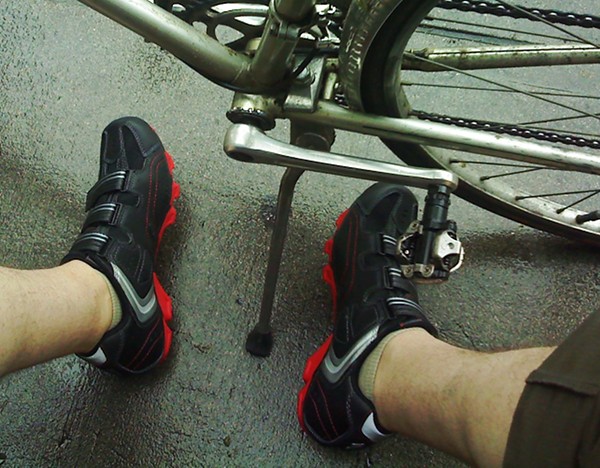
Almost a year later, a few more changes were made. After complaining that his feet always slipped on the touring pedals at high speeds and that toe clips were a bother, he installed these SPD clipless pedals - much to my shock at the time.  He loves them and now says that he would not go back to non-clipless on a roadbike, vintage or not.

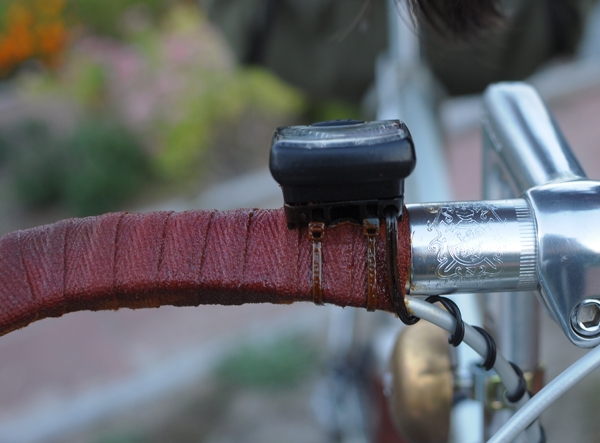
Around the same time, he also installed a CatEye computer to keep track of his speed and mileage,

a Topeak frame pump,

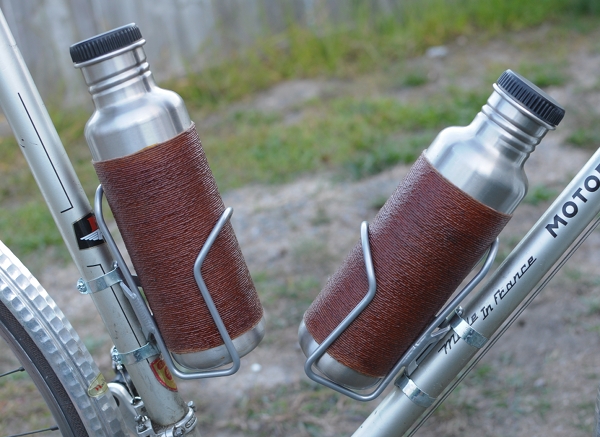
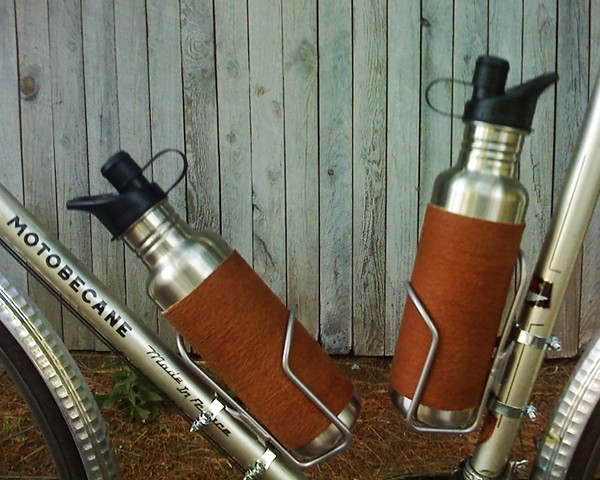
and two bottle cages, bolted onto the frame - into which he places his twined and shellacked Klean Kanteen bottles.

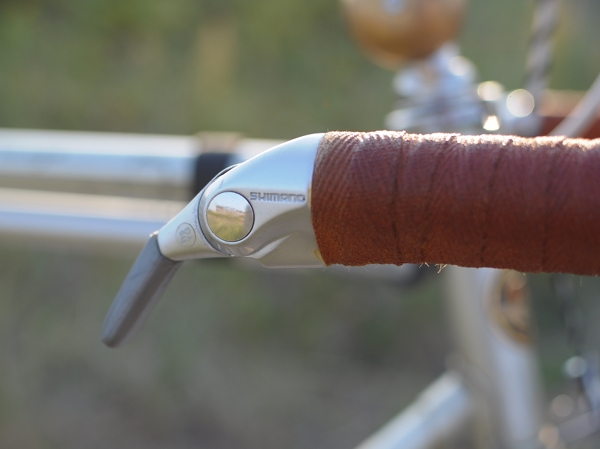
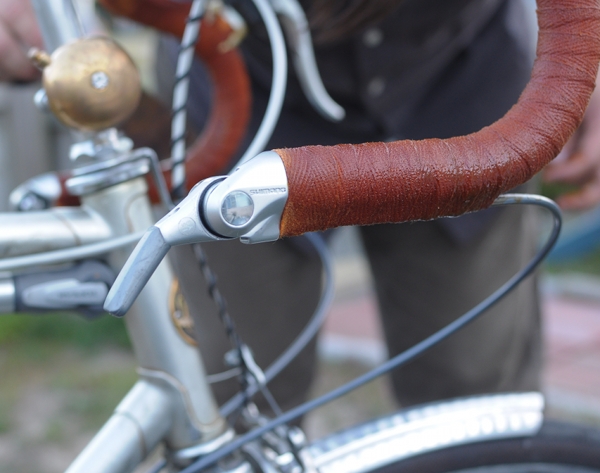
And the final update - completed just a couple of weeks ago in our yard  - was the replacement of the original stem shifters with these Shimano bar-ends. Since the bike is a 10-speed, it isn't possible to get indexed shifting, but these work just as well in friction mode. After having used a shifting method that sounded like a tractor for over a year, the Co-Habitant is absolutely delighted with these - they are fast and quiet, and he is convinced that they are superior even to my Silver shifters (although I disagree).

And so that is the story of Myles's slow but steady transformation from a plain '70s French 10-speed to a glorious and shamelessly eccentric dandy. Was it worth it? It certainly helped the Co-Habitant learn about classic roadbikes - both riding them and working on them. It is difficult to get a straight answer from him about how comfortable the bike is, especially as he is more tolerant of discomfort and pain than I am and to some degree even thinks these are "normal" to experience on a roadbike. But from what I can surmise, the bike is more or less comfortable in its current state, except that it places a bit too much weight on the hands and is over-responsive to the point of being "squirrely". Also, the frame size would ideally be larger, and he could do with better gearing.

All of these comments, however, are made only in response to my direct questioning; he never complains about the bike on his own accord. On the contrary, he is extremely fond of Myles, smiling and shaking his head quietly at any suggestion that such components ought to be placed on a new frame instead.

Wednesday, 15 September 2010

Shellac: Why and How?

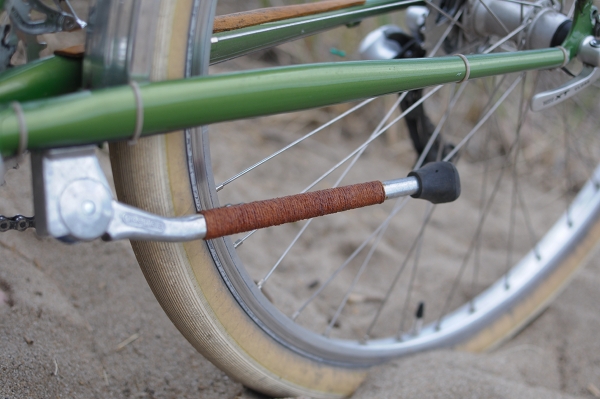
With the rise of the "classic bicycle aesthetic" it is becoming increasingly popular again to shellac handlebar tape, cork grips and twine. Obviously I love the trend. But I also think that people ought to be aware that the purpose of shellacking is predominantly practical, not aesthetic.
Shellac is an all-natural natural sealant (derived from the secretions of a Thai insect), which makes it perfect for waterproofing wood and cloth. When you cover your handlebars in cloth tape, two things will happen to them over a surprisingly short time period:  They will get dirty from your hands rubbing road dust into them, and they will get soggy from rain and sweat - which can cause the tape to distend, discolour, and even rot eventually. Shellac will form a protective layer that will prevent this from happening.

At this point, we have applied shellac so often and to so many bicycles, that we have gone through 3 cans of the stuff in a year and a half. For those interested, here is how I like to do it:

. I use a 1" foam brush, rather than a real paintbrush. A paintbrush can leave visible brush strokes, whereas a foam brush makes it easy to quickly put down an even coat. Also, because shellac is difficult to wash out, it is pretty much a given that you will ruin paintbrushes with it. Ruining a foam brush is less costly.

. I like to apply shellac in thin layers, rather than oversaturating. This way it dries faster, and I have better control over the thickness.

. Because I like to feel the texture of my bar tape, I am careful not to go overboard with the shellac application. If you apply so much that your bars feel glassy and hard as a rock, they might not be so comfortable to hold. If you find that you've accidentally done this, try going over it with steel wool or fine grade sandpaper to restore some of the texture.

. Since I ride my bike often and in bad weather, I re-shellac on a fairly regular basis. The shellac tends to wear off first in the spots where I keep my hands the most. When I notice this, I know it is time to add another thin layer.

. Shellacking the night before I plan to ride the bike usually leaves sufficient drying time - but doing it at least 24 hours beforehand is safer. Once or twice, I've ended up holding my hands on the hoods during an entire ride, because the bars were still not 100% dry.

Twine requires shellacking for similar reasons as bar tape: If left in its natural state, it will unravel over a short time period from friction and moisture.

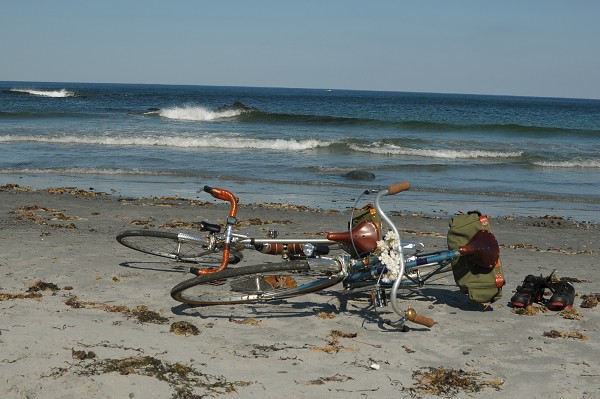
Because of their distinct look, it is understandable that shellacked tape or twine on a bicycle can be seen as a fashion statement. But while I am happy it looks nice, for me the practical benefits far outweigh this aspect. If it were not for shellac, I would destroy my cloth tape on a regular basis. And in case you are wondering - Yes, of course we brought shellac to the Cape! The Co-Habitant has finally replaced his Motobecane's stem shifters with Shimano bar-ends, and we re-did his tape as the sun was setting over the beach next to our house.

Monday, 19 July 2010

Rediscovering Familiar Places... and the Hills You Never Knew Were There

Yesterday was a special occasion for us, and we wanted to do something special to celebrate. We decided to visit an area of Seacoast New Hampshire and Southern Maine where we used to live a few years back - but for the first time, get around entirely on our bicycles.

We began by driving to Portsmouth, NH - which is only an hour North of Boston. We parked in a municipal lot, unfastened the bicycles, and set off. Portsmouth itself is a fantastic town and is very easy to cycle in, but our destination was Maine - which is accessible via a very cool truss lift bridge.

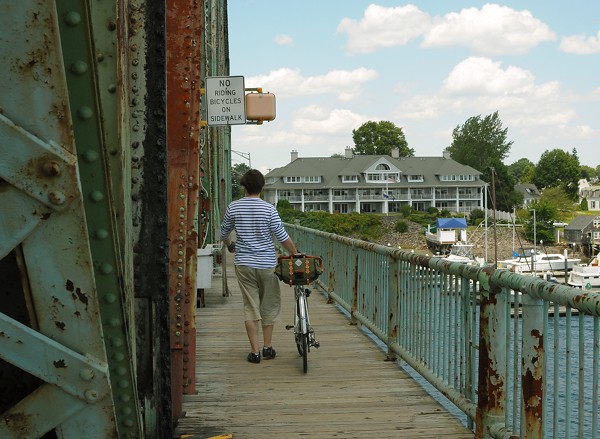
We had to wait for some ships to pass underneath, but they soon lowered the bridge and we walked our bicycles across.

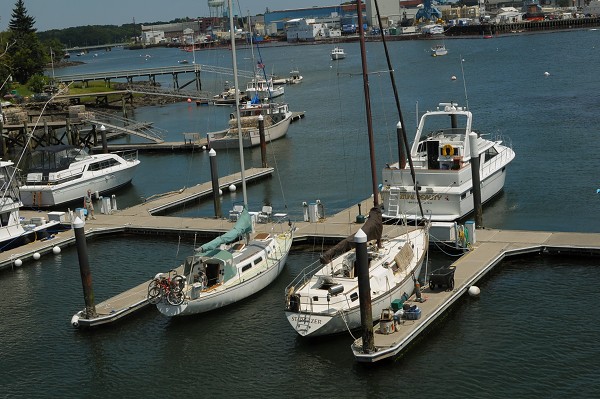
The views from this bridge are amazing, and we even spotted a boat with some bicycles strapped to it.

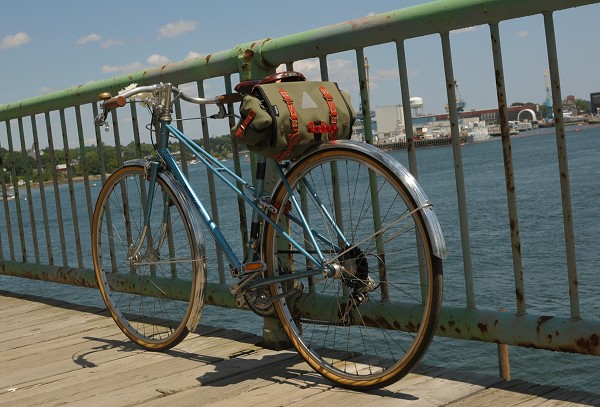
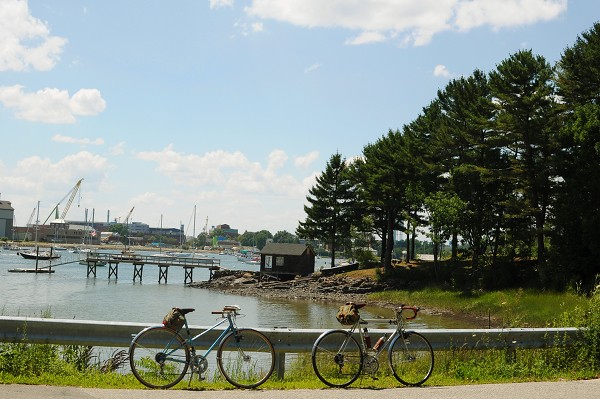
The Co-Habitant's Myles.

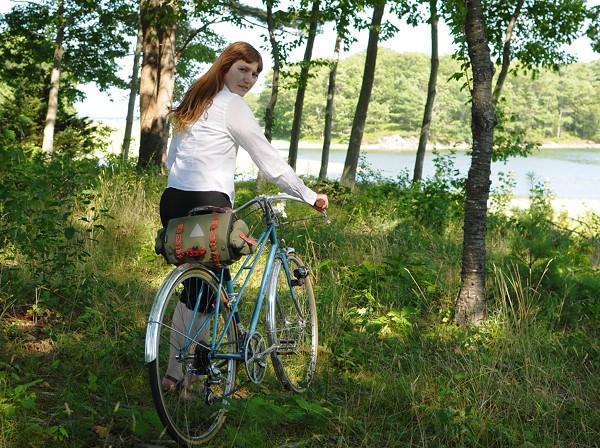
And my Marianne, enjoying the view. I took the vintage mixte, because I wanted to be more upright than on my roadbike - so as to have a better view of the scenery and to carry a camera across my back. All of that I did, but at the expense of both comfort and speed: Despite her beauty, this bicycle is just not as pleasant to ride as the Rivendell Sam Hillborne, and without drop bars it is also not as fast. In fact, now that I am finally building up my custom new mixte, we have plans for Marianne that will rescue her from redundancy - but I will save that for later.

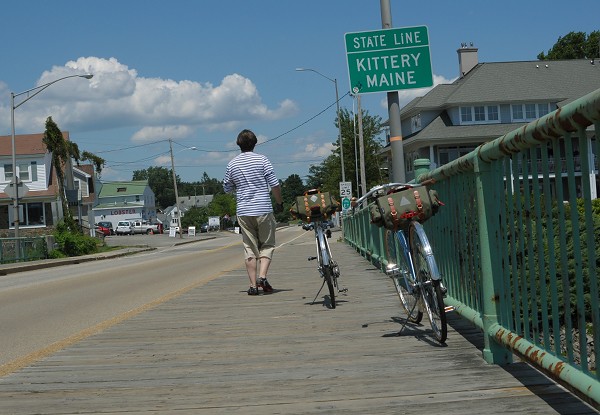
And here we are, in Kittery Maine. This was the first time we crossed a state line on bicycle.

I like to think that I know coastal Southern Maine like the back of my hand. And if you were to ask me, "Is it hilly?", a few days ago I would have answered "not at all" - and I would have been so wrong! It is amazing how we are just not as aware of topography in a car as we are on a bicycle.

We have a favourite road in this area that is an off-shoot of Route 1A and offers spectacular views of the coastline, and I simply do not remember this road having hills. But on my 12-speed Motobecane mixte, I was soon switching gears all over the place as I tried to keep up with the frequent and considerable changes in elevation.

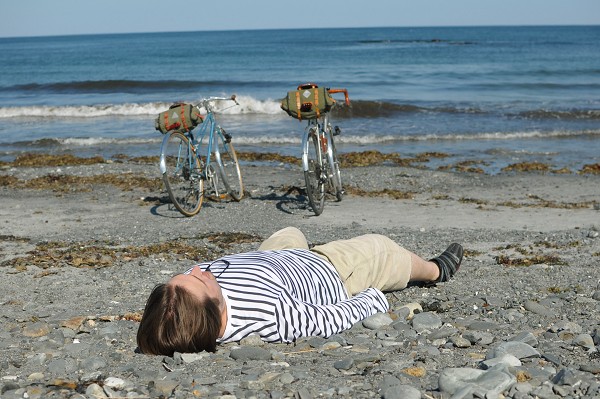
Still, it was so worth it and our trip was spectacular; I would most definitely recommend Southern Maine for touring. The traffic on the roads was much lighter than we expected, and cycling was considerably more peaceful than in the countryside around Boston. There are many non-touristy spots in the Kittery, York, and Ogunquit areas where the beaches are pristine, the restaurants are inexpensive, and the landscape is not cluttered with "motel sprawl".

Steamers, caught on the property of the restaurant that serves them. When it comes to seafood in Maine, there is so much choice that you really need to know where to go, so it helps having once been a local. Our favourite place was right along our route, and we happily stopped by after all those lovely hills.

All in all, this was probably the nicest cycling trip we have taken so far. Next time we will figure out how to plan it so that we can keep going further North before turning back - maybe stay in a motel somewhere overnight. One of our favourite places on Earth has become even "favouriter", once traveled by bicycle.

Friday, 9 July 2010

Home Alone, with Bicycle

In the weeks without me, the Co-Habitant has not been idle: He has transformed his already handsome Motobecane Super Mirage into a mean, lean, sport-touring machine... and then some. For your entertainment, I post his mobile phone pictures of Myles.

Can you spot some of the, erm... unusual updates?

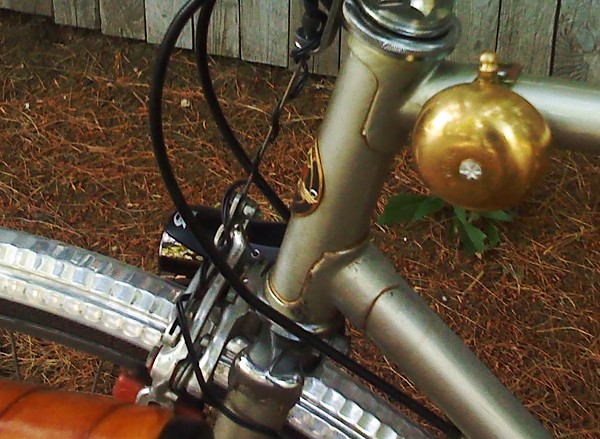
First, there is the bell mounted on the top tube. Yes, the top tube. An eccentric choice, but I think it looks distinguished!

Then there is the computer on the handlebars. The juxtaposition of the computer and the twine makes me giggle. In return, he threatens to put one on his Pashley as well.

And, Oh God, what's this? He installed clipless pedals (SPD 520) and bought clipless cycling shoes to go with them. Madness!

Of course, you've probably noticed these. Yes, they are twin, fully twined water flasks - with sports sprouts, or whatever those things are called. Spectacular, no?

And finally, behold the pump under the top tube. Myles is officially ready for anything - though I don't know about those clipless pedals. The Co-Habitant insists that he likes them, and I guess I should accept that. Maybe with time, he will twine them...

Friday, 28 May 2010

Bicycles in the Field

While the Co-Habitant and I have separate dayjobs, we also work together as an artist team. The artwork we make is hard to summarise, but, among other things, it involves photography - usually in far-off, remote locations. The distance to the locations, the remoteness, the amount of photo equipment and props we use, and the need to be on location at a specific time so as to get the right light, make driving the most suitable means of transport to the sites. However, we now have at least two photo-shoots planned that are close to Boston, and the distances to these locations (13-15 miles from home) are reasonably cyclable. Prior to doing the actual photo shoot, we normally take a reconnaissance trip to the location - to take test shots, to get a feel for the light, and to try out background compositions. These trips don't require much equipment, and so we decided to try to do this on our bikes.

It took over an hour to arrive at the photo-shoot location on our roadbikes. While we have cycled that distance many times before, it has always been in a recreational context, never for work. Here are some notes as to how this was different:

It was difficult to focus on creative thoughts with my leg muscles working overtime (hills) in the summer heat. Instead, my focus is mostly on the physical process of cycling and on monitoring traffic conditions.

Also, I realised that when we cycle together we tend to talk about cycling-related matters - a habit that proved difficult to break! When we drive to photo-shoot locations, we use the trip as an opportunity to have in-depth conversations about our work. We did not succeed in doing this while cycling, as the topic of conversation kept shifting to bikes - that is, when it was possible to talk at all.

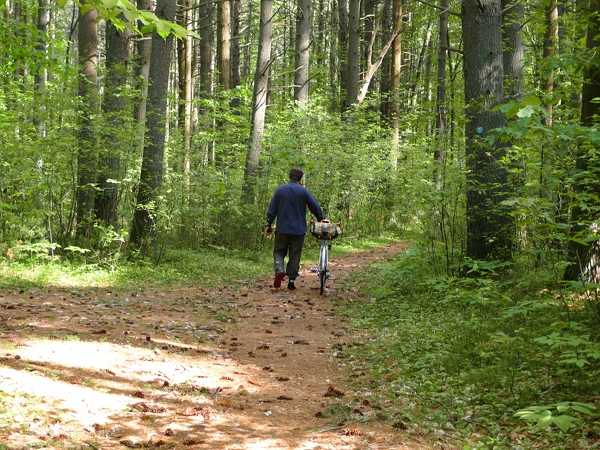
Upon arriving on location, even after a rest, it was difficult to focus on work. We were in a forest, dissected by foot-paths covered in gnarled tree roots and pine cones. The Co-Habitant got excited at the opportunity to cycle off-road. I became frustrated - both because I was too afraid to do it, and because that wasn't what we were there for. I insisted that we walk the bikes and search for potential scene backdrops instead. He agreed, but I could tell that his spirit yearned for off-road cycling and he wasn't truly able to keep his mind on our project.

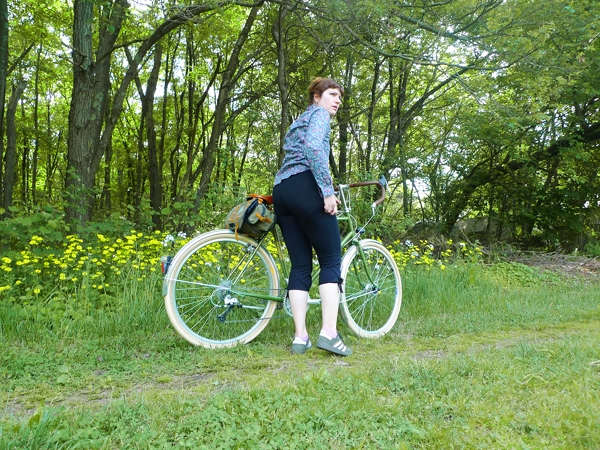
Finally, we happened upon a grassy clearing with wildflowers, and now it was my turn to get distracted. I was supposed to be taking test shots of the location, but I could not resist the opportunity to take "bike portraits". Neither could the Co-Habitant. We ended up posing our bicycles amidst the flowers and then cycling around the grassy meadow, just to get it out of our system. Pathetic!

In the end, we did take the test shots we needed, and even came up with plans for the perfect backdrop. But the process took all day, and we repeatedly struggled with staying on task. The lesson? Well, I guess that we have a hard time combining fieldwork with long bike trips, as the latter is not only exhausting, but fosters a cycling-specific atmosphere that is difficult (for us) to break out of.

That is not to say that we are giving up and will take the car on such trips next time. Rather, I am trying to figure out how to prevent the same conflict from happening again. As much as I love bicycles, they are (believe it or not!) not the center of my universe, and my artwork is infinitely more important to me. I would like for cycling to be a tool that will help me with fieldwork, without sucking all the attention away from it. Just need to figure out how exactly to make that happen.

Ping Blog

Step 1
Blog URL:


Blog Title (optional):


Blog RSS Feed (optional):


I agree with terms of service.

Step 2
Copy the following code and put it on your blog/site to help our blog ping tool track your submission (Need help?):
;

 
Design by Free WordPress Themes | Bloggerized by Lasantha - Premium Blogger Themes | Best Buy Coupons