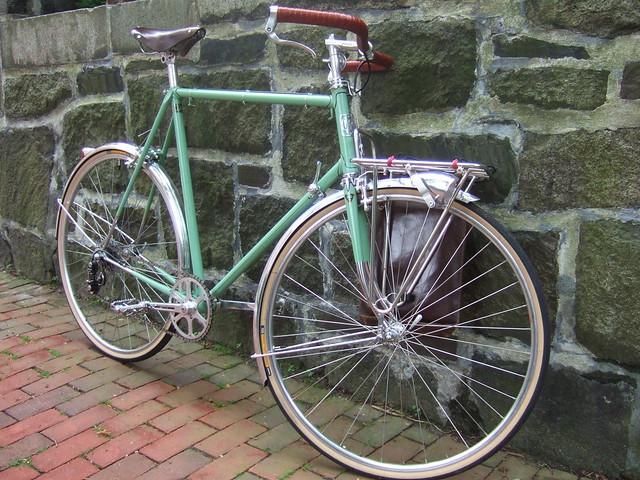
Monday, 6 December 2010

In Smarm's Way: Soul-Searching and Cheese-Mongering

A certain philosopher by the name of Socrates (perhaps you've heard of him, he's the one who's not Plato) famously said, "The unexamined life is not worth living." This has been wrongly translated and misinterpreted over the centuries. In fact, the original quote was, "The Unwashed Fruit is Not Worth Eating," and it was an admonition he penned while experiencing a severe case of diarrhea after eating a bag of dirty dates. Nevertheless, everybody now takes it to mean that you should like think about stuff really hard and stuff, or else you're an idiot.

For this reason, I used last week's break in order to engage in some "epic" soul-searching. Purchasing a Handy Home Products Montana 8'X10' shed from my local Home Depot, I erected it in an undisclosed location (hint: it was that beach "accessible only by bike" that Outlier pretends to have discovered which has a parking lot and is right near a bus stop) and, David Blaine-like, resolved not to emerge from it until I could satisfactorily answer the question that has been foremost on my mind of late: "Why do I, a person not confined to a single location by a house arrest ankle bracelet, choose to live in New York?"

Five days and nights passed, after which I was no closer to having an answer, and in fact I'd still be in there now if some off-season beachgoer hadn't mistaken my shed for a rural-themed porta-potty after eating a bag of dirty dates and fouled it so unbearably that I was forced to abandon it.

A few months ago I could have answered this question easily: "Because at least New York is becoming a better place to ride a bike, thanks to all the new bike lanes they're installing." Unfortunately, though, an anti-bike backlash seems to be wafting through the zeitgeist like the stench from a fouled porta-potty being carried by an ocean breeze. Here's an editorial from the Daily News that neatly sums up the current attitude:

You'd think the fact that "cyclists love it" would in itself support the notion that the bike lanes are successful, inasmuch as they are built for cyclists. However, this is New York, where the attitude is that anything new should work for everybody except the people who need it. Here, a bike lane is a failure if drivers don't like it, a new housing development is a failure if you can afford to live in it, and a restaurant is a failure if the people of the ethnicity which inspired the cuisine can afford to eat there. Hence, we should remove the bike lanes because people who don't ride bikes don't like them, and all they're doing successfully is preventing deaths:

The best her aides could provide were statistics showing, they said, that collisions between pedestrians and bicyclists or motor vehicles on avenues with bike lanes tended to produce fewer fatalities and less serious injuries than crashes elsewhere.

Clearly we need a new Department of Transportation commissioner, since it does not behoove New York's gritty reputation to have streets that are not sufficiently deadly. This is also why the hottest video game this holiday season is going to be "NYC City Planner," in which players compete to design streets for maximum carnage and the highest death toll wins.

Of course, the other argument against bike lanes is that they cause traffic:

That may be music to her ears, but it's blaring noise to New Yorkers who have to drive into Manhattan from Brooklyn, Queens or the Bronx.

Right, because there wasn't any traffic before the bike lanes, and because you have to drive into Manhattan. That's like saying iPhones cause AIDS simply because they happen to exist at the same time--and of course you have to have an iPhone.

In any case, it's probably only a matter of time before New York ends the bike lane "experiment" and reverts to the old "all men, women, and children for themselves" approach. This will be disastrous, since we've all been mollycoddled over these past few years and have lost our "street smarts." Consequently, I fear my only option will be to leave town and go someplace else where the soft and spoiled thrive, like Portland, OR--or else to undergo some sort of intensive training in order to regain my mental toughness. Unfortunately, I'm already too late for the Saxo Bank-SunGuard training camp, where I could have partaken in some of Bjarne Riis's famously difficult team-building exercises. One of his favorite is the "aquatic gladiator" match, in which he arms two riders with paddles and pits them against each other in a fight to the death. Here he is ordering Alberto Contador to "Kill, kill!"

(Note Riis's bloodthirsty smile.)

And here's his adversary scrambling to defend himself against the "Pistolero's" clenbuterol-fuelled assault:

("Get out of my way, you meddling Water-Fred! Can't you see I'm fighting for my life?")

Sadly, the defense was unsuccessful, and the waters of the Mediterranean were red with blood. (Mediterranean Sea's suspension pending B sample test results.)

Then, later, the team engaged in some "dry 69ing" (which is dry humping's dirtier cousin) to oompah band accompaniment:

They should dominate the controversial Team Tantric Sex stage at next year's Tour de France.


Here's Vincenzo Nibali wearing a pair of pants that took a team of chemists over six months to artificially distress, and which probably still contain trace amounts of toxins strong enough to either cause a positive drug test result or else render him infertile:

And here they all are posing with the contenders for the title of "Miss Ciclismo:"


Curious about the Miss Ciclismo pageant, I consulted a popular search engine, which led me tow what appears to be some sort of "behind the scenes" gallery. Clearly, the competition to become Miss Ciclismo is fierce. For example, here are two contestants trying to intimidate each other with a silicone breast bump:

Here's one ridiculing another behind her back:

Here's one attempting to sabotage her opponent though hypnosis:

("When I snap my fingers you will wake up and think you're Vincenzo Nibali's pants.")

And here's a creepy sex-crazed Euro-stalker lurking in the stairwell:

("Actually, I'm waiting for Thor Hushovd. He makes me feel lighter than milk.")

His dreamboat has come in, and it's a Viking longship.

Speaking of Euro class, Ritte van Vlaanderen, purveyors of racing bicycles and films such as this one...


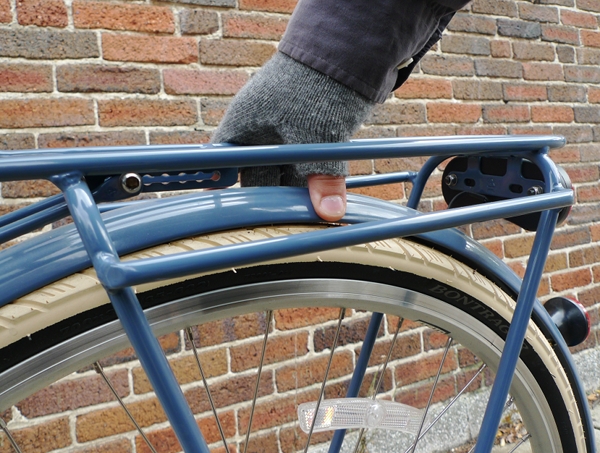
...have sent me what they claim is the "classiest disembodied hand shot ever:"

Whether or not you agree may depend on how you feel about Rivendell and their authoritatively lofty quill stems, since they too know a little something about using hand models:

Either way, though, it's certainly up there. Here's how they made the magic happen:

Judging from the hue of her arms, she must have been part of the design team that developed Nibali's pants.

Bicycles and the Human Figure: Do We Look Better on a Bike?

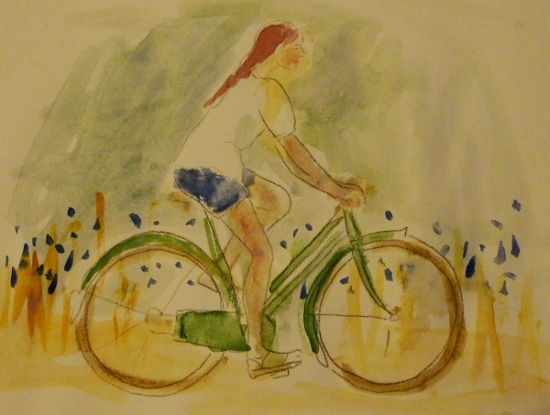
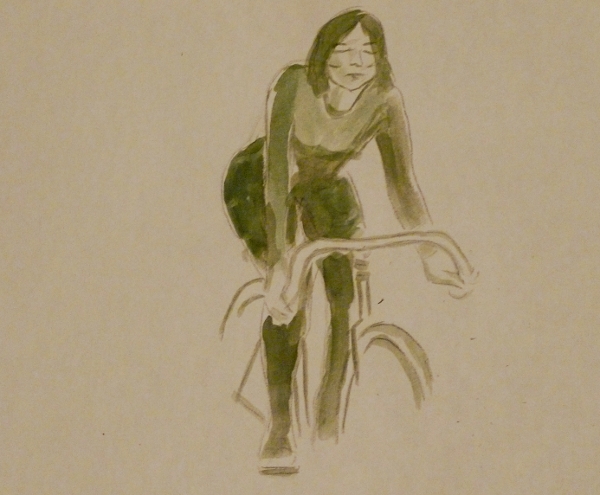
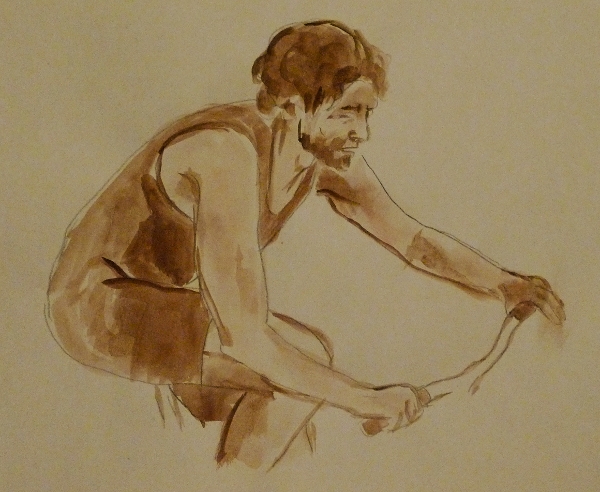
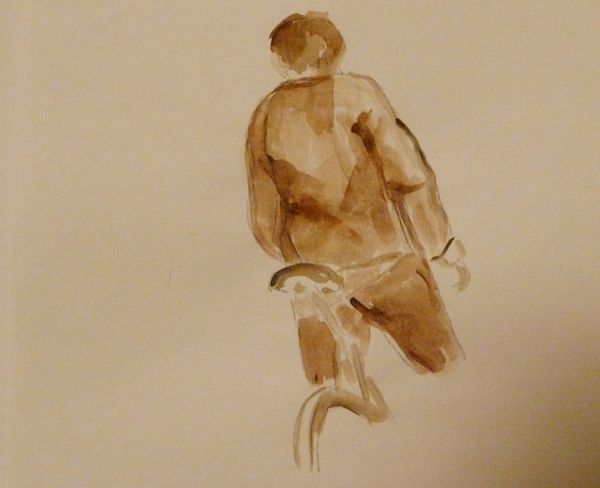
I have never drawn or painted bicycles before, but am now starting a commissioned painting that will include two female cyclists - so I've been making figure drawings and sketches of people on bikes. It has been interesting to study the postures our bodies adapt while cycling - and especially interesting to note the inherent attractiveness of those postures. 

When it comes to the female figure, our positioning on a bicycle tends to really accentuate the waist-to-hip ratio - which, according to evolutionary psychology, is the greatest implicit indicator of "femaleness" to the male.

Cycling also tends to make the legs look longer and leaner - another evolutionary measure of attractiveness, for both genders (researchers believe that long legs may have been indicators of hereditary longevity).

When we cycle, the muscle tone in our arms and legs is accentuated - a general sign of health. In males, this can also serve to suggest strength - which, according to evolutionary psychology once again, females are pre-disposed to respond to.

Finally, being on a bicycle raises the figure higher off the ground, literally making the cyclist seem taller - another advantage for males. The added height also makes the cyclist more noticeable, regardless of gender - placing their body on a moving pedestal of sorts.

Of course, these things aren't simple formulas and there are many factors to consider in addition to the evolutionarily built-in heterosexual responses to each other's bodies. But generally speaking, there is a great deal of evidence that our postures and body language implicitly communicate sexual appeal and social roles to others. Maybe "you look better on a bike" is not just a catch phrase!

One thing my cycling sketches have taught me, is that drawing the human figure on a bicycle is not easy -  which makes it especially admirable that Mr. Rick Smith is able to do it nearly every single day with his comic Yehuda Moon and the Kickstand Cyclery!

As you may have heard, the folks at the Kickstand are having a Virtual Alleycat Race, powered by cycllelicious. If you are taking part, then you have arrived at the Lovely Bicycle checkpoint. You are probably looking for the link to the next checkpoint, but hang on - you're not getting it yet!

Here is what to do:

1. To qualify for the Best Checkpoint Comment Prize, please leave a comment on this post with your name and registration number. The comment must be left between 10am Eastern Standard Time on December 6, 2010 and the same time on December 13, 2010.

2. Lovely Bicycle is having its own mini-contest as part of the Alleycat, and the winner will receive a Mystery Prize. What the mystery prize is I cannot tell you, but if you like bicycles and art you might enjoy it. To take part, tell me what you like best about the way you - or others - look on a bicycle (this does not have to be physical - be as creative or abstract as you like). Please include your name and race number, so that I can identify you! The most compelling comment will receive the Lovely Bicycle Mystery Prize. Only Alleycat racers are eligible for this contest.

3. You would like the link to the next checkpoint now, yes? You shall have it just as soon as you answer a few questions [link disabled - the Alleycat is over, thank you for taking part!].

If you haven't registered for the 2010 Kickstand Cyclery Virtual Alleycat Race yet, register here now!

Saturday, 4 December 2010

Just Three for Me! In Praise of the Humble 3-Speed

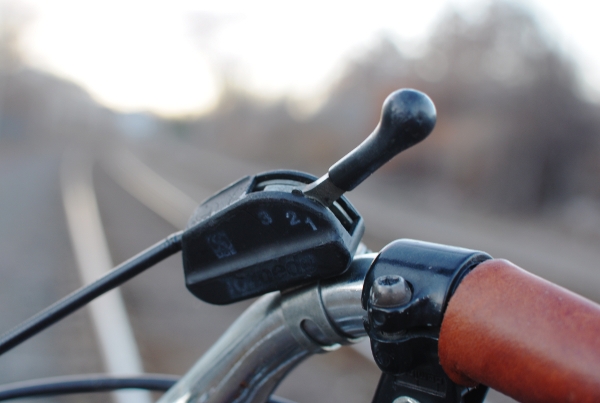
When I was first shopping for an upright bicycle with an internally geared hub, I made the natural assumption that the more gears on the hub, the better. But to my surprise, over time I changed my mind and developed a strong preference for the simple 3-speed. No more, no less: Three gears feel just right. I have been trying to make sense of why I prefer 3-speed hubs to the seemingly more advantageous 7-speeds and 8-speeds, and have a couple of ideas.

Internally geared hubs allow for a narrower range of gearing in comparison to derailleurs. And the overall range of the hub does not increase in direct proportion to the number of speeds.

For example:
The Shimano Nexus 3-speed hub has a 186% overall gearing range.
The Shimano Nexus 7-speed hub has a 244% overall gearing range.
The Shimano Alfine 8-speed hub has a 306% overall gearing range.

The typical 7 and 8 speed hubs do not give you more than double the gearing range of the 3-speed. They give you more than double the notches to click, while the overall gearing range is only somewhat greater. The more speeds on the hub, the smaller the differences between clicks. This requires changing gears back and forth more frequently, just to stay in the same range as the 3-speed hub would give you with less clicking. This could be why I feel that with a 7 and 8 speed hub, I am always switching gears back and forth unnecessarily.

My choice of transportation bicycles plays a huge role in the usefulness of the hubs as well. In my experience, bicycles that are heavy and put the cyclist in a bolt-upright position are simply not the best choice for trips with prolonged hills, regardless of how many gears are on the hub. If I max out a 3-speed hub going uphill on a heavy upright bike, chances are that I will also max out a 7 or 8 speed hub - in which case there is no real benefit to having those additional gears. If a route is too tough for a 3-speed, then what I prefer is a lighter and more sporty bike, ideally with derailleur gearing. A bigger hub on the same heavy upright bike does not do me much good.

While modern bicycles are commonly available with 7 and 8 speed hubs, for me the simpler 3-speed just seems to be a better solution. Your experience may differ - but before you choose a hub with many gears, try a 3-speed and compare for yourself. You might be as surprised as I was to discover which you prefer.

Budget Bikes: What's Your View?

As more beginner cyclists are in the market for new bicycles, I receive more and more questions from readers asking what I think about various makes and models listed on the Budget Options page. People want nice bikes, but, understandably, they also want to save money - and my vintage bicycle recommendation is not for everyone. What about a simple, basic new bike that is classic and comfortable, at a reasonable price?  After all, it seems that more and more manufacturers are starting to offer exactly that.

[screen capture of video via tankww2]

The latest that has been brought to my attention in that regard, is this promotional video from Bikes Direct - an online seller of extremely inexpensive mass-produced bicycles. The video shows cyclists riding colourful mixtes along a path lined with palm trees. The caption reads: "single and 3speed Windsor retro city bikes, style which was popular in the 50s, 60s and early 70s". These are not on the Bikes Direct website yet, but I imagine they soon will be - most likely priced in the $300s. What do you think - Do they look good to you and would you consider ordering?

I am always torn when asked for my own opinion: While I want to be objective, I simply don't like most of the lower-priced bikes that are out there at the moment. I have tried 80% or so of the bicycles on my Budget Options list, and so far very few of them have made me feel that they are worth the price.  It's one thing to spend a couple hundred dollars on a bike and not care, but a price tag in the range of $500-600 is a lot of money to me - too much money to spend on something that I believe is shoddily made, will likely require upgrades, will not feel entirely comfortable even with those upgrades, and may fall apart on me within a year. In the long run, I believe that such a bicycle may cost more than an "expensive" bike. And I am especially surprised to hear of people choosing the lower-end bikes, and then buying Brooks saddles, leather grips, fancy lighting and expensive pannier systems to go with them. By the time they are done upgrading, the cost of the bike can reach a price point at which they could have gotten a higher-end bicycle - with many of those upgrades already included, not to mention with a better frame and higher quality components. 

Beyond that, I am not really sure what to say when asked for suggestions. I believe that a well-made, comfortable bicycle can be mass-produced at a reasonable price in the Far East. But I don't think it's happening yet. What has your experience been and what are your views on "budget bikes"? 

Thursday, 2 December 2010

A Visit with Geekhouse Bikes

Today I had the pleasure of visiting Geekhouse Bikes in Allston, Mass. A region of greater Boston that's just across the river from Cambridge, Allston is notorious for how dangerous it is to cycle there and I was fully prepared for a journey fraught with peril. Instead, I found myself pedaling along a bike lane followed by a series of quiet streets - at the end of which was Geekhouse, nestled picturesquely between a white picket fence and a rusty chainlink fence,  amidst rows of family homes with tidy back yards offset by a sinister-looking warehouse in the distance.

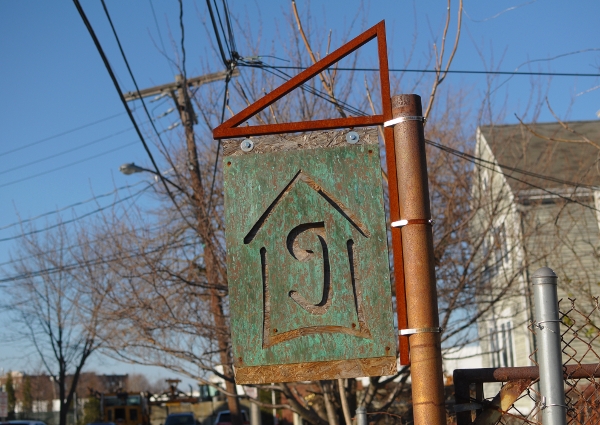
When I saw this out front, there was no doubt that I had come to the right place.

Geekhouse is a small shop that has been producing their distinct custom bikes since 2002.

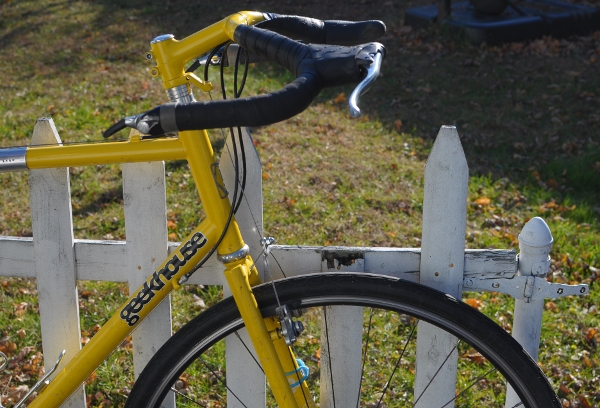
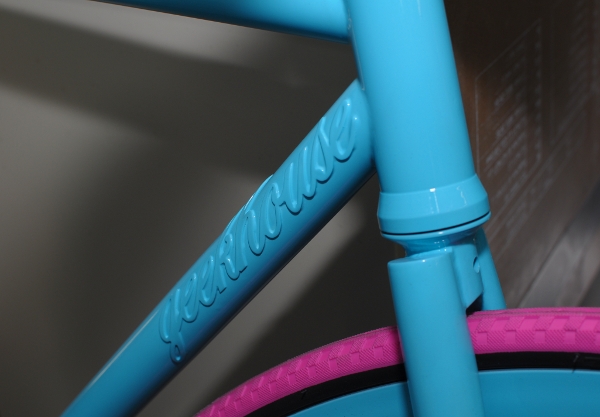
TIG-welded steel, clean lines, and candy-coloured powdercoat, make their handiwork easy to spot on the streets of Boston and beyond. The powdercoat is done in-house by the Geekhouse subsidiary, Sugarcoat.

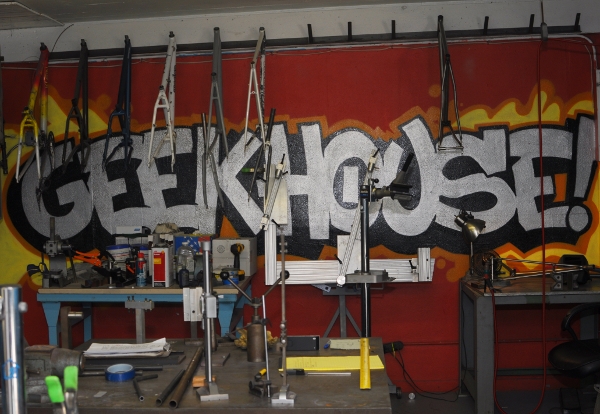
While I generally prefer lugged steel construction, there is something about the "New England bad boy" look of the segmented fork on a neatly TIG-welded frame that makes me feel all funny inside. Now imagine a workshop chalk full of these forks, in candy colours... I did my best to keep calm.

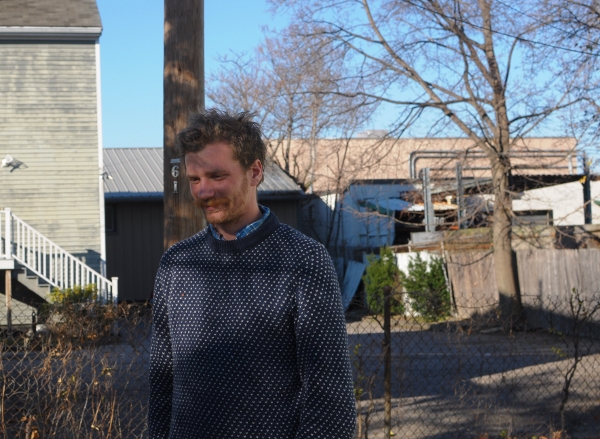
The main man behind Geekhouse is Marty Walsh, who learned TIG-welding while apprenticing for Mike Flanigan of ANT and began making his own frames shortly thereafter. His work embraced the influence of ANT and the Fat Chance legacy, while developing a trademark aesthetic unmistakably his own.

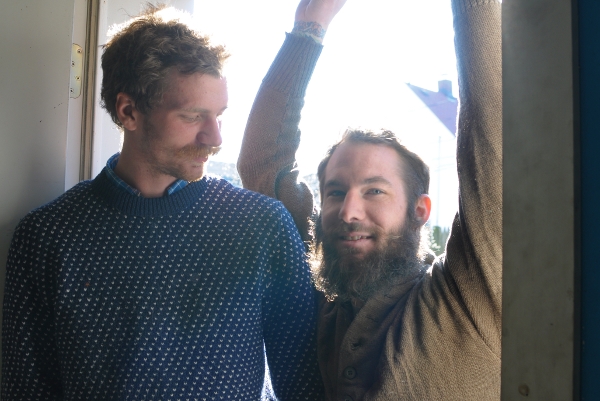
As Geekhouse grew, Marty was joined by Brad in the framebuilding department

and by Gregory in the running-of-the-business department.

The sense of comradery between the three boys is endearing, and entertaining to watch.

They clearly have a good time working together, which makes for a comfortable and lighthearted atmosphere in the shop.

But getting back to bicycles - One development I find exciting, is that Geekhouse has recently made a number of beautiful custom frames for women, reflecting the increasing number of female cyclists who are opting for handmade bikes. Unfortunately none of these frames were at the shop during my visit, but here is a glimpse as photographed by others:

[image via Geekhousebikes]

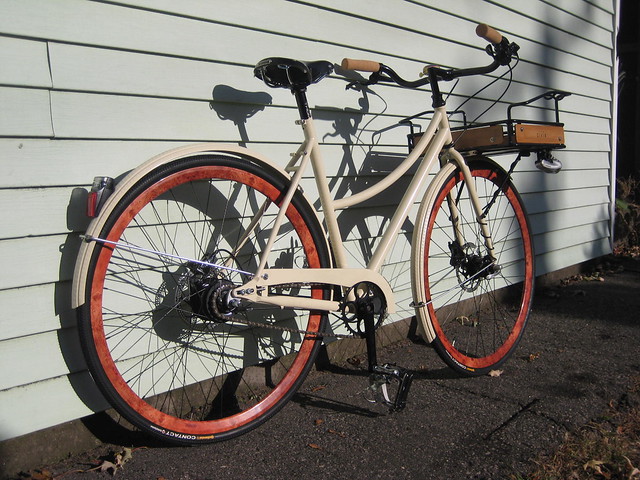
This "Woodville" model is a contemporary take on the loop frame. And notice the "wooden" rims.

[image via Geekhousebikes

And a fairly classic straight step-through bicycle re-imagined in Geekhouse style.

[image by urbanvelo via Geekhousebikes]

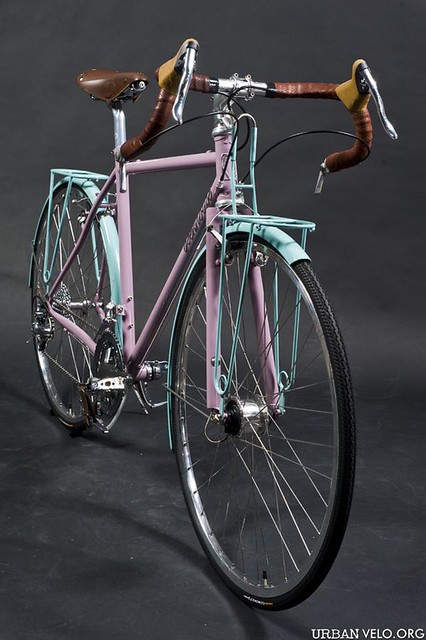
But of course, a "woman's bike" does not have to be a step-through, especially when it comes to road and touring bikes. The bicycle above (shown at NAHBS and mentioned here earlier) was made for Bianca, who rode it cross-country for Autism, from Boston to San Francisco.

[image by urbanvelo via Geekhousebikes]

To me this bicycle is just stunning; definitely my favourite Geekhouse bike. And if the owner rode it from Boston to San Francisco, I take it that it has got to be comfortable.

[image via Geekhousebikes]

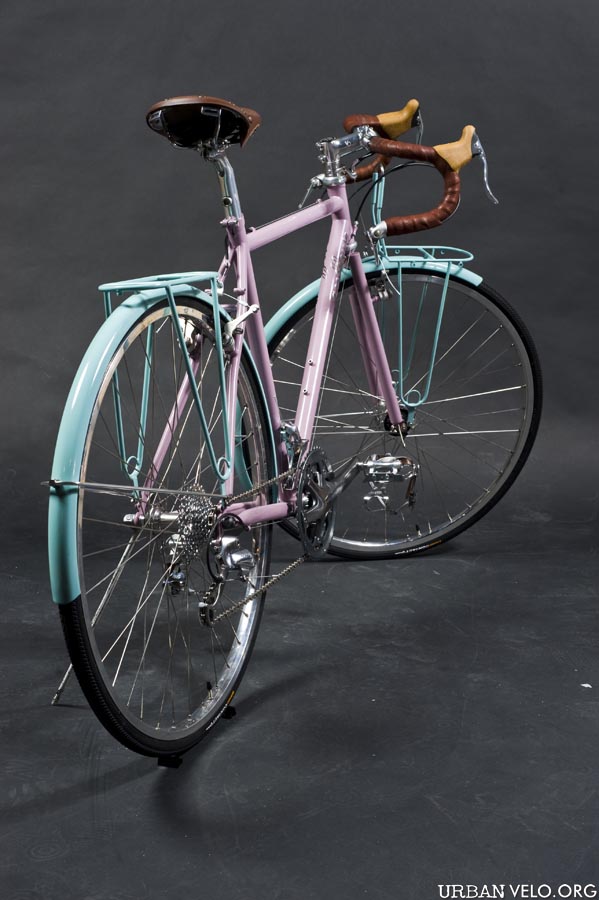
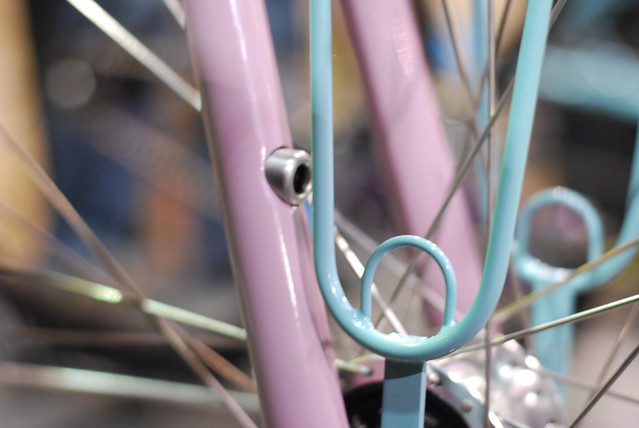
What I think makes this a remarkable bicycle, is the combination of all the practical, functional elements - the built-in mounts, the racks, the lights, the sturdy geometry - and the hyper femininity of the colourscheme. The lilac and pale turquoise are unexpectedly gorgeous together. They make the bicycle look very light, almost ethereal. I would not have thought this design up myself, but I love it - and I think it works on a TIG-welded frame better than it would on a lugged one, as combining lugs with such vivid colours would have been overkill. This is also why I think the bright colourschemes of the lugless Brompton work so well, and why I love the TIG-welded truss frame by ANT: Sometimes, just sometimes the clean joints afforded by the lack of lugwork are more fitting to the overall personality of a bicycle.

The personality of Geekhouse bikes is certainly distinct, and I look forward to a possible test ride... hopefully something with a delicious segmented fork!

Wednesday, 1 December 2010

Refurbishing Vintage Bicycles: Different Perspectives

[Manfred Dittler collection, image via waffenrad.at]

It has been so nice to see more and more people revamping vintage bicycles over the past several years, riding them, and sharing pictures with others. Seeing vintage bikes actively ridden and lovingly cared for feels as if history is "interacting" with our contemporary lives - reestablishing a sense of continuity that has been ruptured in many ways over the past several decades. But as the use of vintage bicycles grows more popular, it is worth noting that not everybody holds the same views on refurbishing them. For me, discovering these differences has been educational, and I will try to describe some of the approaches I have come across:

[Panther Damenrad, image via waffenrad.at]

The Full Restoration Approach
To "restore" a bicycle typically implies bringing it back to its former glory inasmuch as possible. If the bicycle is not in great cosmetic shape, then this may include re-painting the frame in a colour painstakingly matched to the original, finding new-old-stock original decals or replicas, and taking the trouble to locate well-preserved versions of the components and accessories, if the original ones cannot be cleaned up sufficiently well. The end goal is for the bicycle to resemble as closely as possible what it looked like when it was sold as new - be it the 1970s or the 1910s.

[Manufrance Hirondelle, image via collectvelo]

The All-Original Approach
In direct opposition to those who restore bicycles, are those who prefer to keep them all-original - meaning in whatever condition the bicycle was found. The reasoning behind this approach, is that a vintage bicycle is a piece of history and should be preserved in its found state. Some who adhere to this method will clean up the components and frame as much as possible - as long as it does not involve repainting or replacing anything on the bike. Others will take things to the extreme and literally leave the bicycle as is - including any dirt or rust that has accumulated on it. Some will perform repairs, as long as the components remain original; while others believe that if the bicycle is not ridable without repairs, then that is how it should stay.

[somervillain's Shogun touring bike, image via lovely bicycle]

The Period-Appropriate Approach
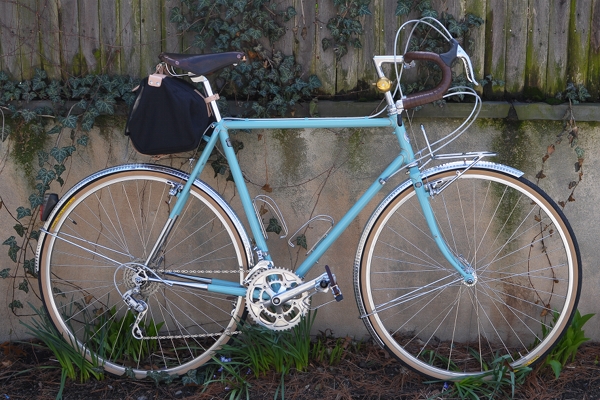
This approach is somewhat similar to restoration, but is considerably more relaxed and is done with the intent for the bicycle to be ridden, not collected or exhibited.  Those who prefer this method, typically clean up and refurbish the bicycle in a way that keeps its appearance period-appropriate without going so far as to replicate the original components, accessories and colour scheme. For example, the bicycle above has been repainted a soft blue - a traditional colour choice for vintage touring bikes, but not the original frame colour. The components selected are also traditional for the time period the owner wanted to evoke, but they are not the components that originally came with this bike. The period-appropriate approach is popular among those who want the bicycle to suit their tastes and riding style, while still paying homage to the era from which it came.

[Motobecane Super Mirage, image via lovely bicycle]

The Updated Remix Approach
Some cyclists prefer to fit vintage frames with modern components - either in part or entirely. The reasoning behind this, is that while they may prefer the looks, ride quality, craftsmanship and other aspects of the older frames, newer components tend to be more comfortable and more convenient. This can include anything from using a modern style of handlebars, brake levers and cranks, to fitting the bicycle with clipless pedals and new high-tech lights. While the newer components are not even remotely original or period-correct, some owners will attempt to make the overall look of the bicycle harmonious. To others this does not matter so much, and they regard the vintage and modern mix as purely utilitarian. If I had to classify the current fixed gear modification trend (whereby  parts of the frame are filed off and the bike is fitted with super-modern wheels and colourful components), it would go in this category as well. The degree of consideration that is given to the original frame is up to the owner.

[Jeunet porteur, image via somervillain]

Over the past two years, I have spoken with vintage bicycle owners whose approaches run the full spectrum of these categories, and have at times been amazed by how strong views on this topic can be. Restorers are criticised for recklessly altering pieces of history. Those who keep vintage bikes original are criticised for not giving the bicycle a chance to "live again". Those who take the trouble to set up their bicycle in a period-appropriate manner are perceived as obsessive "retrogrouches." And those who put modern components on vintage frames are accused of butchering or "not caring enough" about vintage bikes. Personally, I can see the benefit in all methods, and I think that quite a lot depends on the bicycle itself - how rare and historically significant it is. The Co-Habitant and I have used the "updated remix" approach at least to some extent on most of our vintage bikes - but none so far have been historically valuable. What is your take on this, and what approaches have you used on your own bikes?

Ping Blog

Step 1
Blog URL:


Blog Title (optional):


Blog RSS Feed (optional):


I agree with terms of service.

Step 2
Copy the following code and put it on your blog/site to help our blog ping tool track your submission (Need help?):
;

 
Design by Free WordPress Themes | Bloggerized by Lasantha - Premium Blogger Themes | Best Buy Coupons